
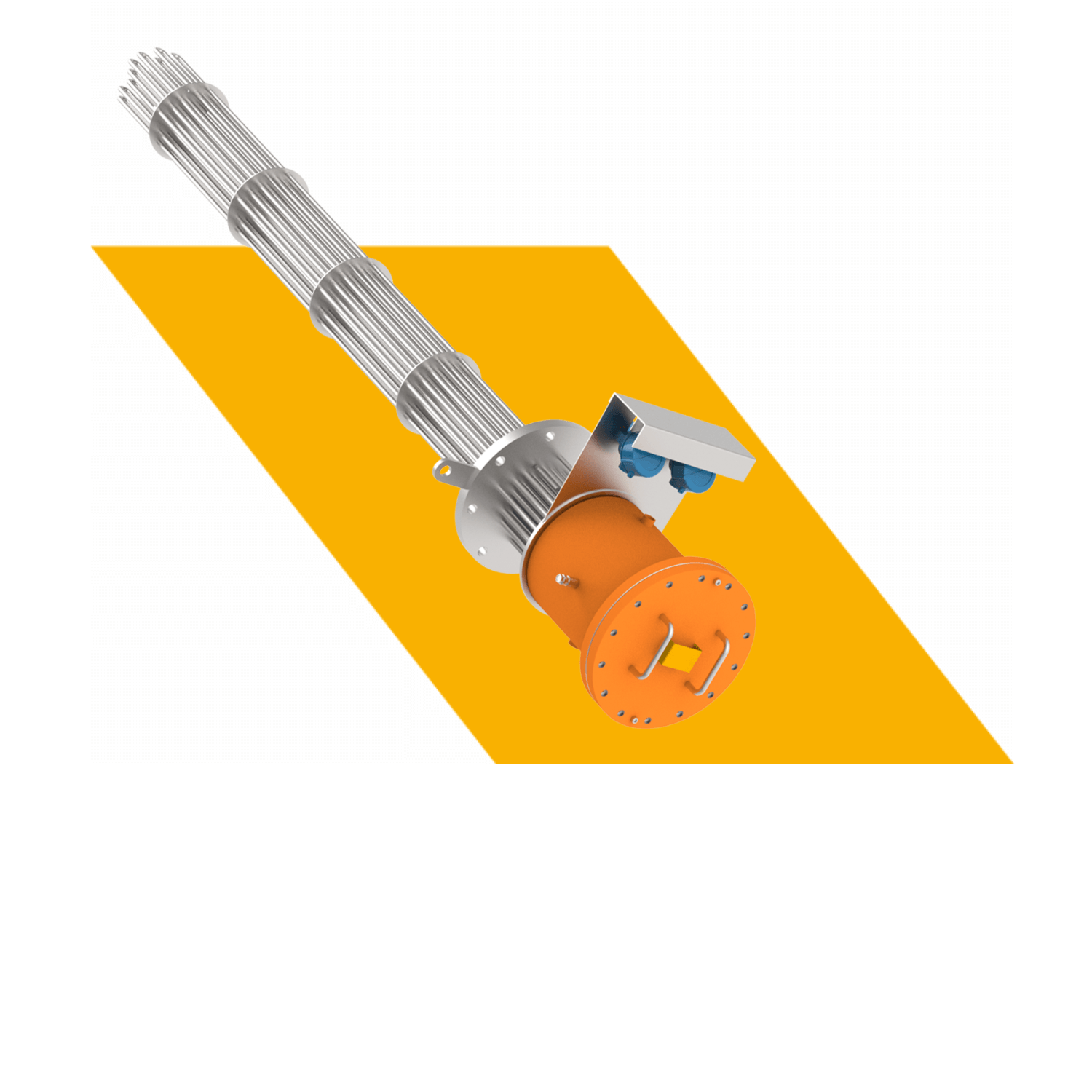
The Hidden Impact of Immersion Heaters on Industrial Performance
Industrial heating is commonly associated with large furnaces, boilers, industrial ovens, and extensive manufacturing infrastructure. Immersion heaters rarely come up in those conversations. And that’s understandable.
They’re not the most visible piece of equipment on the factory floor. They don’t make much noise. They don’t look particularly impressive either. Yet if you spend enough time around manufacturing environments, you start to realise just how important they are.
In reality, immersion heaters are often doing critical work behind the scenes every single day. They help maintain temperatures, support production processes and keep operations moving without attracting much attention.
That’s usually how it goes with equipment that works well. Nobody notices it until something stops working.
What Is an Immersion Heater?
At its simplest, an immersion heater is a heating element designed to be placed directly into a liquid, gas, or process medium. Instead of heating a surrounding chamber and transferring heat indirectly, the heater transfers energy directly into the material that needs heating. It is a very simple idea, and very effective, too.
Because heat is applied directly, energy losses are often reduced, and temperature control tends to become more efficient.
That’s one reason immersion heaters are widely used across industries such as:
- Manufacturing
- Chemical processing
- Oil and gas
- Pharmaceuticals
- Food processing
- Water treatment
- Power generation
For a lot of operations, they’re simply one of the most practical heating solutions available.
Why Industrial Performance Often Depends on Temperature
If you think about it, many industrial processes are really temperature-dependent. A chemical reaction may require a specific temperature range. A manufacturing process may need materials heated consistently throughout production. Water systems may need to remain within certain operating limits.
Even small variations can sometimes create bigger issues later.
The truth is, production quality often depends on consistency.
And consistency becomes much harder when temperatures fluctuate unexpectedly.
That’s where immersion heaters quietly make a difference. They’re not necessarily improving the process themselves. They’re helping maintain the conditions that allow the process to perform properly. There’s an important difference there.
Small Temperature Problems Can Become Expensive
Most people focus on major equipment failures.
But surprisingly, small temperature inconsistencies often create their own problems.
Maybe a process takes longer than expected.
Maybe product quality starts varying between batches.
Individually, these issues might not seem serious. During busy weeks, they can even go unnoticed.
Then months later, someone starts looking at production reports and notices declining efficiency.
That happens more often than many people realise.
Reliable heating systems help reduce those risks by maintaining stable process conditions throughout production cycles.
Efficiency Is About More Than Saving Energy
When people hear the word “efficiency,” they usually think about electricity bills.
And yes, energy consumption matters.
But industrial efficiency is often much broader than that.
A properly selected immersion heater can help:
- Reduce production delays.
- Improve temperature consistency.
- Minimize process interruptions.
- Support product quality.
- Reduce unnecessary downtime.
Direct Heating Often Works Better
One reason immersion heaters remain so widely used is their simplicity.
Heat is transferred directly into the material being heated.
There’s less reliance on secondary transfer surfaces. Less wasted energy escaping into surrounding environments.
And, in many applications, response times tend to be faster as well.
This direct heating approach often helps operators maintain tighter control over temperatures without adding unnecessary complexity to the process.
Most people just want something practical.
Industrial facilities are no different.
Different Industries, Different Requirements
What surprises many people is how many industries rely on immersion heating systems in some form.
Chemical Processing
Chemical manufacturers frequently depend on precise temperature control to support reactions, mixing processes and material handling.
That is why stable heating becomes so important.
Food and Beverage Production
Food processing facilities often use immersion heaters for liquid heating, ingredient preparation, cleaning systems and sanitation processes.
Consistency matters here too.
Customers may never see the process, but they definitely notice inconsistent products.
Pharmaceutical Manufacturing
In pharmaceutical environments, process control requirements can be extremely strict.
Temperature stability helps support product quality, regulatory compliance and overall production reliability.
Water Treatment Systems
Water treatment operations frequently use immersion heaters to maintain process temperatures and improve system performance.
Especially in colder environments, maintaining stable temperatures can become essential for smooth operation.
Reliability Matters More Than People Think
From experience, many maintenance teams will tell you the same thing.
The best equipment is often the equipment nobody has to think about.
If a heating system consistently does its job day after day, it tends to disappear into the background.
That’s actually a good thing.
Reliable immersion heaters help reduce unexpected downtime, emergency maintenance, and production interruptions. Over time, those benefits can have a significant impact on operational performance.
And, fewer surprises usually make everyone’s job easier.
The Growing Role of Monitoring and Control
Industrial operations are becoming increasingly connected.
Heating systems are evolving alongside that trend.
Today, many facilities integrate heaters with automated monitoring systems, sensors, and digital controls that provide real-time visibility into process conditions.
This creates several advantages:
- Faster issue detection
- Improved process control
- Better energy management
- Reduced manual monitoring
- More accurate reporting
Instead of reacting after problems occur, teams can often identify potential concerns earlier.
And that usually leads to better decisions.
Why Accurate Temperature Measurement Is Essential
Of course, heating equipment is only part of the equation.
Even the most reliable immersion heater depends on accurate temperature measurement to deliver consistent results.
Without proper monitoring, maintaining process stability becomes much more difficult.
Companies, such as Tempsens, provide temperature sensing, calibration and thermal engineering products and solutions to enable process control and measurement accuracy across challenging applications.
Because at the end of the day, good heating depends on good data.
And good data helps teams make better decisions.
On a summarizing note
Immersion heaters may not be the most talked-about equipment in industrial facilities.
They are usually working quietly in the background while larger systems attract most of the attention.
But their impact is often much bigger than people expect.
They support process stability, improve efficiency, help maintain product quality, and contribute to smoother day-to-day operations across a wide range of industries.
The truth is, industrial performance is often shaped by small systems doing their jobs consistently rather than dramatic pieces of equipment grabbing headlines.
And more often than not, immersion heaters are a perfect example of that. Quiet. Reliable. Easy to overlook.
Yet absolutely essential when it comes to keeping industrial processes running the way they should.


Leave a Reply