
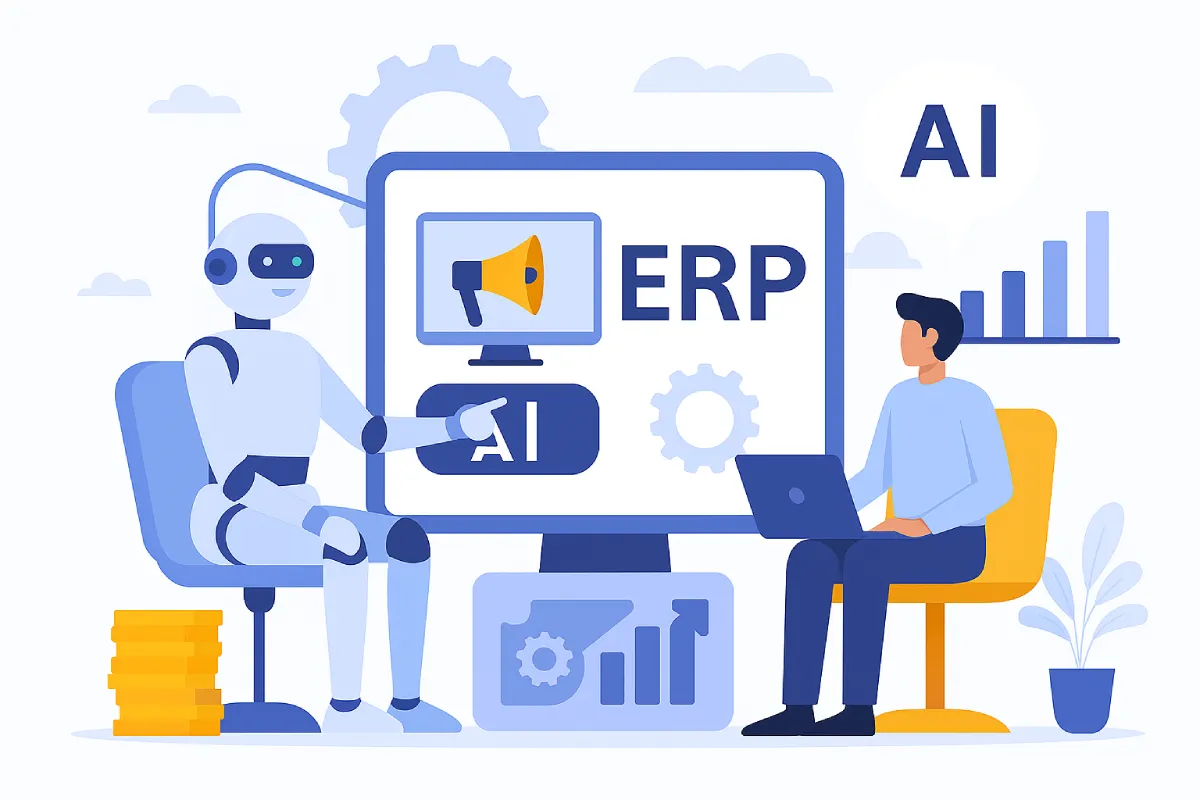
The Impact of AI Consulting on Modern ERP System Transformation
Enterprise Resource Planning (ERP) systems are also necessary in the management of operations, data, and workflows within an organization. Nevertheless, when businesses grow and technology advances, most of the traditional ERP systems tend to fail to meet increasing demands. Artificial intelligence is where it fits in, and it provides smarter, faster, and efficient means of addressing business processes. Firms seeking to leverage such potentials are resorting more to professional advice.
Why Businesses Are Turning to AI Consulting for ERP Optimization
Working with an AI consulting team helps organizations identify how artificial intelligence can enhance or modernize their existing ERP systems. Consultants identify the gaps in existing workflows and suggest AI-driven solutions, be it automation, predictive analytics, or more accurate data. The businesses that have the help of professionals will be able to introduce AI and start achieving productivity, reporting, and decision-making gains without any substantial disruption.
The role of AI in enhancing ERP
AI also introduces higher sophistication to the ERP systems beyond automation. The AI tools are more precise and helpful with each use and a review of data patterns and user behavior, which has, in the long term, proven to be more precise and useful. The outcome is a smarter system that helps with more efficient operations within departments.
1. Increased Data Accuracy and Data Integrity
ERP systems are based on precise data, which should be entered by hand, which tends to be erroneous. The aspect of AI minimizes inconsistencies since it validates data, identifies anomalies, and makes updates automatic. This will result in the creation of more dependable reports and improved decision-making.
2. Improving Predictive Capabilities
The AI forecasting tools assist companies in estimating inventory, sales patterns, workforce, and possible risks. This helps the teams to have better insights into the future challenges and opportunities, and plan for them.
3. Routine Processes Automation
Many ERP processes, such as processing invoices and updating inventory records, can be automated using AI. Automation lowers the administrative workload, human error, and gives employees more time to work on strategic activities.
Improving Decision-Making with Real-Time Insights
Among the greatest benefits of using AI alongside the ERP systems there is the possibility to create real-time insights. Leaders can monitor live dashboards, observe developmental trends as they unfold, and make informed decisions within a short time as opposed to waiting until the end of the month to receive reports.
AI can also be used to integrate information between different departments, dismantling information silos. This integrated perception enhances co-operation and offers the leadership an integrated picture of the business performance.
Making department-wide efficiency
AI has the potential to automate the workflow processes in sales, finance, HR, operations, and customer services. For example:
1. Finance
AI will increase fraud rates, enhance the accuracy of the budget process, and automate the process of matching invoices.
2. Sales and Marketing
Predictive analytics can find opportunities and tailor marketing programs.
3. Operations
AI will maximize the scheduling process, allocation of resources, and supply chain.
4. Human Resources
AI can also be used to predict the staffing requirements and enhance the recruitment efforts.
The companies enhance the efficiency of the working process and make it smoother by introducing smart functions into the workflow of each department.
Cost Optimization and Increased Scalability
The introduction of AI in the ERP systems can initially be costly, yet the opportunities for savings are enormous over time. Automation saves on labor, corrective insights eliminate expensive errors, and lean processes enhance productivity. Scaling of businesses is easier with AI since the workflows evolve with the increase in demand.
The Impact of AI Consultants on the Successful ERP Integration
AI specialists are also extremely important in assisting companies to move away from the old approach to ERP into smarter and AI-enhanced systems. They may have duties that involve:
- Assessing the performance of the current ERP.
- Determining the processes that can be optimized by AI.
- Suggestion of tools and technologies.
- Formulating integration plans.
- Education on new working processes.
- Post implementation performance monitoring.
Their professionalism makes the AI solutions effective and consistent with the business objectives, and provides quantifiable returns.
Conclusion
The AI is re-inventing the ERP systems by enhancing accuracy, efficiency, decision-making, and scalability. Through the assistance of experienced AI consultants, companies will be able to unlock all the possibilities of their ERP solutions and remain competitive in a rapidly changing digital environment. The use of artificial intelligence is not an upgrade anymore–it is a requirement to be successful in the long run.


Leave a Reply