
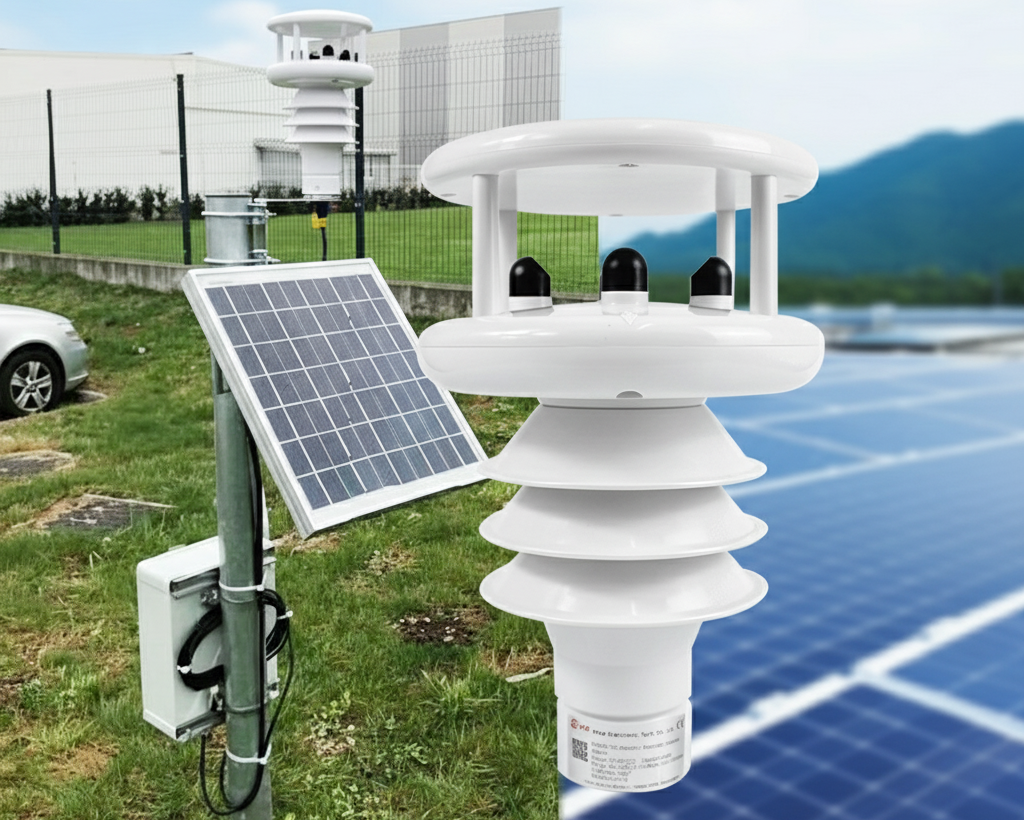
The Importance of Accurate Weather Instruments for Informed Decision Making
Weather has always played an important role in human activity, but with the advent of technology, its importance has increased. Reliable weather data is critical to the well-informed decision-making by industries such as agriculture, building, transportation, renewable energy, aviation, and environmental research. Organizations want trustworthy data to manage risk, boost operational efficiency, and prepare for a future when climate trends are more uncertain. This is when good-quality weather monitoring equipment comes into play.
Importance of Correct Weather Data
Weather conditions influence the decisions businesses make on a daily basis. Farmers use rainfall and temperature projections to help decide when to water or harvest crops. Construction businesses measure wind speed and rain to prevent expensive project delays and to keep their personnel safe. Logistics firms use weather updates to optimize delivery routes, while companies that generate electricity from renewable sources use weather data to maximize the effectiveness of solar panels and wind turbines.
Correct weather information increases productivity and cuts down operational costs. Reliable data helps organizations protect precious assets, maintain employee safety, and plan for bad weather. Such areas where a small error of forecast can lead to huge financial losses, the rational corporate decision is to invest in dependable weather monitoring equipment.
The Significance of Modern Weather Instruments
Modern weather instruments are built to collect accurate environmental data in a range of situations. Digital sensors of today allow continuous observation with outstanding consistency and accuracy, unlike traditional observation approaches.
Some of the most common tools used to measure weather are:
- Air temperature thermometer
- Hygrometers are used to determine the level of humidity.
- Wind speed anemometers
- Measuring wind direction with wind vanes
- Rain indicators are used to monitor precipitation.
- barometers are devices for monitoring atmospheric pressure
Solar radiation sensors for climate and renewable energy research
They are frequently used by government agencies, research institutions, business enterprises, and educational groups. They give dependable environmental data, which leads to better operational efficiency, risk management, and planning in many sectors.
Advantages of Smart Weather Monitoring Systems
The Internet of Things (IoT) and the fast development of sensor technologies have changed the practice of weather monitoring from a basic data collection chore to a smart environmental management system. Weather stations today are able to transfer data to cloud-based platforms in real-time so that the meteorological data can be accessed by the users from anywhere.
Smart weather monitoring systems have many advantages:
- Continuous monitoring in real time
- Automated Severe Weather Warnings
- Remote access to mobile and PCs
- Keep historical data for trend analysis
- Allows for smooth interaction with existing management systems
- Lower costs related to manual inspections and maintenance
These capabilities enable firms to react quickly to changing environmental conditions, therefore minimizing any undue delay and improving the decision-making process overall.
Selecting the Correct Weather Monitoring Solution
But choosing weather monitoring equipment involves far more than simply purchasing sensors. Before investing, there are many important things firms need to consider.
Accuracy and reliability are essential. High-quality sensors produce consistent measurements that are reliable in harsh situations.
Secondly, durability is paramount, particularly for outdoor installations where equipment faces harsh temperatures, dirt, rain, and high winds.
Third, interoperability with digital platforms and IoT technologies enables the easy monitoring, analysis, and sharing of the obtained data among multiple systems.
Finally, maintenance and technical assistance are easy, which can extend the life of the equipment and greatly cut long-term running costs.
By examining these variables thoughtfully, businesses may build weather monitoring systems that deliver value for a long length of time.
A Trustworthy Ally for Expert Monitoring
With weather patterns becoming increasingly unpredictable, reliable weather instruments are more important than ever. Accurate meteorological data helps businesses make faster decisions, reduce operational risks, and improve long-term planning. Renkeer is committed to providing professional meteorological monitoring solutions for a wide range of environmental conditions. Its product portfolio includes wind speed and direction sensors, weather stations, rain gauges, solar radiation sensors, and IoT monitoring systems. Renkeer’s weather instruments are renowned for their accuracy, durability, and seamless integration, earning the trust of customers worldwide
Organizations who desire to acquire a more comprehensive picture of the practical uses of the many weather instruments can benefit from learning the specific contributions each instrument has made to the process of making informed decisions and carrying out accurate environmental monitoring.
Future of Weather Monitoring
With the increased adoption of digital transformation methods by companies, weather monitoring is becoming smarter and more data-driven. Artificial intelligence, machine learning, and predictive analytics are already helping to improve the processing and interpretation of meteorological data. Companies can use these technologies to foresee potential problems, recognise patterns, and take proactive actions, instead of just reacting to changing conditions.
Furthermore, the growing use of IoT networks enables the incorporation of multiple environmental sensors, leading to the development of extensive monitoring systems that provide deeper insights into local weather conditions. This holistic approach will help firms improve their operational resilience, optimise resources, and promote safety.
To Conclude
Meteorological agencies are no longer the only ones who can conduct reliable weather surveillance. Today, agricultural, construction, transportation, renewable energy, industrial, and environmental management enterprises depend on accurate weather data to make important decisions.
Modern weather monitoring systems can help businesses reduce uncertainty, improve operational efficiency, and better predict changing environmental conditions. Smart monitoring systems and high-quality instruments deliver the precise data needed to protect people, assets, and long-term business performance. With climate variability increasing worldwide, organisations that care for sustainability and resilience will need accurate weather monitoring technologies more than ever.


Leave a Reply