
The Post-Launch Traffic Drop: Why Beautiful WordPress Sites Are Failing Google’s New Standards
As a web designer or agency owner, you already know the drill. You spend weeks perfectly crafting a client’s new WordPress site—tweaking the CSS, optimizing the Core Web Vitals, and building gorgeous, conversion-focused landing pages. But right before the final handover, you hit the classic bottleneck: the content. To get the project over the finish line, many developers and marketing teams have started relying heavily on generative text models to quickly fill out service pages, FAQ sections, and blog archives. It definitely gets the site launched faster, but it introduces a massive SEO liability. Today, both search engines and savvy clients are aggressively hunting for automated filler. If a client takes the site you just delivered, runs the blog copy through a free ai checker, and gets a 100% synthetic warning, the professional trust you built during the entire design phase evaporates instantly.
The problem goes much deeper than just looking bad in front of a client. It is a fundamental issue with how modern search algorithms are evaluating and ranking websites. Google’s recent core updates have been ruthlessly targeting “unhelpful” and mass-produced content. While the algorithms don’t necessarily penalize the use of artificial intelligence itself, they absolutely destroy pages that feature the predictable, monotonous structures that bots naturally produce.
Think about how a raw machine draft reads. It relies on long, rambling introductions, robotic transition words like “moreover” or “additionally,” and paragraphs that are all the exact same length. When an algorithm scans your beautifully designed site and sees this mathematical predictability in the text, it flags the pages as offering zero unique value. It doesn’t matter if your site loads in half a second and has a flawless mobile layout; if the text is robotic, the site will get buried on page ten of the search results.
To protect your client’s organic search rankings—and your own agency’s reputation—you cannot simply copy and paste raw generated output into the CMS. You have to consciously humanize ai drafts so that the tone actually matches the premium aesthetic of the web design. This process involves actively dismantling the symmetrical pacing of the text. It means breaking up long, boring paragraphs to create better visual breathing room on mobile devices, injecting real industry-specific nuances, and swapping out stiff corporate jargon for conversational language that a real customer would actually want to read.
However, for a solo freelancer or a busy design agency, spending hours manually editing every single blog post and “About Us” page isn’t a scalable business model. You are being paid to build high-performance websites, not to sit there acting as a full-time copy editor.
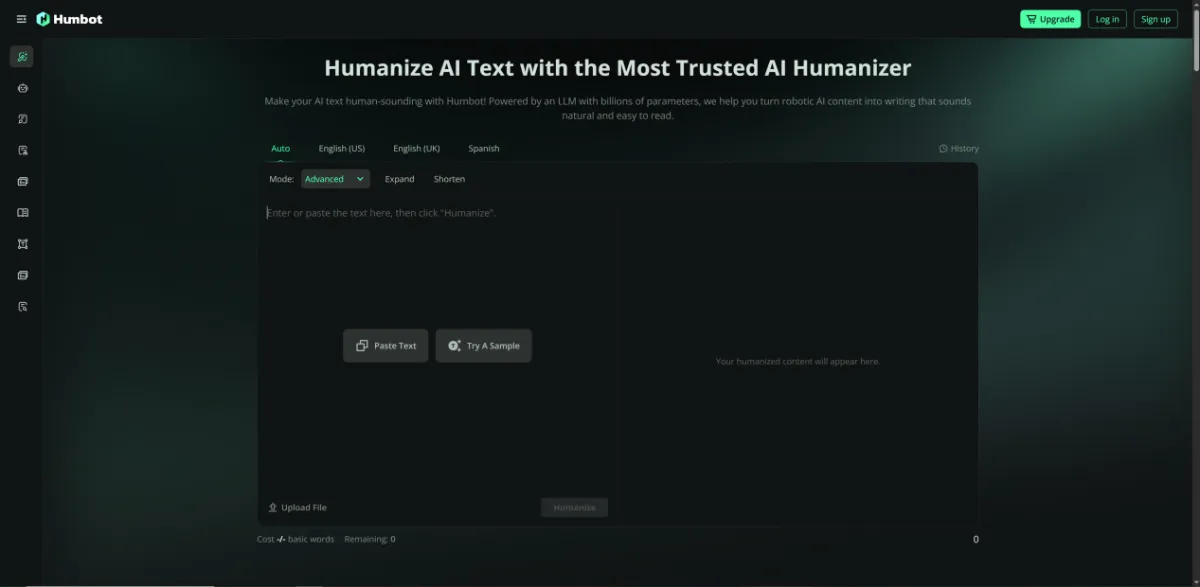
The secret to maintaining your profit margins without sacrificing SEO quality is to integrate a smart structural refinement step directly into your pre-launch workflow. Rather than fighting the rigid syntax manually, forward-thinking web creators are utilizing specialized text processors like humbot.ai right before the content gets uploaded to WordPress. This type of editorial layer actively strips away the robotic footprint and reintroduces the chaotic, natural variance of genuine human speech. By ensuring that the words on the screen are treated with the exact same level of care as your code and layouts, you can deliver a final product that doesn’t just look incredible on launch day, but actually drives sustainable, long-term traffic.



Leave a Reply