

Top Upfluence Competitors: Features, Pricing and Comparison
Influencer marketing budgets are growing faster than almost any other marketing channel. Nearly three-quarters of brands plan to increase their influencer spend in 2026. But with bigger budgets comes bigger scrutiny. Leadership teams aren’t just asking whether influencer campaigns “went well” anymore – they want cost-per-acquisition, revenue attribution, and clear ROI metrics that justify every dollar.
That shift in accountability has changed what brands expect from their influencer marketing platform. It’s no longer enough to have a searchable database and a way to send emails. The platforms gaining market share are the ones that connect creator discovery to campaign execution to revenue measurement in a single system – giving marketing teams the data they need to defend and grow their budgets.
If you’re currently on Upfluence and finding that its $24,000+ annual commitment isn’t delivering the measurable outcomes your team needs, this comparison breaks down 10 of its top competitors. We’ll cover what each one does, what it costs, and where it fits – so you can make a data-informed decision about your next platform.
Here are the 10 platforms we’ll compare:
- Influencer Hero
- GRIN
- Meltwater
- Modash
- Aspire
- HypeAuditor
- Traackr
- Later
- Storyclash
- Heepsy
Why Brands Are Moving Away From Upfluence
Upfluence has been in the market for years, but several issues consistently push brands to evaluate competitors:
- Expensive Annual Lock-In: Pricing starts at $1,276/month on an annual contract, with no month-to-month option and no free trial. You’re committing $16,000+ before you’ve had a chance to fully evaluate the platform’s fit for your team.
- Small Database by 2026 Standards: Upfluence’s 12M+ influencer database was competitive several years ago. Today, leading platforms index 200M to 450M+ creator profiles. The gap limits your ability to find niche, aligned creators efficiently.
- Heavy Manual Effort: Discovery relies on extensive filtering with limited search options (12 filters vs. 37+ on some competitors). Teams spend more time searching than engaging, which defeats the purpose of paying for a premium platform.
- Usability Complaints: A steep learning curve and UI inconsistencies – like the inability to edit campaigns once they’re live – frustrate teams that need to move fast. Customer support quality also varies depending on your plan tier.
Top Upfluence Competitors in 2026
1. Influencer Hero
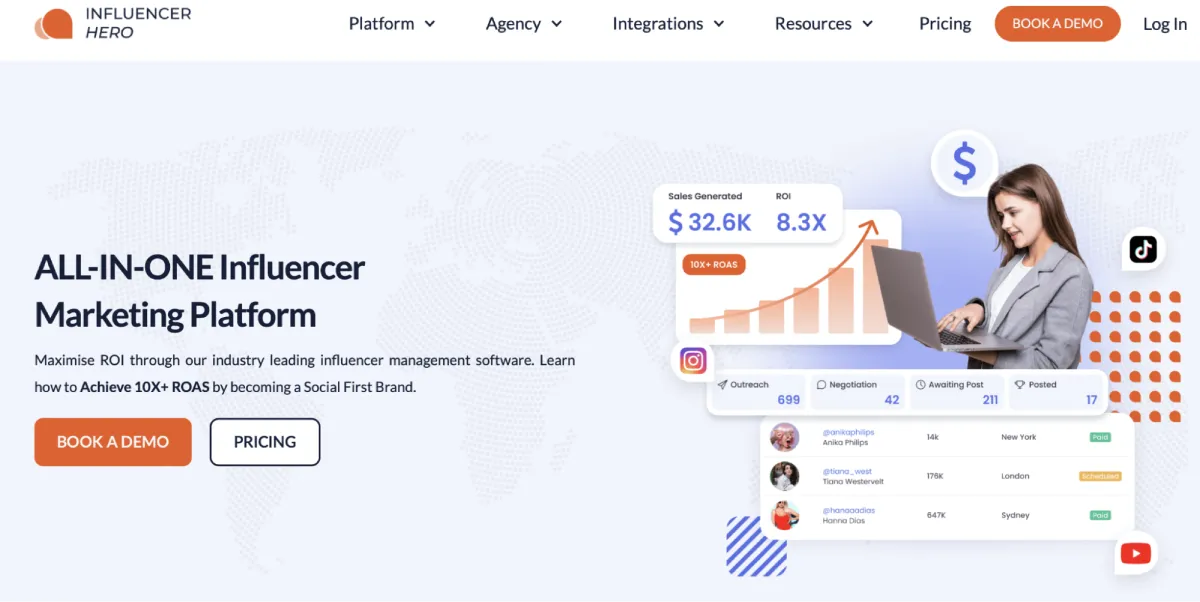
Influencer Hero competes with Upfluence at every level – but with a fundamentally different approach. Where Upfluence requires you to commit $24,000+ annually before testing the platform, Influencer Hero offers month-to-month plans starting at $649. Where Upfluence gives you 12M profiles to manually filter, Influencer Hero provides 450M+ creators across 8 platforms with AI-powered recommendations. It’s a true all-in-one system: discovery, outreach, CRM, product gifting, UGC collection, affiliate tracking, analytics, and creator storefronts – all native, no add-ons.
Best for: Brands that want Upfluence-level (or better) capabilities in a single platform with flexible pricing, a larger database, and AI automation that reduces manual work.
Pricing:
- Standard: $649/month (1 seat, up to 1,000 creators, 1,000 outreach/mo)
- Pro: $1,049/month (3 seats, up to 5,000 creators, 5,000 outreach/mo)
- Business: $2,490/month (8 seats, up to 10,000 creators, 10,000 outreach/mo)
- Custom & Agency plans available with unlimited outreach
Standout features:
- 450M+ Creator Database: Covers Instagram, TikTok, YouTube, Pinterest, Snapchat, Twitch, and X – roughly 37x the size of Upfluence’s database.
- AI-Powered Outreach: Automated drip campaigns with AI-personalized first lines achieve a 43% average response rate. Replaces manual outreach with a system that scales.
- Full CRM With Automation: Campaign boards, deal pages, conversation history, and rules-based triggers that auto-generate discount codes and advance creators through pipeline stages.
- Native eCommerce Integrations: Shopify, WooCommerce, Magento, BigCommerce, and Prestashop for product gifting, affiliate tracking, and revenue attribution per creator.
- Creator Storefronts: Influencers add your products to personal storefronts with automatic affiliate commissions – brands report up to 8x higher ROI.
- Fraud Detection: Audience authenticity analysis identifies fake followers and suspicious engagement before you invest.
The platform’s breadth means teams completely new to influencer software may need a short onboarding period. Brands running very few campaigns per year may not use every feature, though the all-in-one design means you won’t outgrow it.
2. GRIN
GRIN is an enterprise-grade all-in-one platform designed primarily for eCommerce and DTC brands. It offers unlimited creator partnerships, native Shopify integrations, and a comprehensive UGC library. For brands with established influencer programs and the budget to match, GRIN delivers deep functionality.
Best for: Mid-market to enterprise eCommerce brands with established influencer programs and dedicated headcount to manage the platform.
Pricing:
- Custom; typical entry tier starts around $2,500/month
- 12-month minimum commitment
- Annual cost typically $25,000+/year
Standout features:
- Unlimited Creator Partnerships: No caps on the number of influencers, making it suited for high-volume seeding campaigns.
- AI Discovery (Gia): Intelligent assistant for finding and evaluating creators based on brand criteria.
- Creator Portals: Private dashboards where influencers view briefs, submit content, and track commissions.
- Automatic Media Rights: Content reuse rights built into the booking process – no separate licensing negotiations.
- UGC Library: Searchable content library including Stories for repurposing across paid and owned channels.
GRIN’s $25,000+ annual commitment and 12-month lock-in mirror Upfluence’s contract structure – you’re trading one long-term commitment for another. The search can feel rigid, and the interface is occasionally sluggish. Brands that want similar all-in-one CRM depth with more pricing flexibility and a larger database have other options to consider.
3. Meltwater
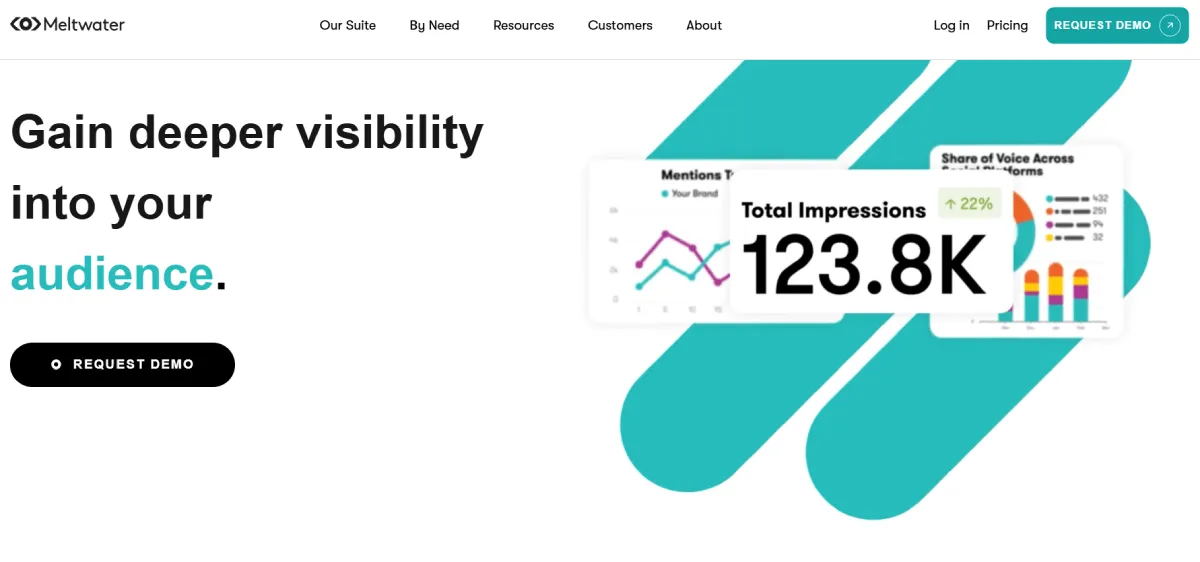
Meltwater’s Klear module brings influencer marketing into a broader media intelligence ecosystem. It combines creator discovery with PR monitoring, social listening, and reputation tracking – making it a natural fit for corporate communications teams that view influencer activity as one piece of a larger brand narrative.
Best for: Enterprise brands and agencies that need influencer marketing tightly connected to PR, media monitoring, and social listening.
Pricing:
- Klear plans start around $33,100/year (discounted)
- Standard pricing can reach $50,000+ annually
Standout features:
- True Reach Technology: AI estimates real audience reach beyond follower counts – cuts through vanity metrics.
- Visual AI Search: Find creators by analyzing visual content themes rather than just text keywords.
- Audience Sentiment Analysis: Monitor how audiences respond to your brand in influencer comment sections.
- Integrated Chat & Payments: Communicate with and pay creators directly through in-platform HR and payroll system integration.
- Cross-Channel Reporting: Combine influencer data with media intelligence for unified brand health reporting.
Meltwater’s 30M influencer database is dramatically smaller than dedicated influencer platforms with 200M-450M+ profiles. The platform excels at media intelligence but doesn’t offer AI-powered outreach automation, CRM workflows, or eCommerce gifting integrations. At $33,000-$50,000+/year, you’re paying enterprise rates for a platform that covers measurement well but leaves significant workflow gaps.
4. Modash
Modash combines one of the largest public creator databases with Shopify-native workflows for gifting, affiliates, and outreach. Its accessible pricing and visual discovery tools make it a strong mid-market contender for eCommerce brands.
Best for: Shopify-based eCommerce brands that want strong discovery and affiliate tools at an accessible monthly price.
Pricing:
- Essentials: $199/month
- Performance: $499/month
- Enterprise: Custom (annual billing)
Standout features:
- 350M+ Public Creator Database: Non-opt-in profiles across major platforms – one of the widest discovery nets available.
- AI Visual Discovery: Upload a product image or describe a “vibe” to find creators with matching aesthetics.
- Shopify-Native Gifting & Affiliates: Automated discount codes, UTM tracking, and product selection from your catalog.
- Built-In Outreach & CRM: Bulk email with Gmail/Outlook sync and relationship tracking in one place.
- Automated Affiliate Payouts: Monthly commission tracking and creator payments handled in-platform.
Modash’s deep integrations only work with Shopify – a dealbreaker for brands on WooCommerce, Magento, or BigCommerce. It also lacks native content licensing and whitelisted ad tools. Brands needing broader eCommerce support and deeper CRM automation with AI-powered outreach may find more complete options available.
5. Aspire
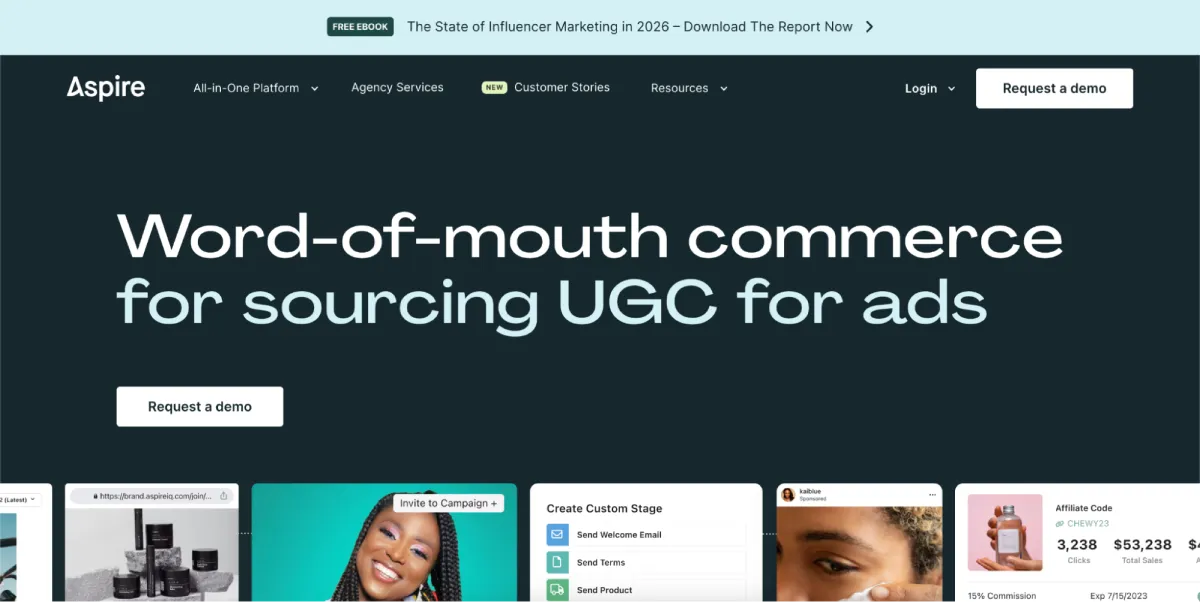
Aspire takes a workflow-driven approach with an inbound creator marketplace where over a million creators actively apply to brand campaigns. Combined with first-party social data from Meta, TikTok, and Pinterest, it reduces the cold outreach burden for brands with enough recognition to attract applicants.
Best for: Mid-market brands with enough recognition to attract inbound creator applications. Well-suited for teams that want structured workflows and hands-on support.
Pricing:
- Custom; mid-tier packages quoted around $2,300/month
Standout features:
- Inbound Creator Marketplace: 1M+ creators actively applying to campaigns, reducing cold outreach workload.
- First-Party Social Data: Direct API integrations with Meta, TikTok, and Pinterest for reliable audience data.
- End-to-End Workflow: Discovery, contracts, content approvals, and performance tracking in a structured pipeline.
- Shopify Fulfillment: Creators select products from your Shopify catalog for seeding campaigns.
- Dedicated Support: Onboarding and ongoing strategic guidance included.
Custom pricing at ~$2,300/month limits budget transparency. The inbound marketplace delivers best for brands with existing awareness – lesser-known brands will still rely heavily on outbound, where Aspire’s tools are less differentiated than platforms with AI-powered outreach and larger databases.
6. HypeAuditor
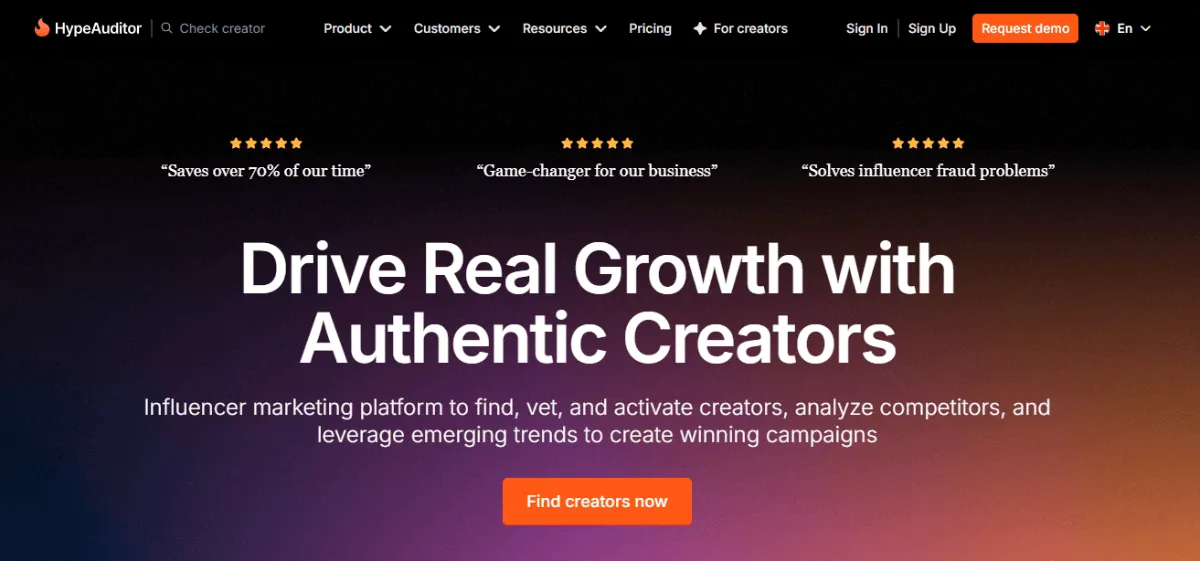
HypeAuditor is the industry benchmark for fake follower detection and influencer auditing. Its analytics depth makes it a strong choice for brands where audience authenticity is the top priority and every partnership needs data validation before budget is committed.
Best for: Data-driven brands that prioritize audience quality verification and want to minimize wasted spend on inflated followings.
Pricing:
- Business plans start around $10,000/year
- Enterprise plans up to $60,000/year
Standout features:
- Advanced Fraud Detection: Industry-leading audience authenticity analysis, engagement quality scoring, and follower growth pattern detection.
- AI Discovery & Lookalike Search: Reads captions and analyzes images to find creators similar to your best performers.
- Social Listening: Track hashtags, mentions, and competitor activity to find organic brand advocates.
- Shopify Revenue Attribution: Connect sales data to see revenue generated per creator through affiliate links.
- Creator Application Pages: Custom landing pages for creator recruitment and content review management.
HypeAuditor excels at analytics but isn’t an end-to-end campaign management platform. It lacks CRM automation, AI-powered outreach, and product gifting workflows. Teams looking for a single platform to handle the full influencer lifecycle – from discovery through payment – will need to pair HypeAuditor with additional tools, adding cost and complexity.
7. Traackr
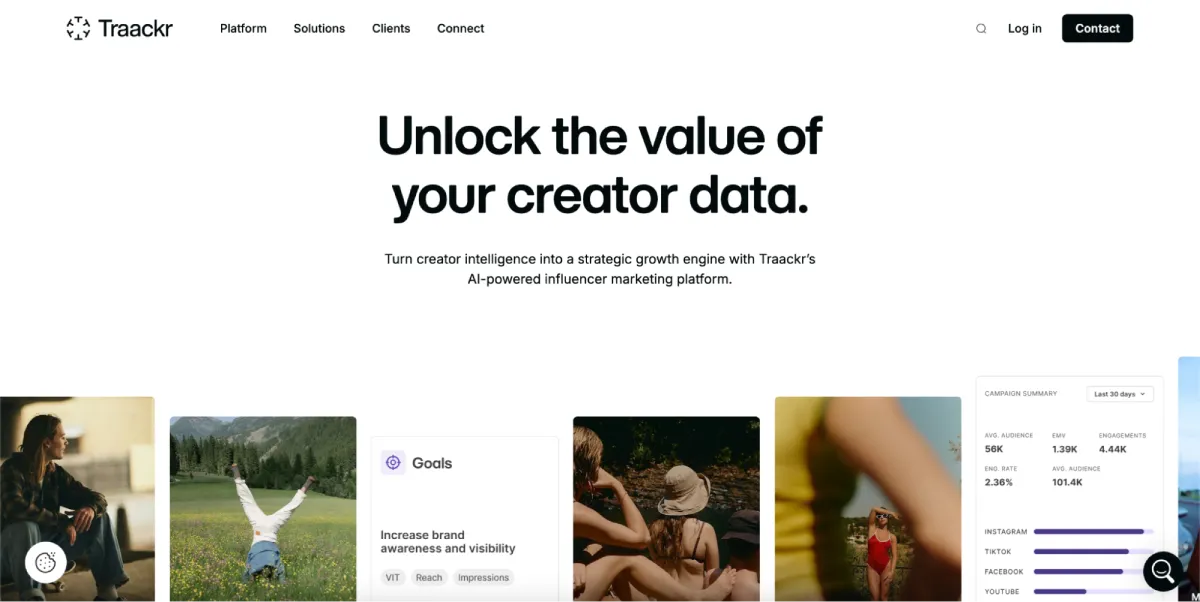
Traackr is built for performance benchmarking and spend optimization. Its proprietary Brand Vitality Score and advanced ROI reporting make it the go-to for enterprise teams that need to justify influencer investments to senior leadership with hard data.
Best for: Enterprise brands and agencies focused on performance measurement, spend optimization, and executive-level reporting.
Pricing:
- Starts at approximately $32,500/year
Standout features:
- Brand Vitality Score (BVS): Proprietary metric quantifying brand visibility, trust, and influence across creator partnerships.
- Advanced Performance Reporting: CPC, CPE, CPV, and ROI tracking with historical benchmarking across campaigns.
- Product Gifting Workflows: Correlate product delivery timelines with content creation outcomes.
- Exportable Executive Reports: Presentation-ready outputs for board meetings and budget reviews.
- Spend Optimization: Identify which creator tiers and content formats deliver the best return per dollar.
Traackr measures performance but doesn’t manage campaign execution. No AI-powered outreach, no CRM automation, no eCommerce gifting integrations. Brands that need both measurement and execution often find that all-in-one platforms like Influencer Hero deliver built-in analytics alongside the full workflow – without maintaining a separate measurement subscription.
8. Later
Later expanded from social media scheduling into influencer marketing, bringing creator collaboration into its content planning workflow. For brands already using Later for organic social, the integration keeps influencer and brand content coordinated in one calendar.
Best for: Social-first brands already using Later for content scheduling that want to add influencer campaigns without a separate platform.
Pricing:
- Self-serve influencer marketing plans start at approximately $28,500/year
- Pro and full-service options can reach $50,000-$60,000/year
Standout features:
- 15M Contactable Creators: All with verified email addresses for direct outreach.
- Integrated Social + Influencer Planning: Coordinate influencer content alongside organic posts in one calendar.
- Creator Application Pages: Custom landing pages to attract and screen interested creators.
- Shopify Gifting & Discounts: One-time discount codes and product seeding with inventory tracking.
- Brand Safety Tools: AI scanning flags potential red flags in creator content history.
Later’s influencer plans start at $28,500/year – comparable to Upfluence’s pricing but without the same depth of CRM and outreach automation. Entry-level features overlap with cheaper platforms. The differentiated value (managed services, advanced analytics) requires $50,000+ tiers.
9. Storyclash
Storyclash specializes in content performance intelligence and competitive benchmarking. Its AI-driven discovery analyzes actual content – including expired Stories – to help brands find creators based on what they produce, not just who follows them.
Best for: Brands that prioritize content-level data and competitive intelligence when selecting creators.
Pricing:
- Business plan starts at $870/month
- Enterprise plans available
Standout features:
- AI-Driven Discovery: Image recognition, AI prompts, and lookalike search find creators by content style.
- 183M Creator Database: Instagram, TikTok, and YouTube with deep content-level indexing.
- Historical Data: Access expired Stories and past content to evaluate a creator’s full body of work.
- Competitive Benchmarking: See which creators your competitors hire and how those partnerships perform.
- Shopify Integration: ROAS, CAC, and AOV tracking tied directly to influencer activity.
Storyclash is a research and intelligence tool, not a full campaign management platform. No built-in contract generation, licensing workflows, or automated outreach. Managing the end-to-end influencer lifecycle requires pairing it with additional tools.
10. Heepsy
Heepsy offers the lowest financial barrier to entry on this list – a free plan and paid tiers starting under $100/month. For teams testing influencer marketing for the first time or working with limited budgets, it provides the basics without a major commitment.
Best for: Early-stage brands and budget-conscious teams that need basic discovery and outreach tools to get started with influencer marketing.
Pricing:
- Free plan available
- Starter: $89/month
- Plus: $249/month
- Advanced: $369/month (required for Shopify sales tracking)
Standout features:
- 50M+ Influencer Database: Strong US and Europe coverage for finding creators in primary Western markets.
- Authenticity Filters: Fake follower detection and audience quality scoring before you commit budget.
- Kanban-Style CRM: Visual pipeline for tracking creators through campaign stages.
- Bulk Email Outreach: Up to 3,000 emails/month with follow-up sequences.
- Shopify & WooCommerce Tracking: Affiliate link and discount code tracking on Advanced plans.
Heepsy’s most valuable features – eCommerce sales tracking, affiliate management – are locked behind higher-priced plans. Outreach lacks AI personalization, meaning more manual effort as your creator roster grows. Brands that outgrow Heepsy typically graduate to an all-in-one platform with AI-powered outreach and deeper CRM automation.
11. Saral
SARAL is an AI-powered influencer marketing platform built specifically for e-commerce brands that want to turn creator programs into a measurable revenue channel. Where Upfluence requires a $24,000+ annual commitment with limited pricing flexibility, SARAL offers quarterly billing. Its AI assistant SIA (SARAL Influencer Assistant) automates discovery, personalized outreach, and follow-up sequences, while native Shopify and WooCommerce integrations connect every creator partnership directly to sales data.
Best for: DTC and e-commerce brands running mid-to-high volume influencer programs that need AI-powered automation, revenue attribution, and strategic support.
Pricing:
Starter: $3,600/quarter
Growth: $5,400/quarter
Pro: $8,100/quarter
Standout features:
* SIA Influencer Assistant: AI handles creator discovery through lookalike matching based on performance patterns, writes personalized outreach emails, manages automated follow-up sequences, and tracks shipments — reducing manual admin significantly.
* Real-Time Revenue Attribution: Track direct revenue, ROAS, and blended CAC impact per creator, connecting influencer activity to business outcomes leadership can act on.
* Complete Relationship CRM: Centralize creator interactions, performance history, contracts, and communication in one system, making it easy to identify top performers and build long-term partnerships.
* Native Shopify & WooCommerce Integration: Automate gifting workflows, generate affiliate links and discount codes, and attribute sales to specific creators in real time, covering both major e-commerce platforms where competitors like Modash only support Shopify.
* Strategic Support Included: Personalized onboarding within 24-48 hours and monthly strategy sessions help brands structure programs and scale creator marketing from experimental to predictable.
SARAL’s platform coverage is limited to Instagram, TikTok, and YouTube, brands running campaigns on Pinterest, Snapchat, or Twitch will need a different solution. No free trial is available; brands access the platform through a demo.
Final Thoughts
Comparing Upfluence competitors side by side reveals clear trade-offs across three dimensions: workflow coverage, data depth, and pricing structure.
- Full workflow platforms like Influencer Hero and GRIN handle discovery through payment in one system. The key differentiator between them is pricing flexibility – Influencer Hero offers monthly plans starting at $649, while GRIN requires $25,000+ annually.
- Analytics and measurement platforms like HypeAuditor and Traackr deliver deep data but need to be paired with execution tools. This adds operational overhead and cost.
- Ecosystem add-ons like Meltwater and Later layer influencer features onto existing platforms. They work well if you’re already in those ecosystems but rarely match the depth of dedicated influencer tools.
- Accessible entry points like Heepsy and Modash let you start small, though you’ll likely need to upgrade as your program scales beyond basic discovery and outreach.
Many influencer marketing agencies use these platforms to manage campaigns at scale for their clients. If you’re not ready to commit to building a full in-house operation, partnering with an agency that already has the tools and processes in place can deliver results while you evaluate the right long-term platform.
The most important comparison point isn’t features or price in isolation – it’s whether a platform can deliver measurable results relative to what you’re paying. Start by defining what “success” looks like for your influencer program, then match that to the platform that delivers it most efficiently.
FAQs
1. Which Upfluence competitor offers the best value for money?
It depends on your program size. For brands that need a complete all-in-one platform, Influencer Hero offers the widest feature set starting at $649/month with no annual lock-in. For teams just getting started, Heepsy’s free plan and Modash’s $199/month entry point provide affordable starting points with room to grow.
2. How does Upfluence’s database compare to competitors?
Upfluence indexes 12M+ influencer profiles. By comparison, Influencer Hero covers 450M+, Modash has 350M+, and Storyclash offers 183M. The database gap means Upfluence users often struggle to find niche creators that align with their specific audience.
3. Which competitors offer monthly pricing instead of annual contracts?
Influencer Hero, Modash, and Heepsy all offer month-to-month plans. Most enterprise platforms – GRIN, Meltwater, Traackr, and Later’s influencer plans – require annual commitments, similar to Upfluence.
4. Can analytics tools like HypeAuditor replace Upfluence entirely?
Not typically. HypeAuditor and Traackr excel at data and measurement but lack campaign execution features like CRM automation, AI outreach, and product gifting. Most teams pair them with an execution platform, which adds cost. An all-in-one platform with built-in analytics is usually more efficient.
5. What features should I prioritize when switching from Upfluence?
Focus on three areas: (1) database size and discovery quality – look for 200M+ profiles with advanced filtering; (2) workflow automation – AI outreach, CRM triggers, and eCommerce integrations save significant time; (3) pricing transparency – avoid trading one opaque annual contract for another.
6. How long does it take to migrate from Upfluence to a competitor?
Most platforms support CSV imports for existing creator lists, so your relationship data can transfer in hours. The bigger factor is learning the new interface – platforms with intuitive UX and onboarding support can have you running campaigns within the first week.
Keywords: Upfluence competitors, Upfluence vs Influencer Hero, influencer marketing platform comparison, Upfluence alternative pricing, best influencer marketing software 2026, influencer CRM comparison, Upfluence features comparison


Leave a Reply