

Top Ahrefs API Alternatives: Analysis of Search Data Retrieval Systems and Professional API Options for SEO Performance
Finding a reliable data source for organic search metrics is often a matter of balancing budget against the depth of a specific index. Ahrefs provides a massive proprietary database but many teams find the current credit system and enterprise pricing tiers too restrictive for custom internal tools. Professionals seeking Ahrefs API alternatives usually look for options that allow higher request volumes without the overhead of a graphical interface they might not use.
The most effective choices fall into two groups: all-in-one software suites that offer programmatic access and dedicated search results scrapers that provide raw JSON data. SE Ranking and Moz provide modeled data, while Zenserp, Scale SERP, SearchApi, and Serper.dev focus on real-time extraction. Honestly, the choice often depends on whether you need a ready-to-use metric or the raw ingredients to build your own.
What Is The Best Ahrefs API Competitor?
SE Ranking API is a top Ahrefs API alternative. Designed for efficiency, the SE Ranking API offers a clean and developer-friendly interface for accessing SEO data. It covers core functionalities without overwhelming users with unnecessary layers. Compared to other APIs in the space, it strikes a solid balance between capability, speed, and ease of implementation.
Comparison Table of Ahrefs API Competitors
The market for high-volume search data is divided by user intent and technical capability:
- Agencies that need a direct substitute for the Ahrefs dashboard with lower costs should consider SE Ranking, which covers about 90% of the same features for half the price.
- Developers building fast applications or AI agents usually choose Serper.dev or Zenserp due to their under-2-second response times and credit-based pricing models.
- SearchApi stands out for its legal protection and multi-engine support, while Scale SERP is built for high-volume batch processing.
- Moz remains the standard for teams that strictly require Domain Authority and Page Authority for link audits.
If you want the cheapest raw data, Serper.dev or DataForSEO often win, but if you need a specific Ahrefs API alternative that provides an all-in-one dashboard, SE Ranking is the best choice.
| Provider | Data Focus | Best Use Case | Starting Cost | Standout Feature |
| SE Ranking API | Broad SEO Metrics | Agencies and SMBs | $318/mo for API (24M credits/year) | AI Overview Tracking |
| Zenserp | Real-time SERP | Fast Prototyping | $49/mo | Unlimited Concurrency |
| Scale SERP | High-volume Scrapes | Batch Data Jobs | $66/mo | Pay-for-Success |
| SearchApi | AI-Ready JSON | RAG/LLM Grounding | $40/mo | $2M Legal Shield |
| Moz API | Link Authority | Outreach/Audits | $20/mo | DA/PA/Spam Score |
| Serper.dev | Speed/Price | Budget Developers | $50 (Batch) | 1-2s Response Time |
SE Ranking API
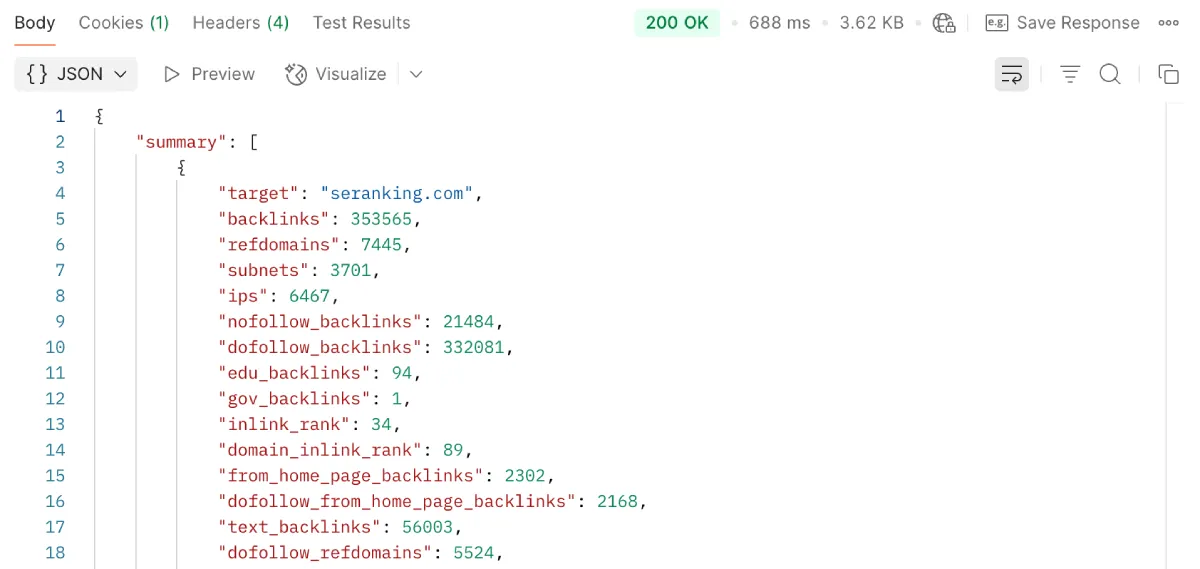
Teams looking for Ahrefs API alternatives frequently land on SE Ranking because it mirrors the traditional workflow of keyword research, site audits, and rank tracking. It functions as a complete hub for data visualization while also offering programmatic access for those who need to pipe metrics into custom reports. The pricing is structured to support growing agencies that find the enterprise costs of other platforms prohibitive. According to our analysts, it delivers a professional experience at about 40 to 60% lower cost than the big-name suites.
What are the key features of SE Ranking API?
- Daily rank tracking across Google, Bing, and YouTube with separate data for mobile and desktop.
- AI Results Tracker that monitors mentions and citations in Google’s AI Overviews.
- Broad keyword research database with difficulty scores and search volume metrics.
- Technical website audit tool that identifies broken links and schema markup errors.
- Backlink monitoring and analysis to track domain strength and referring links.
- Agency Pack add-on that enables white-label reporting and custom client seats.
- Local marketing module for managing Google Business Profiles and local rankings.
- Content marketing platform with AI writing assistance and NLP optimization suggestions.
- Competitive research tools that show historical traffic and keyword data for rivals.
- API access for Growth tier users with 100,000 monthly credits.
What are the pros and cons of SE Ranking API?
Pros:
- Saves over $1,200 annually compared to Ahrefs or Semrush while keeping similar features.
- Clean user interface that is easy for beginners to use without long training periods.
- Flexible tracking settings like every-3-days or weekly updates that provide up to 40% discounts.
- Includes specialized tracking for AI Overviews which many competitors still lack.
- White-label reports are professional and require very little setup for agency use.
Cons:
- The platform can feel slow when running audits on very large sites over 100,000 pages.
- Basic plans restrict white-labeling, forcing agencies toward the Business tier.
What is the pricing of the SE Ranking API?
- SE Ranking API: from $318.00/mo on annual billing only for analyzing 24M backlinks / 240K domains / 30K AI Search queries & more.
- API Access Add-on: $149.00 per month for 1 million credits.
- Core Plan: $103.20/month on annual billing for 2,000 keywords and 10 projects.
- Growth Plan: $223.20/month on annual billing for 5,000 keywords and 30 projects.
- Agency Pack: A $69/month add-on for white-labeling and automated reporting.
- Content Marketing: Add-on starting at $23.20/month for AI content generation tools.
SE Ranking provides two distinct APIs: the Data API, which uses a pay‑as‑you‑go credit system for raw data retrieval, and the Project API, which uses your subscription limits for project management functionality.
Zenserp
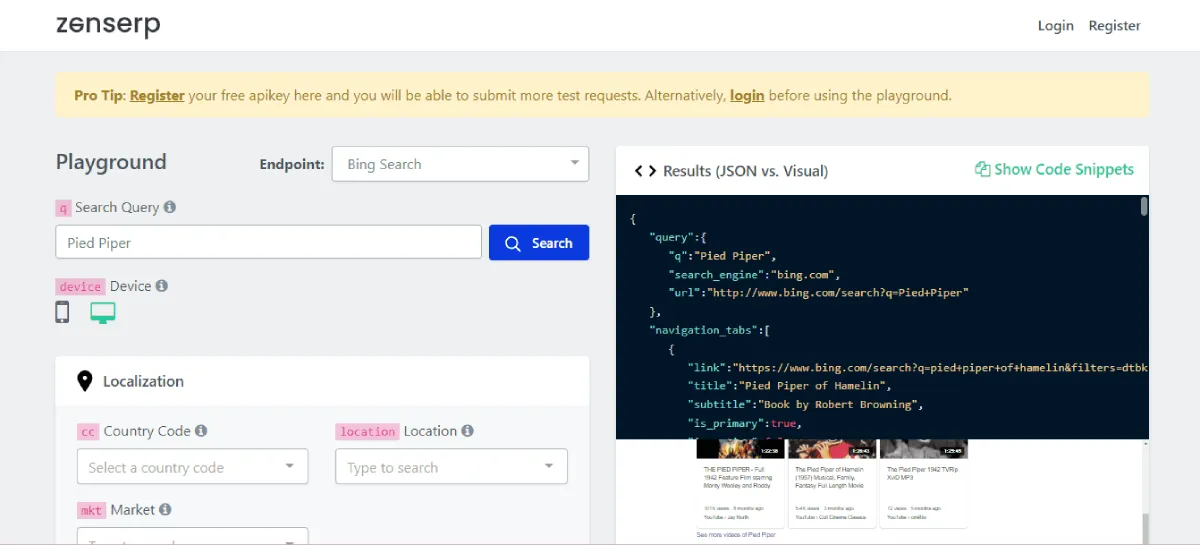
When developers need a fast and reliable Ahrefs API alternative to feed raw search data into a custom app, Zenserp is often the first choice. It is a dedicated scraping tool that manages the heavy lifting of proxy rotation and bot detection. Unlike the bulky dashboards of all-in-one tools, it returns structured JSON in real-time. This is useful for teams building their own tools where speed and geolocated accuracy matter most.
What are the key features of Zenserp?
- Real-time Google search results without any reliance on cached or old data.
- Support for multiple search engines including Bing, YouTube, and Google Shopping.
- Coordinate-level geo-targeting for seeing hyper-local results in specific neighborhoods.
- Automatic CAPTCHA solving and IP rotation to prevent blocks and bans.
- Complete coverage of search snippets like knowledge graphs, news, and image results.
- Interactive request builder that converts search settings into ready-to-use code for any language.
- Unlimited concurrency on all paid plans, allowing as many simultaneous requests as needed.
- Structured data output in JSON format for easy ingestion into databases or AI models.
- Batch endpoint for processing large lists of keywords in a single job.
- Custom queue options on higher tiers for prioritizing critical data retrieval.
What are the pros and cons of Zenserp?
Pros:
- One of the fastest response times available, usually under 3 seconds per query.
- Very simple to integrate into existing tech stacks with clear documentation.
- The free tier allows for 50 requests per month without a credit card.
- No hidden costs for proxies or JavaScript rendering as they are included in the price.
- Reliable infrastructure that scales effortlessly for high-volume enterprise needs.
Cons:
- No built-in SEO analytics or dashboards for non-technical users.
- Does not provide backlink data or deep keyword research metrics like difficulty.
- Advanced support and faster queues are locked behind the more expensive plans.
- Credits on most plans expire and do not roll over to the next month.
What is the pricing of Zenserp?
- Free Plan: 50 API requests per month at no cost.
- Small Plan: $49.99/month for 25,000 searches.
- Medium Plan: $149.99/month for 100,000 searches with personal support.
- Large Plan: $299.99/month for 250,000 searches including a service level agreement.
- Premium Plan: $499/month for 500,000 searches and custom queue access.
- Enterprise: $899/month for 1,000,000 searches.
Scale SERP
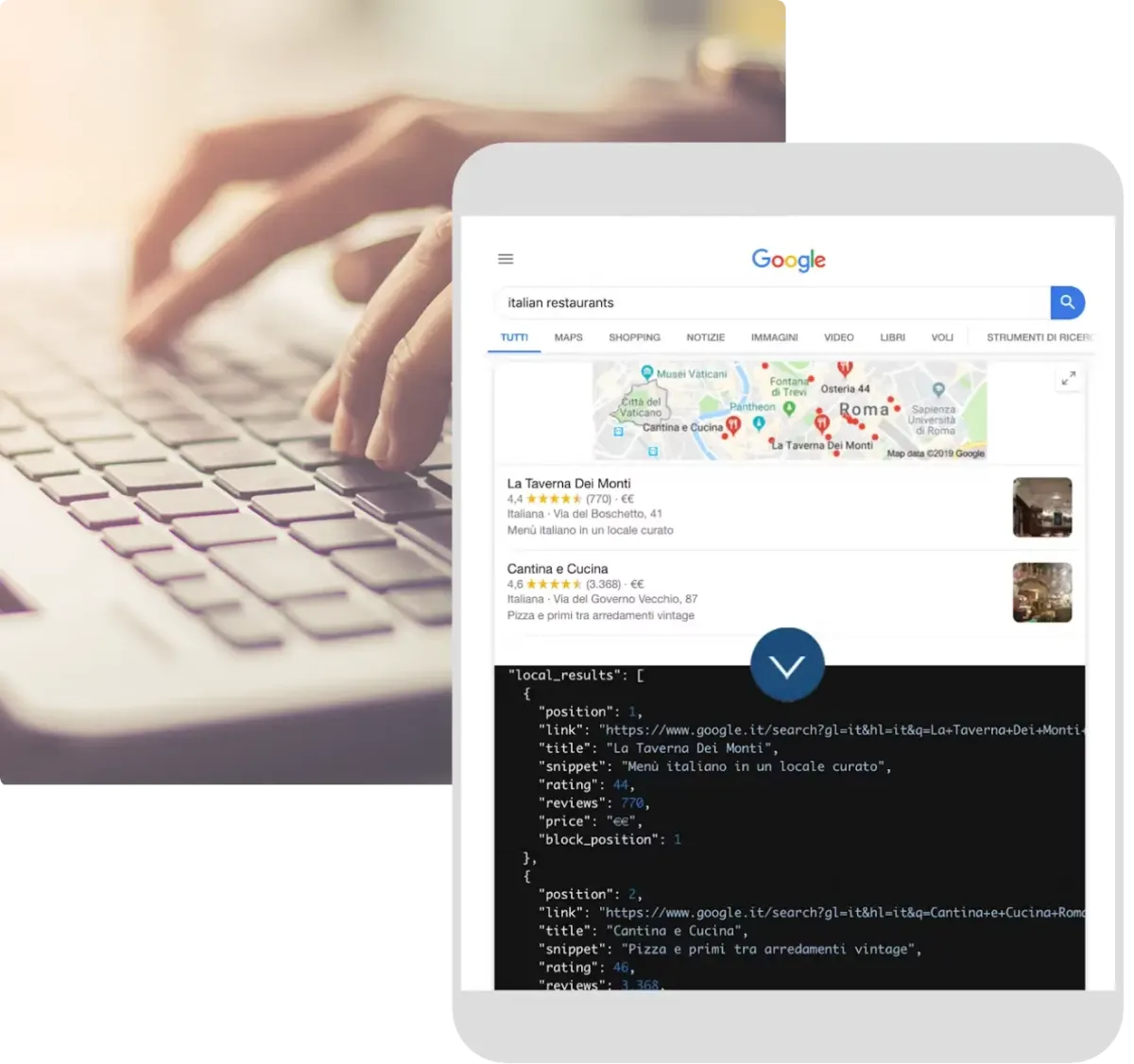
Organizations that need to pull massive amounts of search data without a high monthly overhead often see Scale SERP as a strong Ahrefs API alternative. It is built by Traject Data to offer high-volume batch processing with a “pay-for-success” model. This means you are only charged for searches that return data, making it very budget-friendly for large research projects. It skips the fancy features of larger tools to focus on providing the lowest cost per successful request.
What are the key features of Scale SERP?
- Real-time Google search data collection with no waiting for cached results.
- Batching system that allows up to 15,000 searches to be queued and scheduled.
- Database access to over 1.5 billion historical search results dating back to 2020.
- Support for all major Google search types including images, news, and maps.
- Automatic handling of CAPTCHAs and proxy rotation to ensure high success rates.
- Flexible output formats including JSON, CSV, and raw HTML for various workflows.
- High throughput architecture capable of millions of requests per hour.
- Enterprise-grade reliability with dedicated account managers for large accounts.
- Search analytics dashboard to monitor usage and success rates across projects.
- Coordinate-level geolocation to track rankings from any point on earth.
What are the pros and cons of Scale SERP?
Pros:
- Highly cost-effective at scale with annual plans offering significant discounts.
- Only successful searches count toward your limit, saving money on failed attempts.
- The free tier provides 125 searches per month without requiring a credit card.
- Upgrading plans mid-cycle is seamless and applies unused credits to the new plan.
- Great for exporting data into Excel-friendly CSVs for client reporting.
Cons:
- No phone support or custom software development consulting provided.
- Live results can take up to 20 seconds to load if the system is under high load.
- Documentation lacks some of the deep technical examples found on other platforms.
- Requires a technical team to integrate the raw data into a usable format.
What is the pricing of Scale SERP?
- 10,000 Searches: $66/month on annual billing with overages at $0.0118 each.
- 50,000 Searches: $159/month on annual billing with overages at $0.00796 each.
- 250,000 Searches: $479/month on annual billing with overages at $0.004792 each.
SearchApi
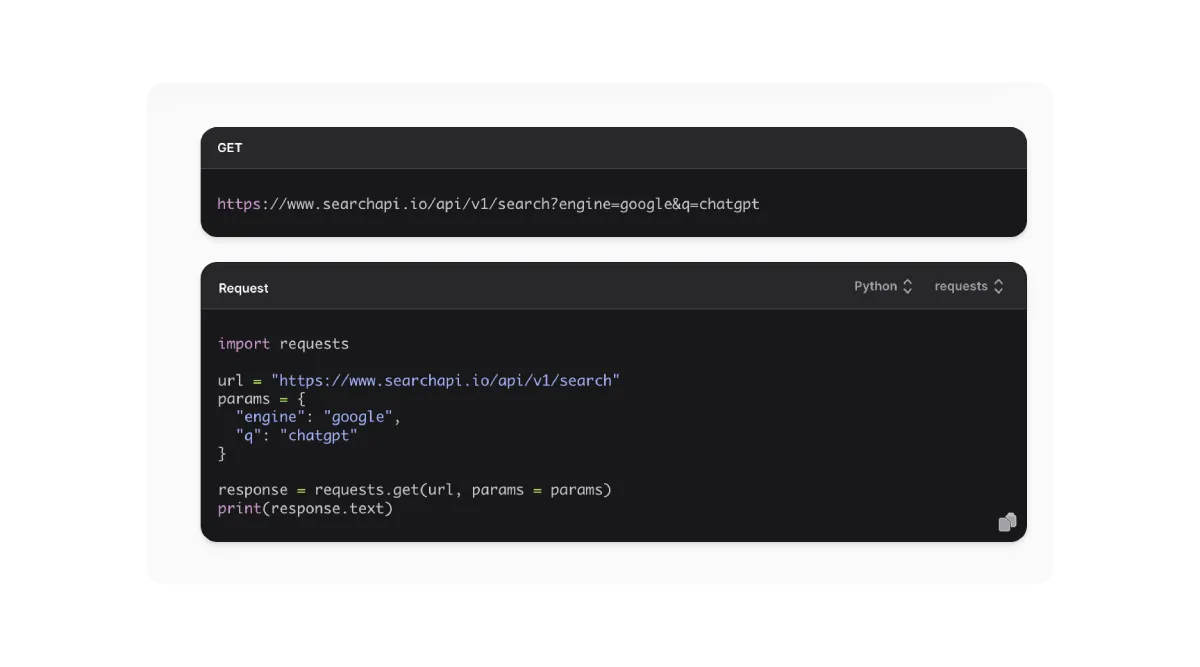
For teams building AI-powered applications or grounding large language models in fresh web data, SearchApi is an excellent alternative to Ahrefs API. It provides a highly reliable infrastructure that is trusted by companies like Anthropic. One of its standout selling points is a legal protection guarantee, which is a key requirement for many corporate legal teams. It focuses on high success rates and easy integration with modern AI frameworks like LangChain.
What are the key features of SearchApi?
- Real-time search data from over 20 search engines, including Baidu and Yandex.
- Advanced extraction of AI Overviews, Answer Boxes, and “People Also Ask” snippets.
- Native integrations with AI development tools like LangChain, n8n, and Haystack.
- Legal Protection Guarantee of up to $2 million for enterprise-level users.
- Coordinate-level geo-targeting in 195 countries for high-precision local tracking.
- Pay-per-success billing where only successful requests consume credits.
- Specialized scrapers for Google Shopping, Flights, Hotels, and Scholarly articles.
- Social media profile extraction for platforms like Reddit, TikTok, and Instagram.
- Ad transparency data from the Google Ads Transparency Center.
- High-performance proxy network with over 100 million global IP addresses.
What are the pros and cons of SearchApi?
Pros:
- Extremely high reliability with a 99.9% success rate guarantee.
- Fast response times, often delivering full JSON results in under 2 seconds.
- The 100 free requests for testing do not require a credit card.
- Excellent documentation that makes integration simple for developers.
- Provides specialized data like DMCA messages and ad advertiser information.
Cons:
- Mid-range pricing that is not the absolute cheapest for high-volume batch jobs.
- Some plans have rate limits that can restrict throughput for large teams.
- Does not offer a built-in dashboard for rank visualization or site audits.
- Focus is on real-time data, so historical search data access is limited.
What is the pricing of SearchApi?
- Free Trial: 100 searches available for testing upon signup.
- Developer Plan: $40/month for 10,000 searches, roughly $4 per 1,000 calls.
- Production Plan: $100/month for 35,000 searches, including a 99.9% SLA.
- BigData Plan: $250/month for 100,000 searches with priority throughput.
- Scale Plan: $500/month for 250,000 searches and an analytics dashboard.
- Octo 1M Plan: $1,500/month for one million searches at $1.50 per 1,000 calls.
Moz API
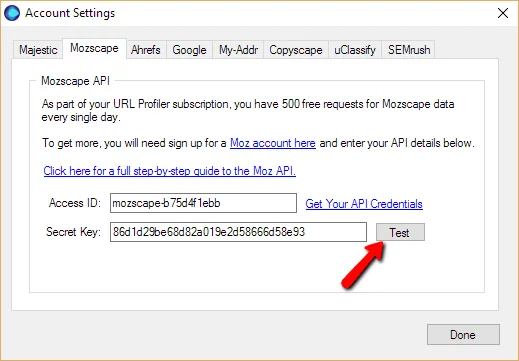
Professionals who need a specific alternative to Ahrefs API for link building and domain analysis often choose Moz. The platform is the source of Domain Authority (DA) and Page Authority (PA), which are common metrics used to judge the quality of a link prospect. While Ahrefs has a larger index, Moz is highly respected for its spam score data and search intent classification. Its API is built to be flexible and cost-effective for those who need authority metrics without a full suite subscription.
What are the key features of Moz API?
- Access to Domain Authority and Page Authority scores for competitive auditing.
- Spam Score metrics to identify potentially harmful or low-quality websites.
- Search Intent grouping that labels keywords as informational, commercial, or transactional.
- Brand Authority™ metric that measures a brand’s footprint across search results.
- Ranking Keywords endpoint that shows the top 50 terms for any domain or URL.
- Link Metrics for analyzing backlink profiles, referring domains, and link status.
- Keyword metrics including monthly search volume, organic CTR, and difficulty.
- Final Redirect endpoint for auditing site migrations and tracking link health.
- AI Search tracking to monitor visibility in new generative search environments.
- Keyword suggestions for expanding content strategies based on seed terms.
What are the pros and cons of Moz API?
Pros:
- Industry-standard metrics like DA and PA are easily understood by clients.
- The entry-level pricing of $20 per month is very accessible for small teams.
- Provides deep insight into the “why” of search through intent classification.
- Regular updates to the link index keep the data reliable for link building campaigns.
- The V2 API is significantly faster and more capable than the previous version.
Cons:
- The backlink index is smaller than Ahrefs, meaning some newer links might be missed.
- Free access is extremely limited, with a rate of only one request every 10 seconds.
- Overage costs can be high if you exceed your monthly row allocation.
- Requires a paid subscription to access more than the most basic link metrics.
What is the pricing of the Moz API?
- Free Tier: 50 rows per month with a restrictive rate limit.
- Starter Plan: From $20/month for 3,000 rows to $75/month for 15,000 rows.
- Growth Plan: From $125/month for 50,000 rows to $500/month for 500,000 rows.
- Advanced Plan: $2,000/month for 4 million rows, ideal for custom tool builders.
- Enterprise Plan: $10,000/month for 40 million rows for commercial products.
- Overage Fees: Ranging from $3.50 to $25 per 10,000 additional rows.
Serper.dev
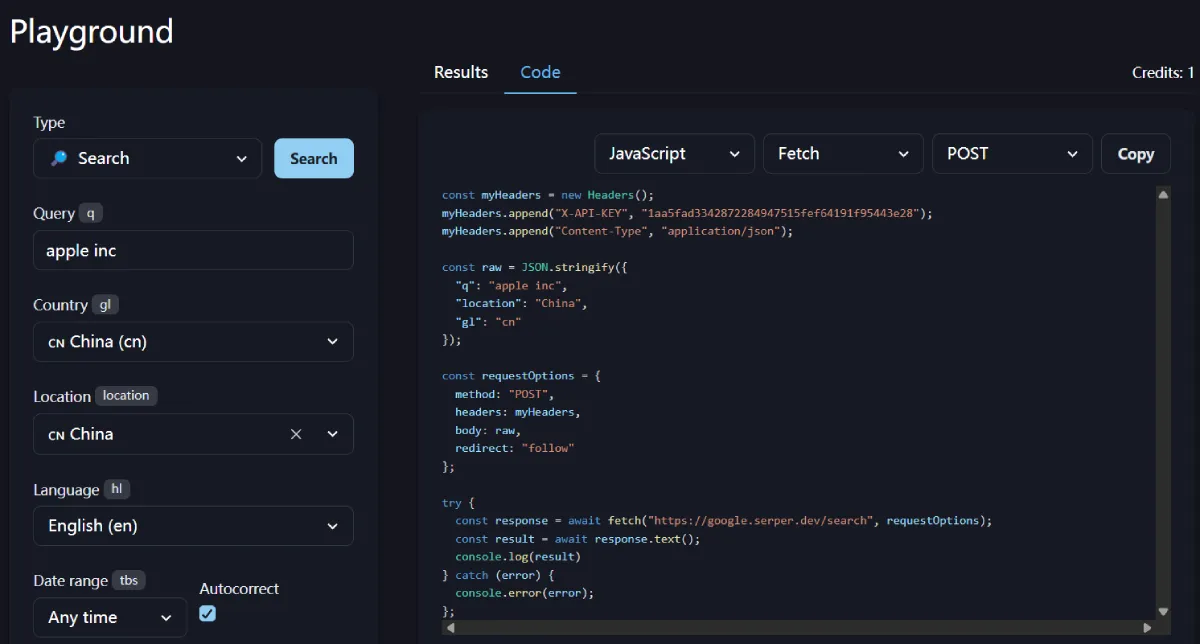
For developers who need a high-performance and budget-friendly Ahrefs API alternative, Serper.dev is a standout choice. It focuses exclusively on providing real-time Google search results with incredible speed. It does not use a monthly subscription model, instead opting for a credit-based approach that is ideal for teams with fluctuating needs. This makes it a great Ahrefs API competitor for those building fast SEO tools or dashboards where per-query cost is the main constraint.
What are the key features of Serper.dev?
- Ultra-fast response times, typically between 1 and 2 seconds for any query.
- Support for 9+ different search types including web, news, maps, and shopping.
- Coordinate-level geo-targeting for extreme accuracy in local search results.
- High concurrency support allowing for up to 300 queries per second.
- Structured JSON output that includes sitelinks, knowledge graph data, and related searches.
- No cached results; all queries are performed live against Google’s servers.
- Automatic JavaScript rendering included in the base price for complex SERP features.
- Simple REST API focused on ease of use and rapid deployment.
- Location and language control for targeting specific regions and dialects.
- Dedicated endpoints for Google Scholar, Patents, and Places data.
What are the pros and cons of Serper.dev?
Pros:
- One of the cheapest options on the market, costing as little as $0.30 per 1,000 requests.
- Generous free trial of 2,500 queries without requiring a credit card.
- No monthly commitment is needed; credits stay valid for up to 12 months.
- Lightning-fast speed makes it ideal for real-time user-facing applications.
- The API is reliable and handles high loads without significant slowdowns.
Cons:
- Does not provide an analytical dashboard or built-in SEO tools.
- Lacks the legal protection layers offered by enterprise-level providers.
- No keyword difficulty or backlink metrics are available through this API.
- The focus is primarily on Google, with less support for secondary search engines.
What is the pricing of Serper.dev?
- Free Plan: 2,500 queries available for testing at no cost.
- Starter Batch: $50 for 50,000 credits, which is $1.00 per 1,000 requests.
- Standard Batch: $375 for 500,000 credits, roughly $0.75 per 1,000 requests.
- Scale Batch: $1,250 for 2.5 million credits, or $0.50 per 1,000 requests.
- Ultimate Batch: $3,750 for 12.5 million credits, reaching $0.30 per 1,000 requests.
- Credit Validity: Credits remain active for six to twelve months, depending on the plan.
How to choose the best Ahrefs API alternative?
When you are trying to find the best Ahrefs API alternative, the first question you should ask is about the data type. If your team is looking for the best Ahrefs API alternative for a growing agency that needs to show clients pretty charts, SE Ranking is the clear winner because it keeps the dashboard and data in one place. But if you are building an AI agent and need the best Ahrefs API alternative to feed live Google data into a prompt, SearchApi or Serper.dev are much better suited for that task. According to our data, practitioners often overspend by paying for a full dashboard when they only need a raw search result. This is why looking at alternatives to Ahrefs API through the lens of specific projects is so useful.
You should also look closely at the cost-per-query for each alternative to Ahrefs API. Some platforms like Scale SERP or DataForSEO are built for high-volume batch processing, where you might wait a few minutes for the results in exchange for a lower price. Other Ahrefs API competitors like Zenserp focus on real-time speed, where you get data in two seconds. If you are doing massive keyword research, the best Ahrefs API alternative will be one that offers a “pay-as-you-go” or “pay-for-success” model. This prevents you from wasting money on failed queries or unused monthly credits.
Another factor is the legal landscape of data scraping. In an environment where data privacy and terms of service are constantly changing, an alternative to Ahrefs API that offers a legal shield is highly valuable for bigger companies. SearchApi and SerpApi provide these guarantees, which might justify their higher price points compared to budget scrapers. Honestly, the best Ahrefs API competitors are the ones that fit your specific risk profile. If you are a small startup, you might choose the cheapest option like Serper.dev, but an enterprise bank would likely choose the best Ahrefs API competitor with a $2M legal shield.
Finally, consider the data richness beyond the 10 blue links. Some Ahrefs API competitors only return basic titles and URLs, while the best Ahrefs API alternatives give you full parsing of AI Overviews, People Also Ask boxes, and Local Packs. If you want to stay ahead of search trends, you need a best Ahrefs API alternative that captures these complex SERP features. This is where tools like SE Ranking or SearchApi really shine. They ensure that your internal reports show the full picture of modern search visibility.
Conclusion
The market for high-volume search data has expanded far beyond the traditional big-name suites. While Ahrefs provides a powerful proprietary index, its rigid pricing and credit systems have created a massive opportunity for more flexible alternatives to Ahrefs API. Whether you need an all-in-one replacement like SE Ranking or a high-speed developer tool like Serper.dev, there is an option that can save your team thousands of dollars annually.
By choosing an Ahrefs API alternative that matches your technical needs—whether that is real-time JSON for an AI model or Domain Authority scores for a link building campaign—you can build more efficient and cost-effective SEO workflows. The best Ahrefs API competitors are no longer just copies of each other; they are specialized tools that serve different niches of the data extraction world.
FAQ
What is the cheapest Ahrefs API alternative for rank tracking?
If you only need raw data, Serper.dev and DataForSEO are the cheapest. They offer query costs as low as $0.30 per 1,000 requests. For an all-in-one dashboard, SE Ranking is the best Ahrefs API alternative for those on a tight budget.
Which Ahrefs API competitor offers the best legal protection?
SearchApi and SerpApi are the best Ahrefs API competitors for legal peace of mind. SearchApi offers up to $2 million in legal coverage for its data collection methods.
Can I get backlink data from an alternative to Ahrefs API?
Yes, SE Ranking and Moz API provide substantial backlink indexes. SE Ranking is often seen as a balanced alternative to Ahrefs API for backlink monitoring, while Moz is the standard for Domain Authority metrics.
Which best Ahrefs API alternative is best for AI agents?
SearchApi is widely considered the best Ahrefs API alternative for AI and LLM grounding because it integrates natively with frameworks like LangChain and provides structured JSON that is easy for models to read.
Does any Ahrefs API alternative track Google AI Overviews?
Yes, SE Ranking and SearchApi are both top choices for tracking AI results. SE Ranking has a dedicated AI Results Tracker for agencies, while SearchApi provides a specialized endpoint for extracting AI Overview data.


Leave a Reply