
Understanding ID Document Verification and How It Works
In today’s digital world, verifying someone’s identity has become more important than ever. Whether opening a bank account, signing up for an online service, or accessing sensitive platforms, businesses need a reliable way to confirm that users are who they claim to be. This is where ID document verification plays a crucial role.
Modern identity verification systems combine advanced technologies like artificial intelligence, biometrics, and secure data processing to create seamless and trustworthy experiences. Let’s explore how ID document verification works, why it matters, and how solutions like PrivateID are shaping the future of secure identity checks.
What Is ID Document Verification?
ID document verification is the process of validating a person’s identity by analyzing official documents such as passports, driver’s licenses, or national ID cards. The goal is to confirm that the document is authentic and that it belongs to the individual presenting it.
Traditionally, this process required manual checks, which were time-consuming and prone to human error. Today, digital systems automate the process, making it faster, more accurate, and scalable for businesses across industries.
Why ID Verification Is Important
With the rise of online services, identity fraud and impersonation attempts have also increased. Businesses must ensure that users are legitimate to protect both their platforms and their customers.
Here are a few key reasons why ID verification is essential:
- Fraud Prevention: Detects fake or altered documents
- Regulatory Compliance: Helps organizations meet KYC (Know Your Customer) and AML (Anti-Money Laundering) requirements
- User Trust: Builds confidence among customers by ensuring secure interactions
- Operational Efficiency: Reduces manual workload and speeds up onboarding
Without proper verification, companies risk financial losses, reputational damage, and legal consequences.
How ID Document Verification Works
Modern verification systems follow a series of steps to confirm identity accurately. While the exact process may vary depending on the provider, the core workflow is generally similar.
1. Document Capture
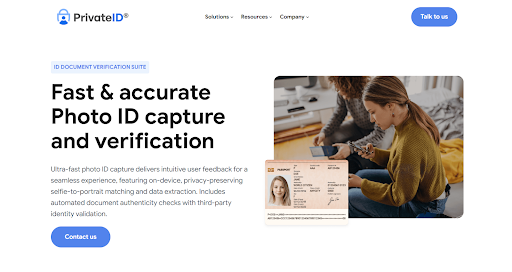
The user is asked to upload or scan their identity document using a smartphone or computer. High-quality image capture is essential to ensure accurate analysis.
Advanced systems guide users in real time, helping them position the document correctly and avoid glare or blur.
2. Document Analysis
Once the document is uploaded, AI-powered software analyzes its features. This includes:
- Text recognition (OCR) to extract data
- Detection of security elements like holograms or watermarks
- Validation of document format and structure
The system checks whether the document matches official templates and identifies signs of tampering or forgery.
3. Identity Matching
After extracting the data, the system compares it with the user’s provided information. This ensures consistency between the document and the user profile.
In many cases, biometric verification is also used. For example, a selfie or short video may be required to confirm that the person presenting the document is its rightful owner.
4. Biometric Verification and Liveness Detection
Biometric technologies play a key role in modern verification systems. Facial recognition compares the user’s live image with the photo on the ID document.
Liveness detection ensures that the system is interacting with a real person rather than a photo, video, or deepfake. This step adds an extra layer of security against spoofing attacks.
5. Decision and Approval
Finally, the system generates a result either approving or rejecting the verification request. This decision is based on multiple factors, including document authenticity, data consistency, and biometric matching.
The entire process can take just a few seconds, making it highly efficient for both users and businesses.
The Role of AI and Biometrics in Verification
Artificial intelligence has transformed identity verification by enabling systems to learn and improve over time. AI models can detect subtle patterns and anomalies that might go unnoticed by human reviewers.
Biometrics, on the other hand, provide a unique and secure way to confirm identity. Facial recognition, fingerprint scanning, and other biometric methods ensure that identity verification goes beyond documents alone.
Together, AI and biometrics create a powerful combination that enhances accuracy and reduces fraud risks.
Privacy Challenges in Traditional Verification Systems
While digital verification offers many benefits, it also raises concerns about data privacy. Many traditional systems store sensitive personal information, including biometric data, which can become a target for cyberattacks.
Users are increasingly aware of how their data is handled and expect transparency and security from service providers.
This is where privacy-focused solutions are becoming more important.
How PrivateID Enhances Secure Verification
PrivateID takes a different approach to identity verification by prioritizing user privacy alongside security. Its technology uses AI and biometric matching to verify identities quickly and accurately, without storing sensitive personal data.
This means that users can complete the verification process without worrying about long-term data exposure. The system performs real-time checks and ensures that personal information is not retained unnecessarily.
By combining speed, accuracy, and privacy, PrivateID offers a modern solution for businesses that need secure identity verification without compromising user trust.
In practical terms, ID document verification becomes not just a compliance requirement but a seamless and privacy-conscious experience for users.
Benefits of Modern ID Verification Solutions
Organizations that adopt advanced ID verification systems can enjoy several advantages:
- Faster Onboarding: Users can verify their identity within seconds
- Reduced Fraud Risk: Advanced detection methods prevent identity theft
- Improved User Experience: Smooth and intuitive verification flows
- Enhanced Privacy Protection: Minimal data storage and secure processing
These benefits make ID verification an essential tool for industries like finance, healthcare, e-commerce, and online services.
Future Trends in Identity Verification
The future of identity verification is likely to focus even more on privacy, decentralization, and user control. Emerging trends include:
- Decentralized Identity Systems: Users control their own identity data
- Advanced Biometrics: More accurate and diverse biometric methods
- AI Improvements: Better fraud detection and real-time analysis
- Privacy-First Models: Reduced reliance on centralized data storage
As technology evolves, identity verification will continue to become more secure, efficient, and user-friendly.
Conclusion
Understanding how ID document verification works is essential in today’s digital landscape. From document analysis to biometric matching, the process ensures that identities are verified quickly and securely.
Solutions like PrivateID are pushing the boundaries by combining AI, biometrics, and privacy-first principles. This approach not only enhances security but also builds trust with users who are increasingly concerned about their personal data.


Leave a Reply