
Why City Apartments Collect Dust and Particulates Faster Than Suburban Homes
Ask most NYC apartment residents how often they have to dust and you will hear timelines that seem implausible to people who have only lived in suburban or rural environments. Surfaces that were dusted yesterday showing visible accumulation by the following afternoon. Window sills collect visible deposits within days of cleaning. The sense that no matter how frequently cleaning happens, dust is always present in some form, waiting to be noticed on the next horizontal surface that catches light from the right angle.
This is not imagination, and it is not a cleanliness failure on the part of the apartment’s residents. It is a physical reality of urban living that has measurable causes and that understanding fully changes how residents think about their cleaning frequency and approach.
What Urban Air Actually Contains
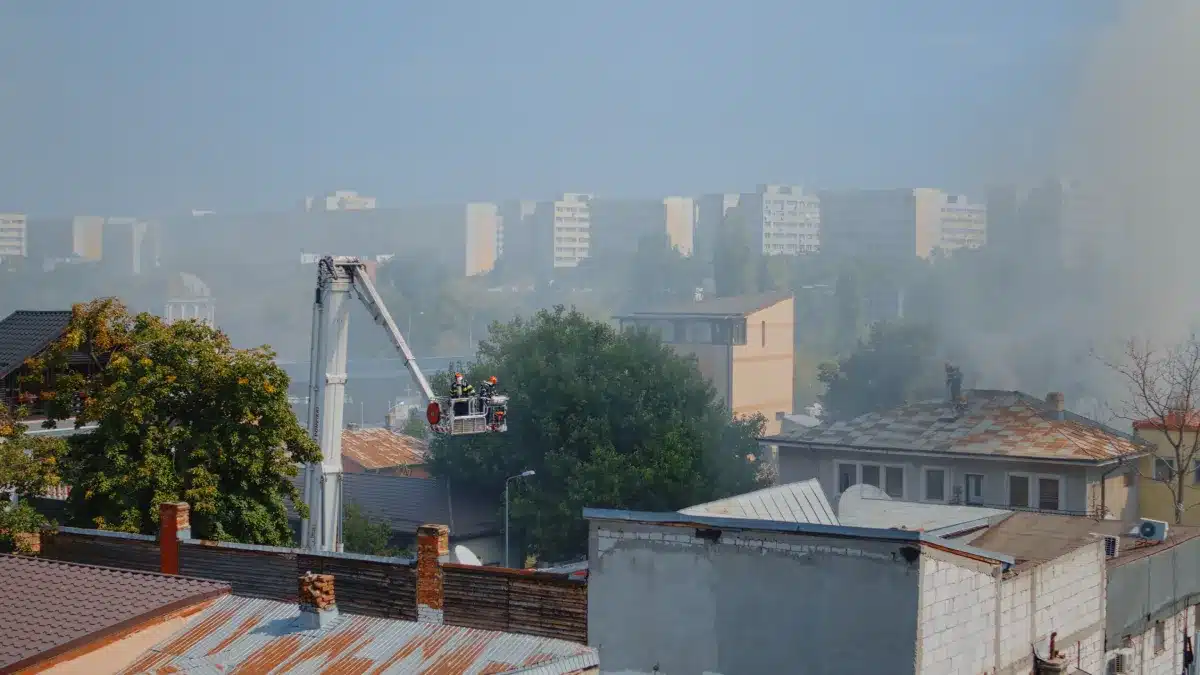
The air in a dense urban environment like New York City carries a particulate load that is categorically different from suburban or rural air not just in quantity but in composition. Vehicle exhaust from the concentration of cars, trucks, buses, and other motorized vehicles that urban density generates contributes carbonaceous particles that are distinctly black and that deposit on surfaces in ways that are immediately visible even at low concentrations. Construction activity, which is essentially constant in a city of NYC’s scale and density, generates silica particles, concrete dust, and various other building material particulates that become suspended in urban air and distribute throughout the environment.
Commercial cooking from the extraordinary density of restaurants, food carts, and food service establishments generates grease aerosols that become part of the urban air particulate mix and deposit on surfaces as a sticky residue that attracts and holds additional particulate matter rather than simply settling in a form that can be wiped away cleanly. The combination of these different particulate types creates an urban dust that is not just more abundant than suburban dust but more adhesive, more visible, and more difficult to remove with simple dry dusting methods.
The Ventilation Pathway
Every time an NYC apartment window is opened, outdoor particulate matter enters the apartment directly with the incoming air. In a city where ambient particulate concentrations are significantly higher than suburban or rural environments, this direct entry pathway introduces measurable contamination every time the window is open, regardless of whether there is any wind to carry particulate into the space.
Building ventilation systems that bring outdoor air into the building for distribution to individual apartments pass that air through filtration equipment, but the filtration efficiency of the systems serving older NYC residential buildings is often lower than modern standards would provide, meaning that a significant fraction of the outdoor particulate entering the system passes through to the occupied spaces. In buildings where the ventilation system draws intake air from urban street level rather than from elevated positions above the worst of the street-level particulate concentration, the quality of the air being introduced is particularly compromised.
The combination of direct window entry and ventilation system introduction means that NYC apartments receive a continuous supply of outdoor particulate matter throughout every day regardless of whether residents take any specific actions that might introduce contamination. The accumulation on surfaces is not the result of activities within the apartment but of the urban environment outside it continuously seeding the interior air with particulates that eventually settles.
Transportation Infrastructure Contributions
NYC’s extensive subway system generates a specific type of particulate matter from the interaction of steel wheels with steel rails and the brake systems used throughout the network, and subway particulate has been documented at elevated concentrations not just in subway stations but in the street-level environment above and near subway infrastructure. Residents who live near subway entrances, above underground lines, or in neighborhoods with extensive transit infrastructure experience elevated subway-related particulates in their ambient air environment that contributes to indoor accumulation.
Bus traffic on urban streets generates both exhaust particulate and brake dust from the frequency of stops that urban bus routes involve, and the concentration of bus routes in NYC creates localized areas where bus-related particulate is a significant component of the ambient outdoor air. Residents living on or near high-frequency bus corridors experience this contribution to their indoor dust accumulation at rates that differ meaningfully from residents living on lower-traffic streets in the same borough.
Why Apartment Surfaces Accumulate Differently Than House Surfaces
Beyond the higher ambient particulate concentration of urban air, the physical characteristics of NYC apartments cause them to accumulate dust in ways that differ from suburban houses. The smaller square footage of most NYC apartments means that the ratio of surface area to air volume is higher than in larger suburban rooms, which means more dust settles per square foot of surface per unit of time than in a larger space with the same air quality.
The higher density of furniture and objects in a space-constrained NYC apartment creates more horizontal surfaces at various heights for particulates to settle on, including many surfaces that are too crowded or difficult to access for regular dusting. The areas around and under furniture that cannot be easily moved accumulate particulate continuously without being reached by regular dusting, developing concentrations that eventually become visible when the furniture is moved or light catches the surface at the right angle.
For apartment residents in apartment cleaning services nyc market who want cleaning frequency and approach that actually matches the particulate accumulation rate their urban environment creates rather than the rate their suburban experience led them to expect, SQKY Cleaning builds cleaning schedules around urban apartment realities rather than generic cleaning frequency guidelines that do not account for the specific environmental conditions NYC living imposes. The right cleaning frequency for a NYC apartment is not the same as the right frequency for a comparable space in a lower-density environment, and a cleaning service that understands that difference delivers meaningfully better results than one that applies a universal frequency recommendation regardless of the environmental context.


Leave a Reply