
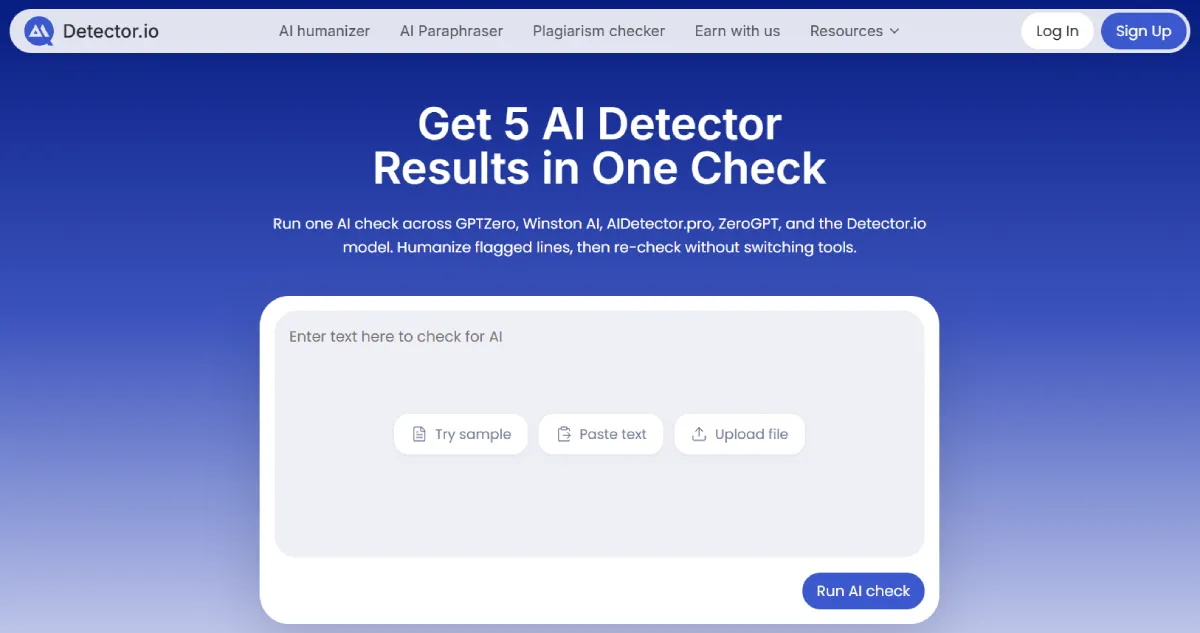
Why one AI checker score no longer tells the whole story
AI content checks used to be fairly simple: paste a draft into a checker, read the score, and move on. Now, that approach is showing its limits. AI writing has become more polished, while human drafts can still look formulaic when they are formal, heavily edited, or written in a predictable style.
When you need to check text for AI patterns, the Detector.io website gives you a broader way to review written content. Detector.io compares several detection providers in the same workflow, then lets the revised text be checked again. The result is a better review process for people who need more than a quick “AI or human” guess.
Detector.io in brief
Detector.io helps review AI signals from more than one angle. It functions as an AI detector, but the real value is in seeing how several detection providers judge the same piece of writing before you decide what the result means.
A report can show AI, mixed, and human percentages, based on scores from Detector.io, Winston AI, GPTZero, ZeroGPT, and AIDP/aidetector.pro. That changes the game because AI detection rarely behaves like a pure yes-or-no test. An AI-generated marketing draft may look totally human in one detector and risky, AI-like in another, while a mostly human paper may still trigger flags.
No more chasing scores across tabs
Many AI detection tools still create a scattered workflow. Someone checks one detector, opens another tab, pastes the same text again, saves the results somewhere, and then compares several scores by eye.
Detector.io turns that routine into one connected path. You can add a draft, run it through several detectors, compare the results, revise flagged areas with the Humanizer, and check the updated version again. For agencies, publishers, educators, developers, and businesses, that path is easier to manage than copied scores.
What Detector.io brings to the table
More than one detector at work
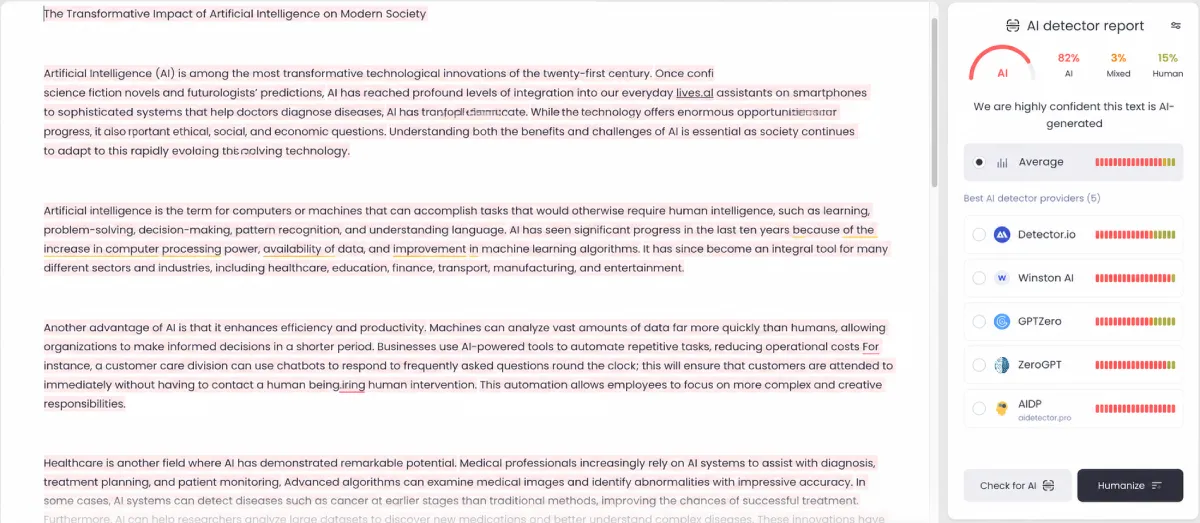
Detector.io checks content across multiple AI detectors and shows the results together, so one score does not carry the whole decision.
Each detector can react to different signals. One checker might get suspicious about neatly repeated wording. Another might care more about how polished the text sounds, how predictable the sentences are, or how closely the structure follows common AI patterns. A broader scan gives a more useful view of how the draft may perform across different systems.
Scores that are easier to compare
Detector.io supports AI detector comparison in a practical way. The average result gives a starting point, while individual detector rows show where scores agree and where they split.
That structure helps people avoid overreacting to one number. If several detectors flag the same draft, the signal is stronger. If one tool reacts sharply while others do not, the text deserves a closer read.
Humanizer for the parts that need work
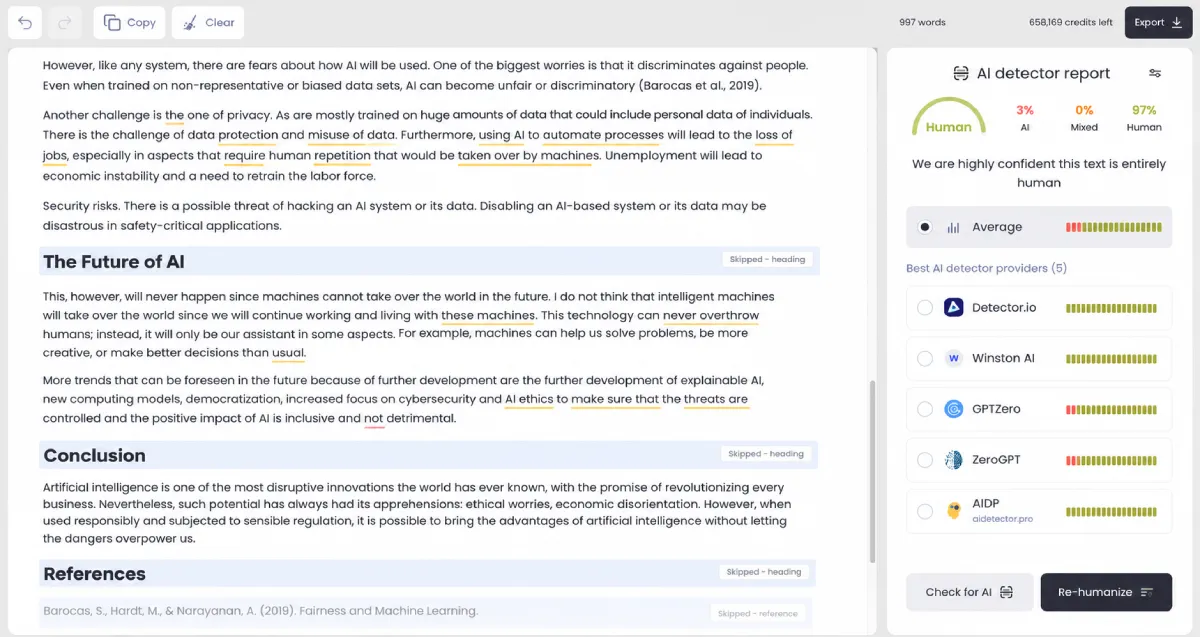
Detector.io includes a Humanizer for text that sounds rigid, repetitive, too polished, or too predictable. The useful part is control.
Suggested edits can be reviewed sentence by sentence. You can approve a suggestion, try a new version, remove it, or leave the original sentence alone. Sections such as headings, citations, references, and formatting can stay off-limits when they should not be changed.
One workspace from scan to re-test
Detection results, comparison data, Humanizer controls, word count, credits, copy actions, and export options all sit in the same work area.
Fewer handoffs mean fewer chances to check the wrong version, lose edits, or compare a fresh score with an older draft.
Re-testing that closes the loop
Re-testing is where Detector.io becomes more than another checker. After flagged content is revised, the updated version can be scanned again.
That answers the question many rewrite tools leave open: did the changes improve the detection result? With Detector.io, the next scan is part of the same process, so the review can easily move from detection to revision to verification.
How Detector.io improves AI content verification
Better verification starts with better context. A single AI content detector can help with a first read, but it cannot show how other systems may score the same text.
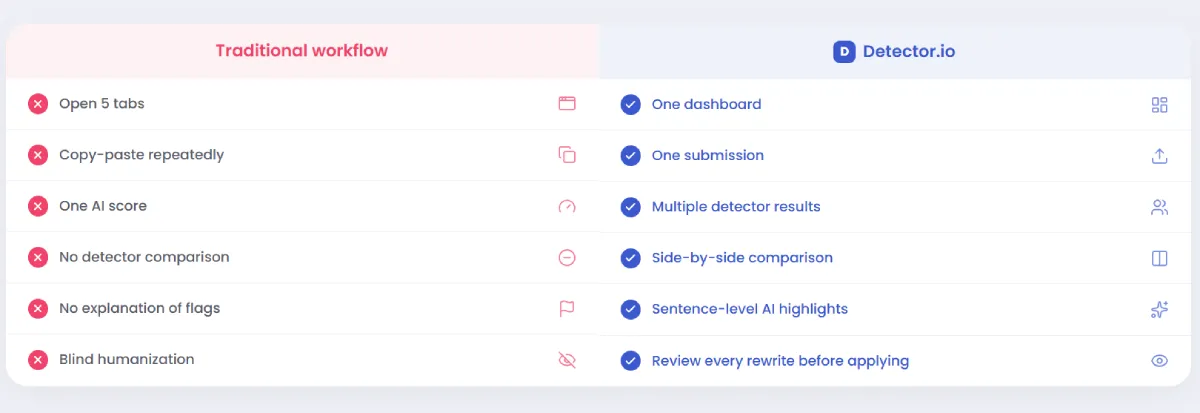
Detector.io improves the process by showing agreement and conflict. If detectors align, the review has a stronger base. If they split, the draft can be checked with more care. That helps reduce false confidence and makes the final call less tied to one tool’s scoring rules.
Pros & cons of Detector.io
| Pros | Cons |
| Several detector results can be reviewed together. | A multi-detector report may take longer to evaluate than one score. |
| Score comparison makes conflicting results easier to understand. | Detection tools can still disagree. |
| The Humanizer gives sentence-level control over revisions. | |
| Locked sections can keep headings, citations, references, and formatting unchanged. | |
| Re-testing helps confirm how the revised draft performs. |
Pricing plans
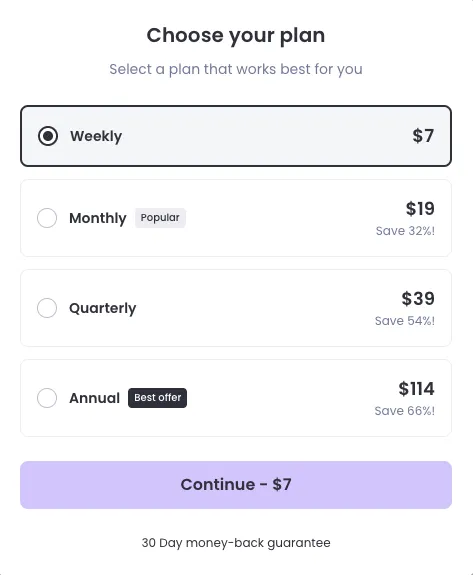
Detector.io offers weekly, monthly, quarterly, and annual access:
- Weekly plan: $7, useful for a short review period or one content batch.
- Monthly plan: $19, better for regular checks.
- Quarterly plan: $39, a strong fit for longer content cycles.
- Annual plan: $114, a better fit for ongoing content checks across several projects.
Detector.io also includes a 30-day money-back guarantee. The main value is not only the price, but the way it can replace a scattered setup: separate checkers, a separate humanizer, manual score tracking, and another round of testing.
Who Detector.io is built for
Detector.io can help marketers review AI-assisted copy, agencies manage client drafts, publishers check submissions, developers review documentation, educators compare detector signals, and businesses verify public-facing materials.
It is best for people who want more context than one score can offer. By bringing detection, comparison, humanization, and re-testing into one workflow, Detector.io makes AI content verification more convenient and reliable.
FAQ about Detector.io
What does Detector.io do?
Detector.io lets you run the same text through several AI checkers, see how their scores compare, rewrite the parts that need attention, and scan the updated draft again.
Why use several AI detectors?
The same draft can land in different places depending on which detector reads it. Comparing several results gives more context before you make a decision.
Does Detector.io include a Humanizer?
Yes. Detector.io includes a Humanizer with sentence-level review, so suggested edits can be accepted or rejected one by one.


Leave a Reply