
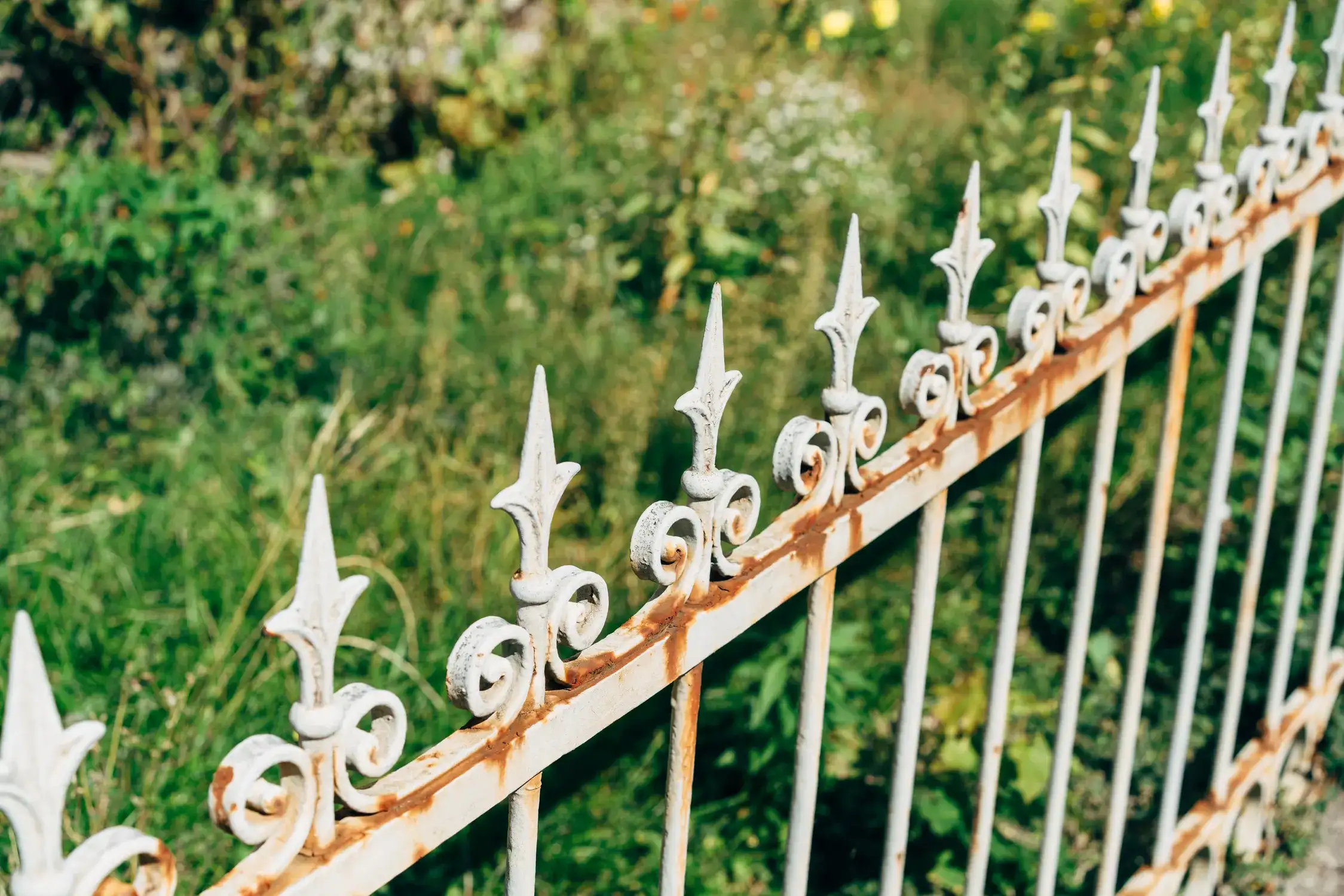
Why Restoring Original Wrought Iron Fencing Almost Always Beats Replacing It
Walk down almost any block in Lincoln Park or the Gold Coast and you will spot it: a stretch of original wrought iron fencing, maybe 80 or 100 years old, flanking a greystone or Victorian two-flat. Some of it is flaking. Some of it has a gate that no longer swings true. And every year, homeowners on those blocks face the same question: restore it, or rip it out and start fresh?
The answer, more often than not, is to restore it. Not out of sentimentality, but because it is the smarter, longer-lasting, and architecturally sounder choice. Here is the case for keeping what you have.
What Makes Wrought Iron Different From Modern Alternatives
Before getting into the restoration argument, it helps to understand what wrought iron actually is, because most people confuse it with cast iron or tubular steel.
Wrought iron is a low-carbon iron alloy that was worked by hand or mechanical hammer. That process created a fibrous grain structure, similar in concept to wood grain, that makes it exceptionally resistant to corrosion and fatigue. Properly maintained wrought iron does not just last decades. It lasts generations.
The iron fencing surrounding many of Chicago’s historic greystone homes was installed between the 1880s and the 1940s. Some of it is still structurally sound beneath layers of old paint and surface rust. That is not an accident. That is the material doing exactly what it was designed to do.
Modern alternatives, primarily tubular steel, aluminum, and ornamental aluminum, are lighter, cheaper to produce, and easier to install. But they are not the same product. Aluminum in particular lacks the visual weight and shadow depth of true wrought iron. Up close, the difference is obvious. On a 120-year-old greystone in Old Town, it shows.
The Architectural Argument Is Not Just Aesthetic
Historic preservation professionals often talk about “material authenticity,” and it sounds abstract until you see what happens when a house loses it.
A Victorian home in Wrigleyville with original wrought iron fencing and a matching gate carries a visual coherence that took decades to develop. The iron connects to the stone, to the brick, to the corbels and cornices above. Replace that fence with a modern aluminum panel system and something shifts. The house looks like it is wearing the wrong shoes.
This matters beyond curb appeal. Chicago’s Commission on Chicago Landmarks actively considers material authenticity when evaluating properties in historic districts. In some areas, replacement with non-original materials can complicate landmark status or raise issues with historic tax credit eligibility. Restoration keeps those doors open.
There is also the resale dimension. A 2019 analysis by the National Association of Realtors found that curb appeal improvements, especially those consistent with a home’s architectural period, return a significant percentage of their cost at sale. Original wrought iron in good condition is a selling point in neighborhoods like the Gold Coast, where buyers are specifically looking for period character.
How Bad Is “Bad,” Really?
One of the most common reasons homeowners default to replacement is that they assume the fencing is too far gone to save. In practice, this is rarely true.
Surface rust, which is what most people are seeing, is not structural failure. It is oxidation on the outer layer. Even fencing that looks heavily corroded can be sound underneath once the old paint and rust scale are removed. A proper assessment involves wire brushing or sandblasting the surface and examining the iron beneath.
Genuine structural compromise looks different: it is sections that have cracked through, pickets that have snapped rather than bent, or base posts that have corroded to the point of being hollow. This kind of damage is less common than it appears from the street, and even then, individual sections can often be repaired or replicated in-house rather than triggering a full replacement.
The key is getting an honest assessment from someone who actually works with iron, not someone who primarily sells fence panels.
What the Restoration Process Actually Involves
Homeowners sometimes imagine that iron restoration means a quick coat of paint. It does not. Done properly, it is a methodical multi-stage process, and skipping steps is exactly how you end up needing to redo the work in five years.
Stage one is surface preparation. All old paint and rust must be removed down to bare metal. Wire brushing by hand works for smaller areas, but sandblasting or chemical stripping is typically more effective on heavily corroded surfaces. Getting to clean metal is non-negotiable.
Stage two is rust treatment. Once the surface is bare, a rust-inhibiting primer is applied. Products containing zinc phosphate or similar rust-inhibiting compounds create a chemical barrier between the iron and moisture. This is the step that determines how long the restoration holds.
Stage three is finish coating. High-quality oil-based or industrial enamel paints are applied in at least two coats. These paints are chosen for flexibility and adhesion, properties that matter in Chicago’s climate, where metal expands and contracts significantly across seasons.
Stage four is mechanical repairs. Bent or misaligned sections are straightened. Broken pickets are welded or replaced with matching pieces. Gate hardware, hinges, latches, and posts are inspected and replaced where needed. In-house fabrication makes this easier when matching profiles are required, because the pieces can be built to spec rather than sourced from a generic catalog.
The entire process, for a standard residential fence, typically takes a few days. The result is fencing that can realistically go another 30 to 50 years with routine maintenance.
When Replacement Actually Makes Sense
This is an opinion piece, not a blanket rule. There are situations where replacement is the right call.
If a fence has been extensively repaired multiple times with incompatible metals, if the original profile has been heavily modified and no longer reflects the home’s architecture, or if the damage is genuinely structural across the majority of the run, starting fresh with a properly fabricated wrought iron replacement is better than chasing repairs on compromised material.
The operative phrase is “properly fabricated wrought iron replacement,” not “aluminum that sort of looks like it.” A skilled fabricator can produce new wrought iron work that matches original profiles closely enough to be visually indistinguishable from period work. That is a very different proposition from installing off-the-shelf ornamental aluminum panels.
Maintenance After Restoration: What Keeps It Going
The single biggest reason restored iron fences fail prematurely is deferred maintenance. Iron does not need much, but it needs consistency.
A visual inspection once a year, ideally in spring after Chicago winters, catches problems early. Chipped paint should be touched up before moisture gets to the metal. Any small rust spots should be treated immediately, wire brushed and primed before they spread. Gate hardware should be lubricated annually.
Beyond that, a full repaint every 8 to 12 years, depending on sun exposure and conditions, keeps the protective barrier intact. This is far less costly than another full restoration, and vastly cheaper than replacement.
Finding the Right People for the Work
Not every contractor who installs fences works with iron at this level. Restoration requires different skills than new installation: knowledge of older iron profiles, experience with surface prep on aged metal, and the ability to fabricate replacement pieces when needed.
Companies with a long track record in Chicago’s iron and metalwork industry, like Americana Iron Works, bring decades of experience with exactly this kind of work on exactly this type of property. That depth matters when the fence you are restoring is 80 years old and architecturally significant to your home.
For homeowners evaluating their options, it is worth asking any contractor directly: do you fabricate in-house, or do you source panels? Can you match my existing profile? Have you worked on properties of this age and style before? The answers will tell you a lot.
Making the Decision: A Practical Framework
If you are standing in front of your Lincoln Park greystone trying to decide, here is a straightforward way to think through it.
Start by getting the iron assessed by someone who can distinguish surface rust from structural failure. If the base metal is sound on more than half the run, restoration is almost certainly the right choice. If you are in a historic district or landmark area, check with the Commission on Chicago Landmarks before committing to any replacement work. And if replacement is genuinely necessary, hold the line on material quality. A properly executed wrought iron fence installation using authentic or closely matched profiles will serve you, and your home’s character, far better than a cost-cutting substitute.
The iron around Chicago’s older homes has already survived a century of hard winters, freeze-thaw cycles, and decades of deferred attention. With the right care, there is no good reason it cannot survive another century.
Key Takeaways
- Surface rust is not structural failure. Most wrought iron fencing that looks “too far gone” is still salvageable with proper preparation and treatment.
- Architectural authenticity has real financial stakes in Chicago’s historic neighborhoods, affecting landmark status, tax credit eligibility, and resale value.
- Proper restoration is a multi-stage process covering surface prep, rust treatment, priming, finish coating, and mechanical repairs. Cutting any stage shortens the result.
- Routine annual maintenance after restoration, especially paint touch-ups and hardware care, is what makes the difference between a 10-year result and a 50-year one.
- When replacement is genuinely necessary, the material choice still matters. Matching profiles in appropriate materials preserves what the home is.
Frequently Asked Questions
How do I know if my wrought iron fence can be restored rather than replaced? The key indicator is the condition of the base metal, not the surface. If the iron beneath the rust and old paint is solid, without cracks, breaks, or hollow sections at the posts, restoration is typically viable. A contractor with iron experience can assess this quickly, often by doing a small test section of wire brushing or sandblasting to see what the metal looks like underneath.
Will restored wrought iron match the appearance of the original fencing? Yes, in most cases. The original profile and patina can be preserved through careful prep work, and any replacement pickets or sections can be fabricated to match the existing design. The finish result, properly painted, is virtually indistinguishable from the pre-deterioration fence.
How long does a proper wrought iron restoration actually last? With quality surface prep, good primer and topcoats, and annual maintenance, a well-executed restoration can protect the iron for 30 to 50 years. The material itself, assuming it was sound going in, can last well beyond that.
Is restored wrought iron a good selling point for historic Chicago homes? Generally, yes. Buyers specifically seeking period homes in neighborhoods like Lincoln Park, Old Town, or the Gold Coast are typically looking for original architectural features. Intact, well-maintained wrought iron fencing is considered a positive attribute and contributes to overall curb appeal.
What are the risks of replacing original wrought iron with aluminum fencing? Beyond the visual mismatch with period architecture, aluminum lacks the material density and shadow depth of true wrought iron. In some Chicago historic districts or landmark-designated areas, non-original replacement materials can also raise compliance concerns or affect eligibility for historic preservation tax credits. It is worth confirming requirements with the Commission on Chicago Landmarks before proceeding.
Final Thought
The iron fencing on Chicago’s older homes is not just decoration. It is part of the architectural fabric of neighborhoods that took a hundred years to develop their character. Replacing it casually, because it looks rough or because someone quoted a lower number for aluminum panels, is a decision that tends to age badly.
Restoration is almost always the more considered choice. It is also, in most cases, the more economical one over any meaningful time horizon. The work is real, the process takes knowledge and care, but the result is something that belongs on the building. That is worth something.


Leave a Reply