

4 Fundamental Content Marketing Ideas for Realtors
Standing out in a competitive real estate market takes more than listing properties online. Realtors also need a strong content strategy to attract buyers, build trust, and stay visible across search engines and social media platforms.
In this guide, you’ll learn four practical real estate content marketing ideas that can help generate qualified leads, grow your online presence, and strengthen your brand over time.
Let’s dive in.
Blogging
Blogging is an excellent way to get your name out there as a real estate agent to generate buyer, seller, or renter leads.
Blogs are short pieces of content that you publish to showcase your expertise, drive traffic to your website, and build trust with potential clients.
Thankfully, starting a blog isn’t complicated.
For real estate professionals, the website experience matters just as much as the content itself. A fast-loading, mobile-friendly real estate website can help keep visitors engaged long enough to explore listings, contact forms, and neighborhood guides.
You also don’t have to be a professional writer to create helpful content that attracts potential clients.
Let’s take a closer look at the blogging process. Once you master these foundational content strategies for residential clients, you can leverage the exact same approach in commercial real estate to build a highly profitable B2B business.
How to Choose Topics for Blog Posts
Choosing topics for your real estate blog is much like writing for the finance industry (or any industry, for that matter).
The key here is to look for relevant and helpful topics for your readers. Ideally, your content should help solve a pain point or add value to your readers.
Now the same holds true for real estate. The best blog topics are usually tied directly to situations buyers or sellers are already dealing with.
For example, homeowners may search for phrases like:
- “How to sell a house after divorce”
- “What repairs should I make before selling my home?”
- “How to sell a house quickly in a slow market.”
- “Best time to sell a house in [city]”
These are valuable topics because the people searching for them are often actively preparing to buy or sell a home.
Realtors can also create educational content around financing strategies homeowners may use before selling. For example, explaining how HELOC loans can help fund renovations such as kitchen upgrades or curb-appeal improvements may help sellers increase their home’s market value before listing.
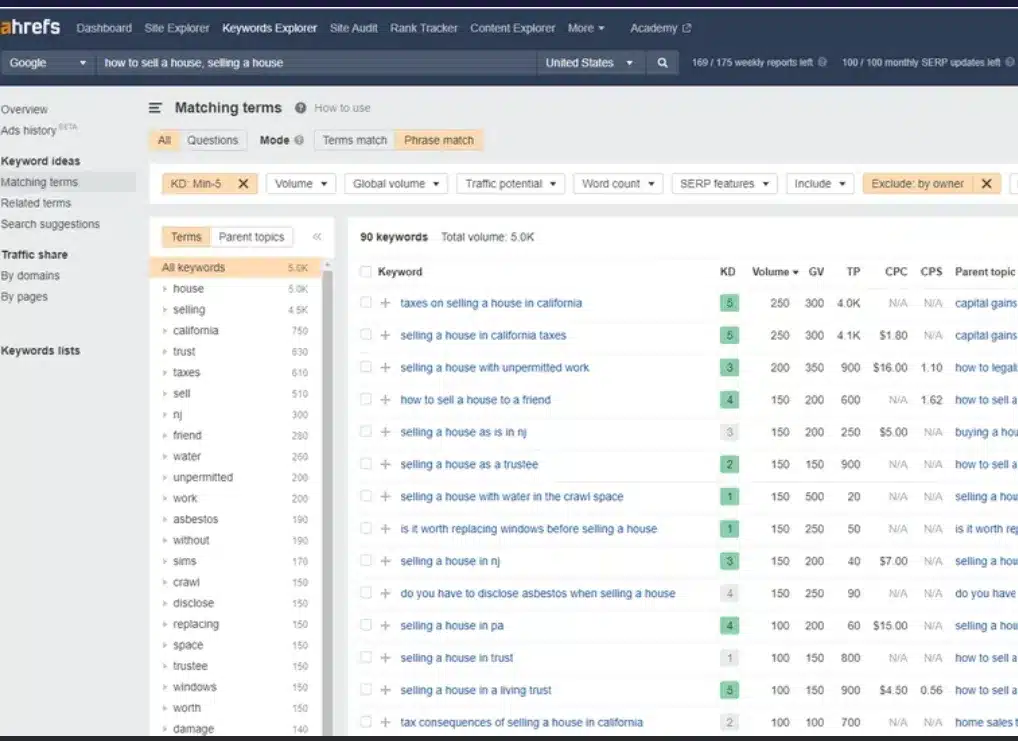
Taking it a step further, you also want to identify topics your clients are already searching for online. These are your target keywords.
The goal is to find keywords with a decent monthly search volume but lower competition. SEO tools like Ahrefs and Semrush can help uncover these opportunities.
For example, a keyword like “best time to sell a house in Miami” may have moderate search volume but strong intent because users searching for it are likely considering a sale in the near future.
As your website authority grows, you can gradually target broader and more competitive real estate keywords.
How to Write Blog Posts
The good news is that you don’t need to stuff keywords in your blog posts to rank high on SERPs.
All you need is high-quality content and a properly optimized page.
Here are some tips for optimizing blog posts for search engines:
- Use keywords naturally throughout your post (but don’t overdo it)
- Place your keyword somewhere in the first section of the post
- Write a compelling meta description (less than 160 characters) that includes your keyword
- Add your keyword to the URL string
- Write in an active voice whenever possible and use short sentences
- Include internal links to prior blog posts where appropriate
Take your blog posts to the next level by running them through an AI writing tool like MarketMuse or Clearscope to improve their depth and relevance.
How to Promote Blog Posts
Now that you have published a library of stellar content, it’s time to maximize your reach.
The goal is to build as much organic traffic to your website as possible.
But traffic alone is not enough. If your website is difficult to navigate, slow to load, or not optimized for mobile devices, visitors may leave before contacting you or viewing listings.
For real estate businesses, website design also affects how potential clients interact with listings, contact forms, neighborhood pages, and property galleries. A clean, responsive layout can improve both engagement and lead generation.
Here are a few ways to increase visibility while improving the overall website experience.
Link building
Link building is one of the key ways to get your website to rank well organically.
Backlinks from high-quality sources to your website indicate to Google that your content is trustworthy and helpful to readers.
For example, getting a mention from Zillow’s blog would be a huge win as a realtor. But why?
Zillow is highly relevant to the real estate industry, and its website has very high authority (i.e., a big, long-standing brand).
When you score links from big sources like this, some of their authority also passes through to you.
How Realtors Can Use Social Media to Generate Leads
Promoting your content on social media is another way to reach a different audience.
There are a few easy ways to make the most of this strategy. And it’s fun to get creative.
Realtors can also turn blog content into social media graphics, listing highlight posts, or short-form videos to make their content easier to share across platforms like Instagram and Facebook.
You can also make it easier for your audience to connect with you on social media by including an Instagram logo vector in your website footer.
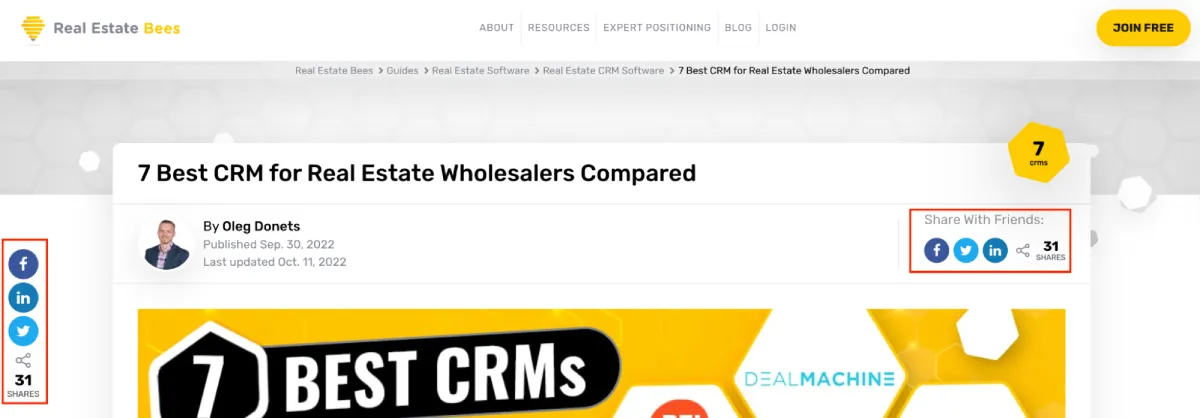
Or adding other social platform vectors to the top of the article to encourage readers to engage with your post and share it on their profiles.
Email Marketing
Repurposing your blog content into newsletters and email campaigns is the perfect way to engage existing clients and build trust with potential clients.
Email marketing consistently delivers strong ROI compared to many other marketing channels and can help generate qualified leads over time.
To help filter through the weeds, you can qualify your leads using a lead-scoring process to prioritize those most likely to close.
Don’t sleep on email marketing. It’s more powerful than you think.
Guest Posting
Guest posting is simply writing a blog post for someone else’s website.
The idea is to provide a high-quality piece of content that offers unique value to your readers. By sharing your expertise, you gain access to their audience.
Here are a few benefits of guest posting:
- Grow your audience by publishing content on more sites
- Build relationships with other like-minded businesses and influencers in your niche
- Share your expertise to help you build up credibility and authority in your field
- Score links from high-authority websites to boost your rankings on SERPs
How to Choose Websites for Guest Posting
When evaluating guest posting opportunities, focus on a few key factors.
First, think about what topics the website covers. If something doesn’t match with your business goals or the real estate industry, don’t waste your time approaching it.
For instance, as a realtor, you don’t want to pitch a website about kayaking. You want to make sure there’s a good fit between the site’s topic and the kind of content you can offer them.
On the other hand, partnering with companies in overlapping industries to promote your business and content is another excellent idea. For example, you can reach out to moving or TV package providers to write guest posts on topics relevant to your audience, such as tips for moving into a new home.
Second, look at the site’s SEO metrics, such as Ahrefs Domain Rating (DR) and monthly organic traffic. The higher the DR, the greater the site’s credibility. For example, Zillow has a 91 DR (out of 100) and 57.1 million monthly organic visitors to its site.
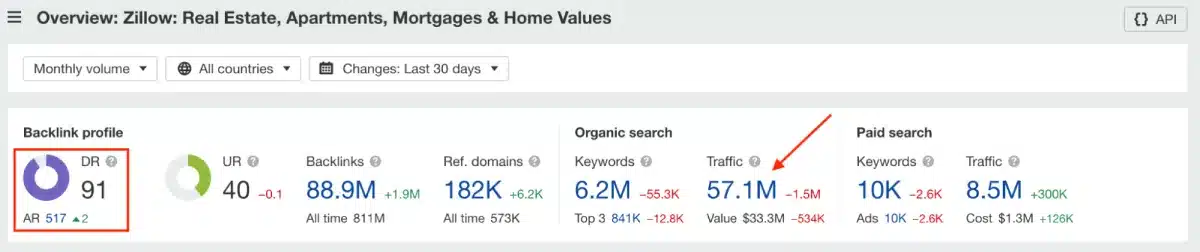
Will Zillow accept your guest post? Probably not. But that doesn’t mean you can’t pitch them your idea.
Start by focusing on sites with DR between 20–50 and a few thousand monthly organic searches. As your DR grows, you can increase your scope.
How to Pitch for Guest Posts
Follow this email template to help you score guest post spots on coveted sites.
Subject: Interested in some fresh, free content?
Hi [name],
I’m sorry if this message sabotaged “inbox zero” for you.
I enjoyed reading your recent blog post about [blog post topic]. My favorite part was [pick a snippet from the blog post], which helped me [achieve a goal or learn something new].
I’m reaching out because I have a few ideas I think the [blog name] audience would enjoy, and I was curious if you’d be open to a guest blog post.
Take a peek at some of these titles:
[Title 1]
[Title 2]
[Title 3]
Here are a few recent examples of my writing:
[The post on the highest authority site]
[The post you’re most proud of]
I look forward to hearing from you!
Best,
[Your name]
When it comes down to it, it’s hard for sites to resist free high-quality content.
Producing high-quality content in-house takes significant time and resources.
Digital PR
The next element of content marketing for real estate agents is digital PR.
Digital PR is a unique way to get your name mentioned in popular real estate media outlets.
Reporters from reputable news publications need expert quotes to give their articles more credibility. That’s where you come in, as the expert.
Benefits of Media Mentions
In exchange for your expert advice or opinion, publications will give you credit for the article.
As real estate agents, this creates an opportunity to improve visibility while earning high-authority backlinks to your website.
Brand mentions are all about helping you establish yourself as a reference in your industry. So before pitching to these sites, ensure you have a well-designed website with a unique logo.Some firms also use corporate video animation alongside strong visual branding to strengthen brand positioning and make their expertise more memorable across digital platforms. Showcasing a professional logo helps create brand awareness, so include it strategically.
Showcasing a professional logo helps create brand awareness, so include it strategically. There are many great logo-making tools you can use to make your brand stand out and help your audience identify your company whenever they see a specific image in press outlets or on blogs.
How to Get Connected with Reporters
I’m sure you are wondering how to gain access to these powerful reporters.
Thankfully, there are plenty of help-a-reporter-out (HARO) programs that can help you secure those coveted spots.
For example, the Real Estate Bees’ Exclusive Publicity Program connects real estate professionals with reporters to help secure their names as expert references for reputable industry-related organizations.
And best of all? It’s credible and free.
Once people begin discovering your brand through media mentions and search engines, social media becomes another important channel for maintaining visibility and staying connected with potential clients.
Social media content marketing ideas for realtors
Finally, the last component of the realtor content marketing strategy is to grow your social media following.
Adults spend an average of 95 minutes per day on social media. That makes these platforms valuable for staying visible to potential clients.
When people follow you on social media, they become more familiar with your brand and are more likely to trust your recommendations over time.
Let’s take a closer look at a few examples.
Types of Social Media Content
Here are some of the best ways to grow your online presence with social media:
- Post photos of your listings on Instagram and include a link to the listing page. This helps people find their dream home and lets them know who they can trust to help them find it.
- Share articles related to real estate or home buying/selling on LinkedIn. This will help you build credibility as an expert in your field, which is essential for attracting new clients and keeping existing ones coming back for more advice and guidance.
- Answer questions on X (formerly Twitter) about how you’d handle situations involving stubborn clients or surprises you had to deal with during negotiations or transactions.
- Provide updates on current market trends and relevant statistics for your local housing market.
When it comes down to it, clients want to see content that adds value, provides statistical information, tells a story, or sparks an emotion.
Some realtors also use sensory branding to make listings more memorable. Elements such as lighting, music, and fragrances like amber perfume can support the lifestyle story being presented across listings, virtual tours, and social media content.
Mary Fitzgerald of The Oppenheim Group is one example of a realtor who uses visual storytelling effectively on Instagram.
She uses a carousel post to showcase multiple images, provides details (square footage, price, address), and encourages users to attend the open house in the description. Voila, seven days later, the house was in escrow.

How to Promote Your Content on Social Media
It’s no secret that social media is a great way to promote your content. But how do you get the most out of your efforts?
Let’s talk about some ways to promote your content on social media.
Paid Placements
The first thing you want to do when promoting your content is to make sure it reaches the right audience.
Paid placements are a great way to target specific users based on demographics and interests. Not only that, but paid placements usually guarantee that your content will show up in front of them in their news feed — which means they’ll actually see it.
It all comes down to sending the right message to the right person at the right time.
Posting in Groups
Another great way to promote your social media content is by posting in groups.
Focus on joining groups (on Facebook or another social media channel) where your content is genuinely relevant to the audience.
This is an example of a private real estate agency group with over 50,000 members. In short, it’s a special forum for real estate professionals to interact, collaborate, and share stories, advice, and insights.

Optimizing for Search within a Platform
Whether it’s Facebook, Instagram, X (formerly Twitter), or LinkedIn, each platform has its strengths and weaknesses in reaching potential buyers.
Here are some tips for optimizing your posts for search within each platform:
- Facebook: Make sure your post title is descriptive, but not too long. Also, ensure it contains keywords people might use to find a listing like yours. And don’t forget to use relevant hashtags.
- LinkedIn: Your audience on LinkedIn tends to skew older than on other platforms. So even if you’re posting about an open house, consider using keywords like “retirement community,” “senior living,” or “55+ community” where applicable.
- X (formerly Twitter) & Instagram: Hashtags are key. If you’re selling a condo in Brooklyn with elevator access and a doorman, tag your post with #Brooklyn #Condo #Doorman #ElevatorAccess
- YouTube: Add appropriate tags and keywords in your video descriptions. Optimize your video titles so they appear in searches for those specific terms. And don’t forget to add an eye-catching thumbnail.

Free Content Marketing Tools for Real Estate Agents
Now that we have gone through the four fundamental real estate content marketing examples, here are a few of my favorite free content marketing tools.
They’ll help make your life easier and improve your content marketing strategy tenfold.
Instead of managing everything manually, these tools can simplify content creation, website management, and audience engagement.
- Need a slogan for your company? CopyAI provides a free slogan generator that’ll help you create a slogan (in seconds) that your customers won’t be able to forget.
- Are you ready to create the perfect website (with no coding experience)? Use Typedream, a free no-code website builder, to make a beautiful website in minutes.
- Is it time to send your monthly newsletter? Convert Kit email marketing software is so simple that you can spend less time in the tool and more time creating.
- Are you looking to create content that gets attention? Use Exploding Topics to identify trends and keywords before your competitors.
Wrap-Up
A strong content strategy works best when paired with a fast, user-friendly website experience. Real estate agents who combine consistent content creation with a professional online presence are more likely to build trust, generate leads, and turn visitors into long-term clients.
If you’re building or redesigning a real estate website, choosing a responsive WordPress theme with strong performance and customization options can make content marketing much easier to manage at scale.
If you’re ready to improve your online presence, PortoTheme can help you build a fast, professional real estate website designed to attract and convert more clients.
Author Bio:
Ryan Robinson. I’m a blogger, podcaster, and (recovering) side-project addict who teaches 500,000 monthly readers how to start a blog and grow a profitable side business at ryrob.com.



Leave a Reply