
5 Bitcoin vs Quantum Computers Risk Analysis Services Compared for 2026 Security
BlackRock shook the crypto crowd when its May 2025 Bitcoin-ETF filing quietly warned that quantum computers could one day crack the math safeguarding every satoshi on the network, according to a Cointelegraph report. That single line in a blue-chip prospectus turned a long-theoretical risk into a boardroom agenda item overnight.
Quantum hardware is still experimental, but its trajectory is clear. Labs are stitching qubits together at a pace that recalls the early transistor boom; the difference is stakes measured in billions of digital dollars.
That urgency sharpened in August 2024 when NIST approved the first three federal standards for post-quantum cryptography, effectively starting the migration clock for public-key systems everywhere. Governments and auditors now have a timetable, and excuses to delay are evaporating.
As deadlines loom, a cottage industry has emerged to answer one blunt question: “Will a future quantum chip steal my Bitcoin, and how do I stop it?” From Big-Four consultancies to open-source upstarts, providers are racing to inventory vulnerable wallets, map remediation plans, and keep anxious hodlers—and their regulators—off the front page.
In the pages ahead, we rank five services we believe offer the clearest, most actionable quantum-risk analysis for Bitcoin going into 2026. You’ll see how they differ, where each shines, and which one fits your needs—whether you safeguard a personal cold wallet or billions in custodied coins.
Let’s cut through the hype, size up the real threat, and find the partner that will keep your keys safe when qubits finally grow teeth.
Understanding the quantum threat to Bitcoin
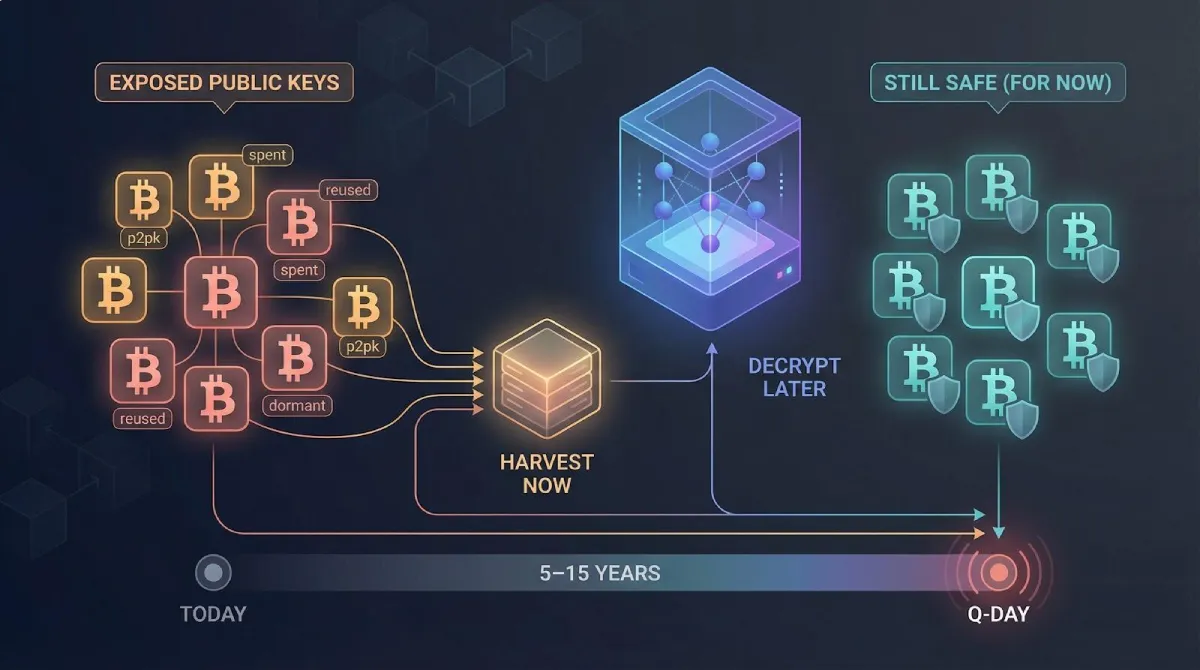
Picture a quantum computer with enough stable qubits to run Shor’s algorithm at scale. In that world an attacker could lift a Bitcoin public key from the blockchain, derive its private key in minutes, and sign a spend before the rightful owner reacts.
That risk hinges on one detail: the public key must already be visible on-chain. Early pay-to-public-key (p2pk) addresses reveal keys by design, and any modern address exposes its key the first time it sends a transaction. Deloitte’s full-chain sweep found more than 4 million BTC, roughly one quarter of the supply, sitting in addresses that are already quantum-exposed.
Project 11’s January 2025 on-chain analysis estimates the vulnerable pool is even larger—about 6.3 million bitcoin, worth roughly $648 billion at the time—once dormant exchange reserves and overlooked change outputs are included.
The uptick underscores how tally methods continue to surface new pockets of risk as researchers refine their heuristics.
Those coins include Satoshi-era holdings, idle exchange wallets, and every reused address you or I ever posted on a sticky note. If a cryptographically relevant quantum machine existed today, a single script could empty them.
What about the rest of the supply? Coins parked in fresh, single-use addresses stay safe until they move; their public keys remain private. That grace period lasts only if owners avoid address reuse and migrate funds as soon as standards shift.
Time is elastic. Experts once pegged “Q-Day” decades away; recent advances have shortened forecasts to roughly 5-15 years. Adversaries follow a harvest-now-decrypt-later playbook, archiving exposed keys today so future qubits can unlock them.
The stakes go beyond personal loss. A mass sweep of dormant wallets could dump billions of coins onto the market, collapsing price and trust in one move. Network-wide defenses such as post-quantum signatures, key-rotation policies, and even expiring unsafe outputs are under discussion, but they require slow, messy consensus.
That brings us back to 2026. Today is the easy window: inventory vulnerable addresses, map migrations, and test quantum-safe tools. Delay, and the same steps become an emergency response during a market crash.
The next section details how we scored the services that help you prepare.
How we ranked the services
Comparing quantum-risk vendors is harder than judging hardware wallets or exchanges. Each mixes research, software, and consulting in its own formula. To level the field, we built a scoring sheet that pinpoints what matters most between now and 2026.
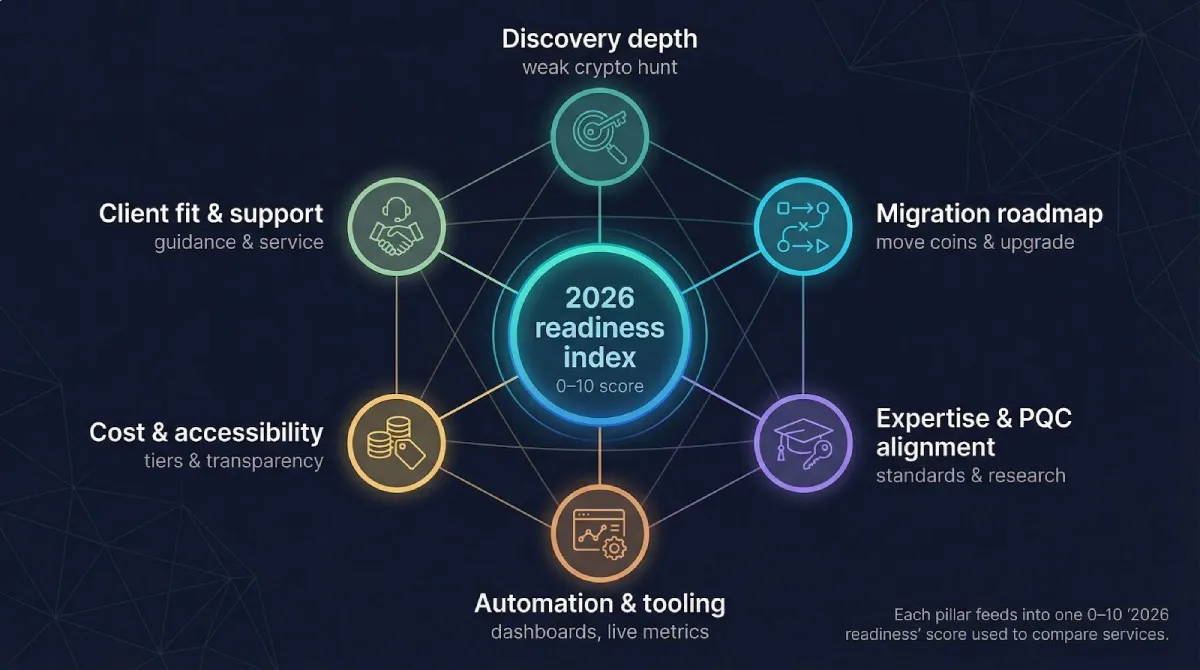
First, we check how thoroughly a team hunts for weak cryptography. A service that scans every wallet, code repo, and TLS certificate scores higher than one that only checks address formats.
Next, we weigh the migration roadmap. Discovery means little without clear, step-by-step instructions for moving coins and upgrading systems before qubits leave the lab.
We then rate expertise and freshness. Providers aligned with the newest post-quantum standards and active in crypto research climb the ranks.
Automation counts, so we grade the tools and dashboards that turn a one-off audit into live metrics your security team can track.
Cost keeps us honest. We examine price clarity and entry tiers to confirm that solo investors and small funds can participate, not just Fortune 500s.
Finally, we assess client fit and support. A boutique that guides engineers through wallet migration earns service points even if its software footprint is light.
Each category carries a weight. Scores roll up to a ten-point “2026 readiness” index that shapes the leaderboard. Now meet the contenders.
1. Project Eleven: future-proofing coins the DIY way

Quantum cryptography firm Project Eleven turns quantum worry into a weekend project, living up to its stated mission to “secure digital assets for the post-quantum era.”
Its open-source Project 11 Post Quantum Cryptography toolkit powers Yellowpages, a public ledger where you link every Bitcoin address you own to a fresh post-quantum key. Complete the process once, publish the proof, and if ECDSA fails tomorrow you still control your coins.
Everything runs on open-source tools. Open the command line, generate a hybrid keypair, and record the proof in less time than a Lightning payment. Transparent code builds trust, and the zero-fee model removes any excuse to wait.
Trade-offs exist. The registry protects ownership, not infrastructure, so exchanges and banks still need deeper audits. A young startup also lacks the long track record boards prefer. Yet for individual holders and lean crypto firms that want to act today, Project Eleven delivers speed, simplicity, and an eight-out-of-ten readiness score that stands tall beside larger rivals.
2. Deloitte: enterprise armor with a boardroom badge
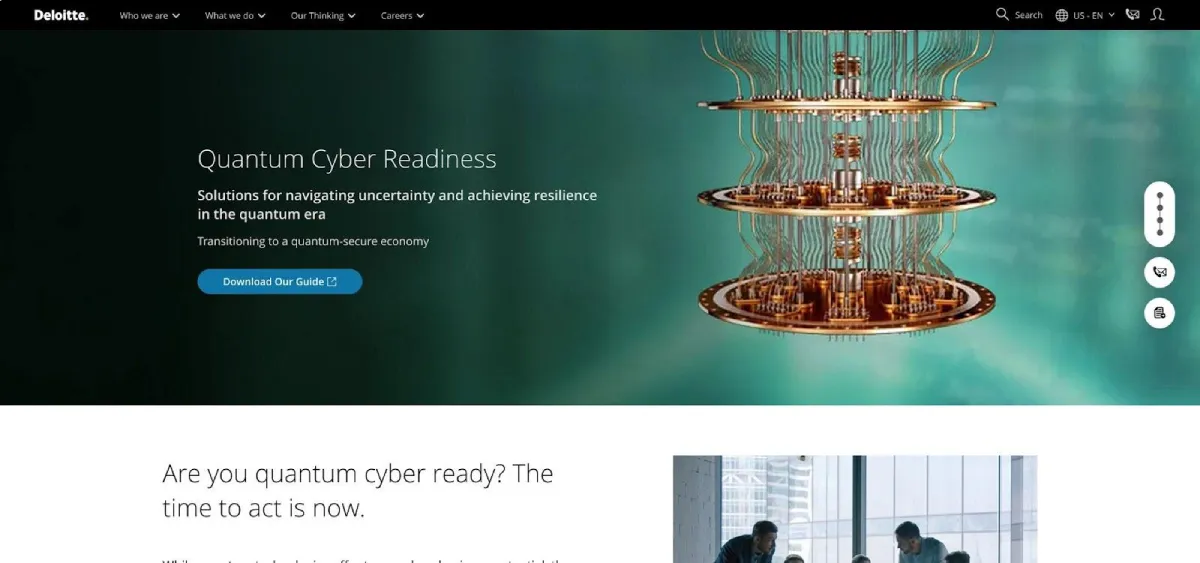
Deloitte approaches quantum risk the way auditors handle revenue recognition: no loose ends and no surprises. Its Quantum Cyber Readiness program begins with a microscope-level sweep of every wallet, server, and signing process you touch, then translates exposure into terms your CFO understands.
A key advantage is access to Chainalysis data. Real-time blockchain intelligence feeds Deloitte’s risk engine, allowing consultants to spot which addresses have leaked public keys and how many coins sit exposed. The final report pairs that forensic detail with a phased migration plan aligned with NIST deadlines and regulator expectations.
You pay higher fees and commit staff hours, yet the payoff is credibility. A Deloitte stamp on your quantum-preparedness report satisfies insurers, auditors, and even the most skeptical board chair. For exchanges, banks, and custodians managing multiple jurisdictions, that assurance carries substantial weight.
All in, Deloitte earns nine points out of ten on our 2026 scale. Cost and lead time are the only deductions. If budget permits and reputation matters most, this service sits at the top of the shortlist.
3. Chainalysis: real-time intel for the quantum countdown
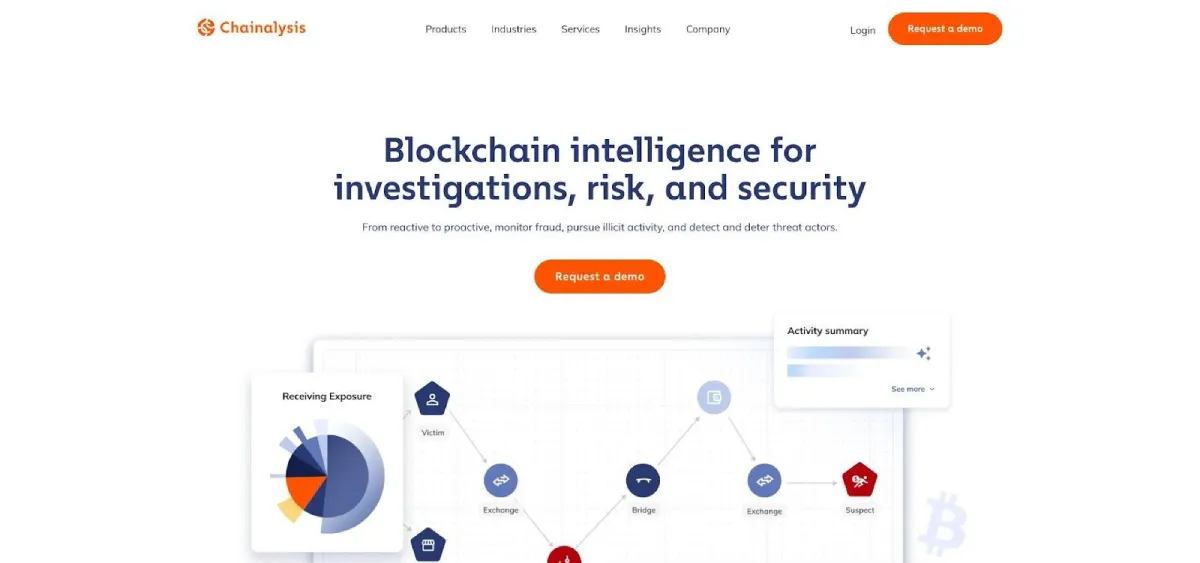
Chainalysis provides blockchain analytics trusted by law-enforcement agencies. The same data platform now spots quantum weak points before attackers can act.
Upload your wallet list to the Quantum Vulnerability Report to receive clear metrics: what share of holdings sit in addresses with exposed public keys, how your risk compares with peers, and which outputs need immediate migration. The dashboard updates as you move coins, turning a one-time audit into a live risk gauge.
Early-warning telemetry is the standout feature. The network crawler flags unusual activity, such as dormant p2pk addresses suddenly emptied or clusters of legacy outputs swept in quick succession. You get the alert and can launch incident response before headlines spread.
The program is still early in its release cycle. Some features remain in “design partner” mode, and pricing sits behind a request-a-demo form. It also covers on-chain exposure only, so you need a separate plan for server certificates and signing infrastructure.
For exchanges or funds already using Chainalysis compliance tools, adding a quantum lens is a smooth upgrade. Continuous monitoring earns the service 7.5 points on our 2026 scale and keeps it firmly on the podium.
4. QryptoCyber: automation that finds every last RSA and ECC relic

QryptoCyber treats cryptography like inventory management. Its cloud platform scans external networks, internal servers, codebases, and even aging IoT devices, then produces a unified bill of materials listing every algorithm in use. Reviewing that exposure list is sobering: expired TLS certificates here, hard-coded secp256k1 keys there, and a stray RSA-1024 library few remember installing.
An AI engine ranks each finding by quantum urgency and builds a Gantt-style roadmap. You see which fixes deliver the largest risk drop and exactly which PQC library to insert. Progress scores rise as you patch, turning a once-invisible threat into a KPI the C-suite can track.
Setup requires access to repositories and network sensors, and smaller teams may pause at enterprise-software pricing. Yet the time saved compared with a manual audit is significant. For mid-size exchanges and fintechs running dozens of microservices, QryptoCyber’s automated rigor earns 8.5 points on our 2026 readiness scale.
5. Applied Quantum: boutique guidance with white-glove follow-through
Applied Quantum sits between solo security shops and global consultancies. The firm’s experts arrive on-site, map every place your business relies on classical cryptography, and build a migration playbook that respects budget, latency, and regulatory nuances.
Engagements feel more like workshops than audits. Engineers collaborate with PhD cryptographers, executives join tabletop exercises, and each team leaves with a quarter-by-quarter task list. Need direct help swapping a lattice-based signature library into your custody stack? Their specialists pair with your developers until test vectors pass.
Limited bandwidth is the trade-off. Applied Quantum supports a small client roster, and the queue grows as 2026 approaches. For mid-tier exchanges, regional banks, or Web3 startups seeking personal attention without Big-Four fees, the service offers a practical middle ground. We award eight points on our 2026 readiness scale, thanks to deep expertise and hands-on care.
Compare the contenders at a glance
You have the stories; now review the stats. The table below condenses each provider into one row so you can scan strengths, gaps, and fit in under a minute.
| Service | Type | Analysis depth | Roadmap quality | Tooling level | Cost range | Ideal for | 2026 score |
| Project Eleven | Startup toolkit | Medium | Medium | Open source | $ | Individuals, small crypto orgs | 8 / 10 |
| Deloitte | Big-4 consulting | Ultra high | Ultra high | Manual + data | $$ | Banks, custodians, exchanges | 9 / 10 |
| Chainalysis | Analytics SaaS | High (on-chain) | Medium | Dashboard | $$ | Exchanges, funds, compliance | 7.5 / 10 |
| QryptoCyber | Automated platform | High | High | Full-stack AI | $$ | Mid-size fintechs, Web3 firms | 8.5 / 10 |
| Applied Quantum | Boutique consult | High | Ultra high | Select tools | $-$$ | Mid-tier exchanges, regional banks | 8 / 10 |
Conclusion
Use this grid when pitching stakeholders or planning next year’s security budget. The deeper reviews add context, but this snapshot answers the classic hallway question: “Which one should we call first?”
FAQ: quick answers to big quantum questions
When will quantum computers break Bitcoin?
Most forecasts cluster between 5 and 15 years, yet breakthroughs can arrive without notice. Plan now so the exact date does not dictate your safety.
What exactly is at risk?
Any address that has already revealed its public key. That group includes every coin you have ever spent and each early-era p2pk stash. Once a key is public, a future quantum computer can create a valid spend.
Can’t Bitcoin just swap in a new signature scheme?
Yes, but upgrades move slowly. Developers must select a post-quantum algorithm, wallet makers must implement it, and users must migrate funds before attackers act.
How do I check my own exposure today?
Start simple. List every address you control. If a block explorer shows a spend, treat that address as vulnerable and move its coins to a fresh Bech32 address. Then choose a service from our list to audit deeper layers such as multisig vaults and backend code.
Are other blockchains safer?
Only if they already use post-quantum signatures, and very few do. Ethereum, Solana, and most major chains rely on similar elliptic-curve cryptography. The assessment steps are comparable, so the services above can help there as well.


Leave a Reply