
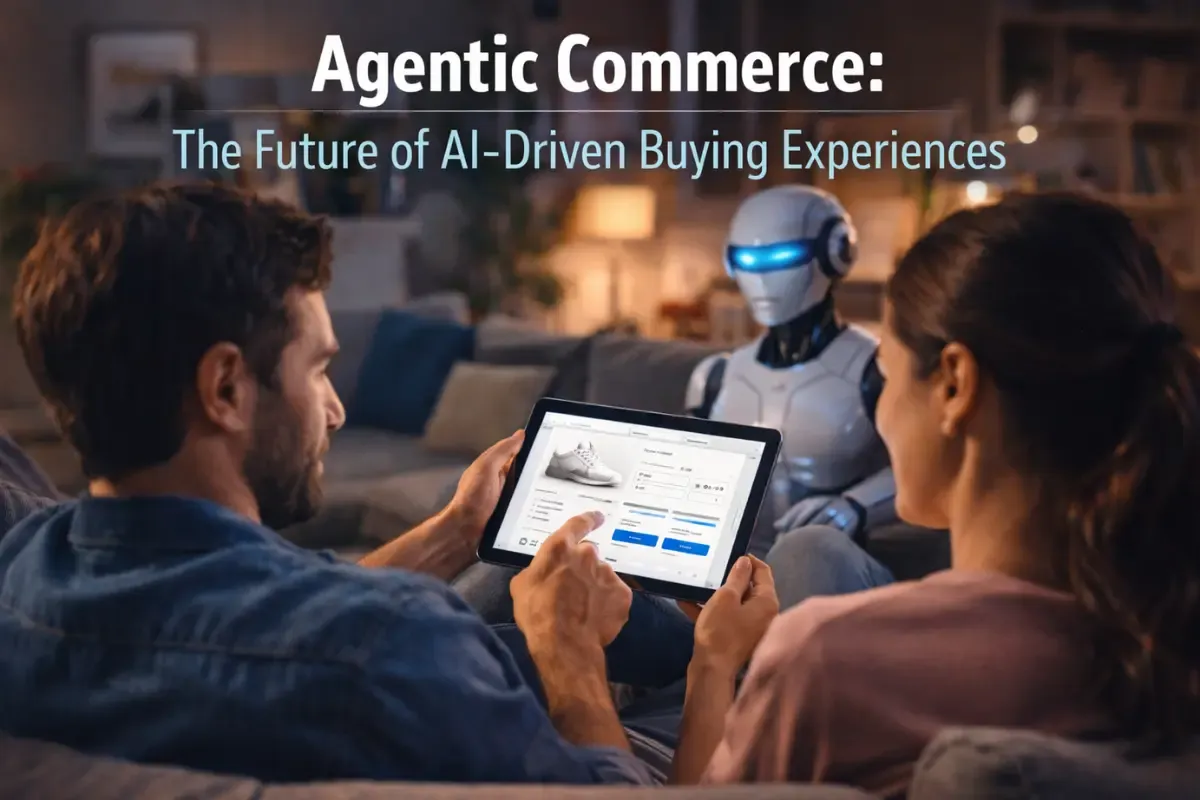
Agentic Commerce: The Future of AI-Driven Buying Experiences
Digital shopping continues to change form as smart systems discover how people browse to compare and make their choices. Consumers expect systems that can react quickly, offer relevant alternatives, and make their shopping easier. Due to this shift, optimization strategies, such as support from the best SEO company in Oakville, are now focusing on the visibility of smart ecosystems instead of static results in search listings.
Traditional browsing requires manual comparisons across pages and platforms. However, modern tools analyze preferences and predict intent before selection begins. As a result, digital experiences focus on relevance, personalization, and automation, while search engine optimization strategies adapt content accordingly.
Agentic commerce reflects this new direction, where digital agents act with purpose and context. Therefore, brands that structure content thoughtfully benefit from stronger discovery. Guidance often aligns with practices refined by a professional SEO company, especially when aligning intent signals and structured visibility.
User expectations continue to expand alongside smarter tools. However, buying journeys now revolve around proactive assistance rather than reactive exploration. Understanding this change supports stronger positioning within evolving digital spaces that reward adaptability and clarity.
Understanding Agentic Commerce
Agentic commerce is the term used to describe buying experiences led by digitally autonomous agents that interpret user preferences, analyze alternatives, and offer customized solutions. Instead of serving as mere assistants, these digital agents perform actions according to context, past behavior, and current circumstances.
Such interactions transform discovery because buyers receive curated pathways instead of unfiltered options. Consequently, engagement becomes dynamic, predictive, and efficient and allows digital systems to design experiences that closely align with changing expectations and personal preferences.
How Intelligent Agents Reshape Buying Journeys
Agent-driven environments alter the structure of decision-making from beginning to completion. Instead of initiating searches manually, buyers interact with adaptive interfaces that gather signals, interpret context, and offer refined suggestions. This shift transforms attention patterns because relevance replaces volume as the primary filter.
Discovery often begins through contextual prompts triggered by behavioral insights. For example, browsing habits, product interest, and timing indicators influence agent responses. Consequently, recommendations arrive with stronger alignment to expectations, encouraging quicker evaluation and reducing fatigue associated with excessive comparison.
Content visibility also changes as agents prioritize structured data and semantic clarity. Because of that, product descriptions, metadata organization, and contextual tagging influence discoverability more strongly than keyword stuffing or surface-level optimization. Systems favor coherence and contextual relevance.
Decision support continues through comparison analysis executed automatically by agents. Instead of reviewing numerous pages, buyers receive synthesized summaries, highlighting benefits, limitations, and compatibility considerations. Therefore, cognitive effort decreases while confidence in selection rises steadily.
Transactional processes follow similar patterns. Agents assist with scheduling, negotiation parameters, and preference confirmation, ensuring smooth progress toward completion. Additionally, real-time updates maintain transparency, preventing uncertainty during critical steps of engagement.
Trust building becomes central to agent adoption. Systems should communicate reasoning clearly and transparently to ensure that recommendations are believable and accountable. Thus, clear communication and ethical use of data and feedback that is contextual will help to build acceptance by users who are navigating automated recommendations.
Personalization extends beyond demographic targeting. Personality context, emotional cues, and awareness of the environment constantly enhance responses. Thus, interactions change dynamically to reflect current needs, instead of static assumptions that were formed in earlier sessions.
Accessibility benefits appear alongside personalization gains. Agent assistance makes it easier to manage complex processes for different groups, providing easier navigation and better understanding. This means that digital spaces become more welcoming, accommodating different types of experiences and interactions.
Optimization strategies must adjust to these developments. Structured information hierarchies, conversational content, and intent-aligned narratives improve integration with agent interpretation. Because agents prioritize meaning rather than isolated phrases, clarity in messaging holds measurable value.
Performance measurement also evolves. Engagement metrics go beyond clicks to include the depth of interaction, decision duration, and satisfaction metrics. Therefore, the insights analysis reveals more complex patterns that can guide improvement based on real-time user behavior rather than simple activity indicators.
Ethical responsibility is a hallmark of technological advances. Transparency, data stewardship, and respectful personalization methods build the credibility of ecosystems that are based on agents. Therefore, accountability influences visibility as strongly as technical refinement or narrative relevance.
Future developments indicate expanding autonomy among digital agents. Collaborative negotiation between buyer and seller agents may soon refine pricing and customization dynamically. Such evolution suggests continued transformation across marketing, sales, and user engagement frameworks that prioritize adaptive intelligence.
Designing Content That Aligns with Agent Behavior
Agent interpretation depends heavily on clarity, structure, and contextual meaning. Therefore, content crafted with thoughtful organization supports stronger recognition and response accuracy.
- Structured headings and concise paragraphs guide contextual parsing while improving readability.
- Semantic richness strengthens relevance because varied phrasing reflects natural interaction patterns.
- Conversational tone aligns with dialogue-driven engagement environments.
- Logical progression supports agent summarization and recommendation building.
- Regular updates ensure contextual relevance and indicate continuous importance.
A focus on these aspects enhances the ability to interpret while maintaining human-centered accessibility. Therefore, communication remains accessible and in line with changing technological requirements.
Preparing Strategies for Autonomous Market Interaction
Strategic planning must anticipate interaction between autonomous decision makers. As digital agents represent buyers increasingly, messaging must accommodate machine interpretation alongside human perception.
Context strengthens alignment because narrative frameworks provide meaningful reference points. In addition, ethical transparency enhances trust and encourages ongoing engagement over a long period of time. The structure of adaptability guarantees relevance when behaviors change over time.
Holistic visibility planning integrates search, conversational channels, and agent-compatible data models.
The Expanding Influence of Predictive Intelligence
Predictive capability continues to shape buying ecosystems. Systems anticipate needs through pattern recognition and behavioral continuity, offering solutions before active searching begins. Such foresight transforms timing expectations within engagement cycles.
Confidence grows as predictive suggestions demonstrate accuracy consistently. Therefore, reliance on proactive assistance strengthens, reducing exploratory browsing and emphasizing curated experiences driven by contextual awareness and adaptive reasoning.
Continued integration across connected platforms expands predictive reach further. Interaction data flows between environments, supporting a holistic understanding that refines suggestion accuracy and maintains continuity throughout evolving journeys.
Final Thought
Agentic commerce introduces experiences centered on anticipation rather than reaction. Digital journey is now a partnership between the user and smart systems that constantly evaluate potential. As a result, decisions become easier and clearer, and more flexible and responsive to changing expectations.
Visibility within such environments depends on thoughtful structuring and narrative clarity. Content aligned with interpretive intelligence remains discoverable while sustaining genuine human connection. However, adaptability becomes an integral element in maintaining meaningful engagement even in changing digital landscapes.
Strategic preparation helps build resilience as autonomy grows over transactions. When structured communication meets contextual awareness, experiences remain intuitive and credible. Guidance informed by experienced teams, including Livewire Web Solutions, supports alignment with these emerging dynamics.
The evolution of agentic ecosystems is rewarded with attention to meaning, ethics, and user experience. Consistent refinement, context-based storytelling, and a responsible awareness of data ensure digital presence is a safe bet to ensure continuous improvement that is based on both authenticity and efficiency.
FAQs
What does agentic commerce mean for visibility with the best SEO company in Oakville?
Agentic commerce reshapes visibility because intelligent systems interpret intent rather than scanning static keywords. Guidance aligned with the best SEO company approach strengthens semantic clarity, structured organization, and conversational context. Consequently, discoverability improves recommendation-driven ecosystems shaped by predictive assistance and contextual filtering.
How does agentic commerce change content optimization practices?
Content optimization evolves toward interpretive alignment. Instead of prioritizing density or repetition, structured clarity and narrative flow guide outcomes. When refined through the best SEO company in Oakville’s perspective, communication adapts naturally to dialogue-based interaction environments and predictive discovery processes.
Why do autonomous agents influence buying trust levels?
Autonomous assistance provides comparison summaries, transparent reasoning, and contextual suggestions. Such features reduce uncertainty during evaluation stages. Because clarity reinforces confidence, users engage more comfortably, resulting in smoother navigation and stronger commitment to final decisions across intelligent commerce platforms.
How can structured storytelling support agent-driven interaction?
Structured storytelling offers contextual anchors that assist interpretation engines. Logical flow, semantic variety, and concise segmentation enable accurate summarization. Therefore, narratives maintain emotional connection while strengthening compatibility with systems that analyze meaning through layered contextual mapping techniques.
When should strategies adapt to agentic commerce developments?
Adaptation benefits early implementation because behavioral shifts progress steadily. Integrating the concepts of ethical transparency, interpretive optimization, and semantic refinement assures the ability to expand autonomy. Active adjustment helps to ensure durability and sustainability as expectations for interaction continue to evolve across diverse ecosystems.


Leave a Reply