
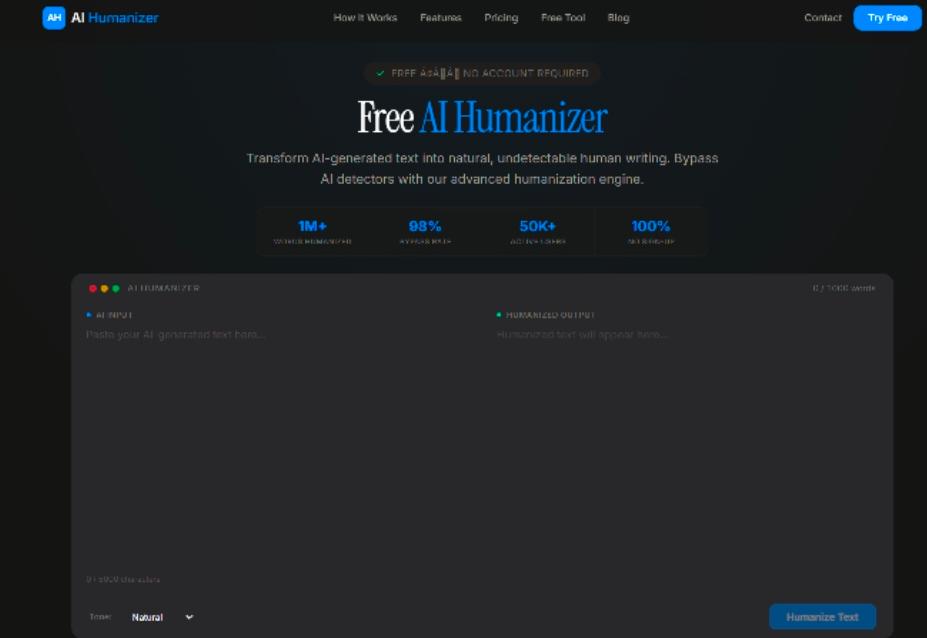
AI Humanizers for Developers: Building More Natural Productivity Tools
Artificial intelligence has become a core component of modern SaaS platforms, automation systems, and productivity tools. From AI-generated emails to automated customer support and content creation, developers are integrating language models into products at an incredible pace. However, one challenge continues to appear across these systems: AI-generated text often sounds robotic, repetitive, or overly formal.
This is where an AI humanizer for developers becomes valuable. Humanizer tools help transform machine-generated content into more natural, readable, and conversational language while maintaining the original meaning. For developers and SaaS builders, integrating this functionality can significantly improve user experience and content quality.
Why AI Humanization Matters
Large language models are powerful, but their outputs can still feel synthetic. Users quickly notice patterns such as:
- Repetitive sentence structures
- Predictable transitions
- Overly generic phrasing
- Unnatural tone consistency
- Lack of emotional variation
In productivity applications, these issues can reduce trust and engagement. For example, AI-written customer emails that sound robotic may negatively affect communication quality. Similarly, automatically generated reports or summaries can feel impersonal if the language lacks natural flow.
Humanization layers help bridge this gap by refining AI outputs into text that sounds more authentic and user-friendly.
Common Use Cases in SaaS and Productivity Tools
Developers are now integrating humanizer functionality into a wide range of applications. Some common examples include:
Email Automation Platforms
AI-generated outreach emails often require tone adjustments before sending. Humanizers can soften language, improve readability, and reduce repetitive patterns, making automated communication feel more genuine.
AI Writing Assistants
Content-generation platforms frequently use humanization features to polish drafts created by language models. This helps users create blog posts, product descriptions, and social media content that sounds less machine-generated.
Customer Support Systems
Support chatbots and automated responses benefit greatly from natural language refinement. Humanized responses can improve customer satisfaction by sounding more empathetic and conversational.
Workflow Automation Tools
Automation pipelines that generate internal reports, summaries, or notifications can use humanization modules to improve clarity and readability for teams.
What Makes a Humanizer Developer-Friendly?
Not all humanizer solutions are equally useful for developers. A strong implementation should support scalability, customization, and easy integration into existing systems.
API-First Architecture
Developers prefer tools that offer clean REST or GraphQL APIs. Humanization services should be easy to integrate into backend workflows, browser extensions, and SaaS dashboards without requiring complicated setup.
An API-first approach allows developers to add text refinement directly into automation pipelines, content workflows, or AI-processing chains.
Low Latency Performance
Many productivity tools operate in real time. Slow response times can negatively affect user experience, especially in chat systems or live editors.
Developer-friendly humanizers should provide fast processing while maintaining text quality. Efficient response times are critical for scalable SaaS applications.
Tone and Style Controls
Different products require different writing styles. A customer-support platform may need friendly and empathetic language, while a technical documentation tool requires precision and clarity.
Good humanizer systems allow developers to customize:
- Formality level
- Tone style
- Sentence complexity
- Readability targets
- Industry-specific language
These controls make integration far more flexible across different use cases.
Pipeline Compatibility
Modern SaaS applications often use multiple AI services together. A typical workflow might involve:
- AI text generation
- Grammar correction
- Humanization
- Translation
- Publishing
Humanizer tools should fit naturally into these pipelines with predictable outputs and structured API responses.
Reducing AI Detection Concerns
Another reason developers use humanizers is to reduce overly obvious AI-writing patterns. Some businesses want generated text to feel more organic and less formulaic, especially in marketing or communication tools.
While the goal should never be deception, improving natural readability can enhance user trust and create a smoother reading experience.
This is why many SaaS builders now integrate an AI humanizer for developers directly into their content workflows and automation systems.
Best Practices for Integration
When integrating humanization features into applications, developers should follow a few practical guidelines:
Preserve Meaning
Humanization should improve readability without changing the original intent or factual accuracy of the content.
Allow User Review
Whenever possible, users should be able to compare original and humanized outputs before publishing.
Monitor Quality Metrics
Developers should track:
- User engagement
- Readability scores
- Response satisfaction
- Content editing frequency
These metrics help evaluate whether the humanization layer improves the overall product experience.
Avoid Overprocessing
Excessive rewriting can sometimes reduce clarity or introduce awkward phrasing. Lightweight refinement often works better than aggressive modification.
Final Thoughts
AI-generated content is becoming standard across SaaS products and productivity platforms, but raw model outputs still require refinement in many real-world applications. Humanization tools help developers create software experiences that feel more natural, engaging, and user-friendly.
For indie builders and engineering teams, integrating humanizer functionality is no longer just a content feature, it is becoming part of the overall user experience strategy. As AI adoption continues to grow, developer-friendly humanization systems will likely become a standard layer in modern automation and productivity pipelines.


Leave a Reply