
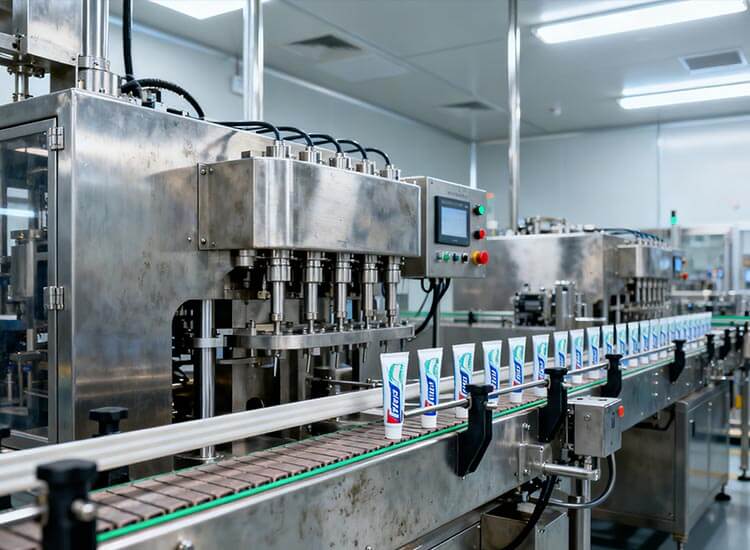
Complete Guide for Fast, Clean, and Efficient Manufacturing of Toothpaste Production Line
A toothpaste production line is the backbone of modern toothpaste manufacturing. It brings together mixing, vacuum homogenization, storage, filling, sealing, coding, and packing into a single, seamless workflow. For brands that want clean production, stable quality, and higher output, this system plays a central role.
Whether you run a small oral care business or a large factory, the right line helps you control texture, reduce waste, and speed up packaging. A well-built toothpaste production line also supports product consistency, hygienic processing, and accurate tube filling, which matter in every batch.
What Is a Toothpaste Production Line?
A toothpaste production line is a complete set of machines used to produce and pack toothpaste from raw ingredients to final cartons. It usually includes a mixer, a vacuum emulsifier, a storage tank, a tube-filling and sealing machine, a coding unit, and an outer packaging system for finished products.
This setup is designed for products that need smooth blending and clean handling. Toothpaste contains powders, liquids, flavors, and active ingredients, so manufacturers need uniform mixing, air-free processing, and precise filling control to maintain the right texture and appearance.
Main Stages in the Production Process
The first stage is raw material preparation. Ingredients such as abrasives, sweeteners, binders, water, flavor, and active compounds are measured and moved into the mixing system. At this point, correct formulation, clean transfer, and batch accuracy decide how the final product will perform.
The second stage covers mixing, deaeration, filling, sealing, and packing. Air bubbles are removed under vacuum, then the paste is sent to storage or directly to filling. A proper toothpaste production line keeps this flow stable, which helps reduce rejects and improve shelf-ready quality.
Mixing and Homogenizing System
The mixing unit is one of the most important parts of the line. It combines ingredients into a smooth paste and prevents lumps, uneven color, or separation. Most factories use vacuum mixers because they improve paste smoothness, ingredient blending, and production hygiene in one step.
Vacuum homogenizing also removes trapped air, which matters a lot in toothpaste. Too much air can affect product density, tube filling, and shelf appearance. That is why manufacturers prefer systems built for stable viscosity, bubble-free texture, and better material control during long runs.
Filling and Sealing Equipment
Once the paste is ready, it moves to the filling section. This part fills laminated, plastic, or aluminum tubes with the exact amount of toothpaste. Good filling machines keep each tube consistent, which supports weight accuracy, clean tube handling, and less product loss.
After filling, the tubes are sealed and coded. Depending on the packaging type, the system may use heat sealing or folding methods. A reliable sealing station improves pack presentation, leak prevention, and batch traceability, all of which matter for brand image and compliance.
Key Machines Used in a Toothpaste Production Line
A standard production line often includes a vacuum mixer, paste storage tank, transfer pump, tube filling and sealing machine, cooling unit, conveyor, coding machine, and cartoning machine. Each machine has a direct effect on process speed, product safety, and packaging quality.
Some manufacturers also add inspection systems, labeling units, and case packers. These extra machines help when output increases or when retail standards become stricter. A scalable toothpaste production line gives brands more freedom to grow without rebuilding the full setup later.
Comparison Table: Manual vs Semi-Automatic vs Automatic Line
The right setup depends on your budget, daily output, and labor capacity. Small brands may begin with semi-automatic equipment, while larger factories usually move toward full automation for better speed and line balance.
| System Type | Best For | Production Speed | Labor Need | Accuracy | Investment Level |
| Manual Setup | Very small batches | Low | High | Basic | Low |
| Semi-Automatic Line | Startups and growing brands | Medium | Medium | Good | Moderate |
| Automatic Production Line | Medium to large factories | High | Low | Very high | High |
| Fully Integrated Line | Large-scale continuous production | Very high | Very low | Excellent | Premium |
This comparison shows why many brands upgrade over time. As production grows, automation becomes more practical because it improves line efficiency, fill consistency, and labor savings, while also reducing handling errors across the packaging process.
Benefits of Using an Automatic Toothpaste Production Line
An automatic line improves both manufacturing and packaging performance. It fills faster, reduces manual contact, and keeps batches more uniform. That helps companies maintain clean operations, steady throughput, and reliable product quality without slowing down the shift.
It also cuts down material waste and rework. When mixing, transferring, and filling are properly connected, less paste is lost during production. For businesses focused on scale, a toothpaste production line supports lower operating costs, better output planning, and stronger factory control.
Toothpaste Production Line for Small and Large Manufacturers
Small manufacturers usually need flexible machines that are easy to operate and clean. They may work with fewer product variants and lower daily volume, so a semi-automatic setup gives them enough control without the higher cost of a fully automatic system.
Large factories need faster filling, better synchronization, and more stable output over long hours. In these environments, an advanced toothpaste production line helps manage high-volume production, reduce downtime, and smooth packaging flow, especially when multiple SKUs are running daily.
Important Features to Check Before Buying
Before investing, look closely at production capacity, mixer design, tube compatibility, automation level, and cleaning system. These factors affect daily performance more than most buyers expect. A strong machine should support easy maintenance, accurate dosing, and food-grade construction from start to finish.
You should also check control options, spare parts support, and upgrade potential. A cheaper machine may seem attractive at first, but poor support can create long stoppages later. The best line is one that fits your product, your factory space, and your long-term production plan.
Maintenance and Hygiene Standards
Regular cleaning is essential in oral care manufacturing. Paste residue can build up in tanks, valves, pipes, and nozzles if the line is not maintained properly. That can affect flavor, texture, and filling quality, which is why routine cleaning, sanitary design, and inspection checks matter every day.
Preventive maintenance also protects production schedules. When seals, pumps, and filling parts are checked on time, the line runs more smoothly, and breakdown risk stays lower. A clean and well-serviced system keeps the toothpaste production line performing well over long production cycles.
Common Production Challenges and How the Right Line Helps
Manufacturers often face problems such as air bubbles, inconsistent paste texture, inaccurate filling, poor sealing, or slow product transfer. These issues usually come from outdated machines or poor process control rather than the formula itself.
A modern line helps solve these problems through better vacuum mixing, smoother pumping, and smarter filling control. With the right equipment, companies get more stable batches, cleaner tube sealing, and better production reliability, which directly improves market-ready product quality.
Final Thoughts
A toothpaste production line is not just a group of machines. It is a complete production solution that supports mixing, filling, sealing, and packing with better speed and control. For oral care manufacturers, it helps improve quality consistency, factory hygiene, and overall productivity.
If your goal is to produce toothpaste more efficiently and pack it with fewer errors, choosing the right line makes a real difference. The right system gives you smoother production, stronger packaging results, and a better path for future growth.


Leave a Reply