
How I Use AI to Speed Up Original Character Design Without Losing the Human Touch
I used to think character design was mostly about drawing skill. After spending more time building and refining original characters, I realized the real time sink sits somewhere else. It is in the indecision. I would get stuck between two hairstyles, three outfits, four color directions, and a vague feeling that the character still was not “right.” The drawing itself was only part of the job. The harder part was shaping a character into someone visually clear, emotionally readable, and consistent enough to keep using.
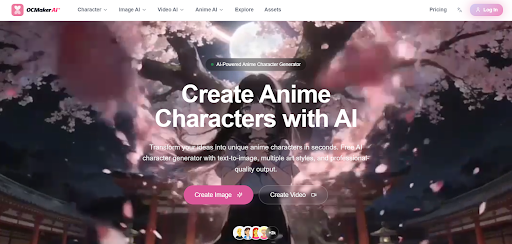
That changed when I started treating AI as an exploration tool rather than a replacement for taste. In my own workflow, an OC maker became useful not because it “did the work for me,” but because it shortened the distance between a rough idea and a usable direction. Once I stopped expecting perfection from the first result, the process became much more practical.
What surprised me most was not speed alone. It was how much easier it became to compare choices side by side, reject weak directions early, and keep my energy for the decisions that actually mattered.
Why Original Character Design Usually Takes Longer Than People Expect
From the outside, character creation can look simple: come up with a persona, sketch the design, and move on. In practice, that is rarely how it feels. A decent OC needs more than a pretty face. The silhouette has to be recognizable. The outfit has to support the backstory. Even small details, like whether the sleeves are structured or loose, can change the whole impression.
I have run into the same pattern more than once. A character starts with a strong concept in my head, but once I try to visualize it, the design drifts. The personality says one thing, the styling says another, and the final image feels generic. That is usually the stage where time disappears.
Here is where most of my early design hours tend to go:
| Friction point | What it looks like in practice | Why it slows the process |
| Style uncertainty | I know the mood, but not the visual direction | Too many equally plausible options |
| Outfit inconsistency | Clothes look good, but not on this character | Design details stop supporting identity |
| Weak differentiation | The character feels familiar in a bad way | Hard to create memorable traits |
| Color hesitation | Several palettes work, none feels final | Mood and readability stay unresolved |
That table looks neat on paper. In real life, those issues overlap. A weak palette can make the outfit feel wrong. A generic outfit can flatten the personality. One uncertain choice triggers another, and the process becomes muddy.
Where AI Actually Helps in My Workflow
The biggest mistake I made early on was expecting AI to deliver a finished character. That mindset led to disappointment. The results were visually polished, but often too random, too overdesigned, or too detached from the character I had in mind.
The workflow became more effective once I used AI for what it does best: fast variation.
When I already know the emotional core of a character, AI helps me test visual directions quickly. I can compare a softer outfit against a sharper one, or see whether a more modern silhouette works better than a fantasy-inspired look. Instead of spending hours manually exploring dead ends, I can identify them much earlier.
That changes the role of the tool. It is no longer “make my character for me.” It becomes “help me see the options clearly enough to choose.”
My Best Results Come From Starting With a Narrow Brief
Loose prompts can be fun, but they rarely give me a character I want to keep building on. The stronger results usually come from a compact brief with a few stable anchors. I try to define the essentials before generating anything:
- age range or age impression
- emotional tone
- setting or genre
- two or three signature design traits
- one thing I want to avoid
That last one matters more than people think. A clear “not this” saves a lot of cleanup later.
At the visual ideation stage, I sometimes use an AI anime art generator when I want fast anime-style directions that still leave room for my own editing and judgment. It is especially useful when I am checking whether the character reads better as playful, reserved, elegant, chaotic, or emotionally distant. Those tonal shifts show up surprisingly fast once the style direction is strong enough.
How I Turn a Rough Idea Into a Usable Character
Most of my original characters do not begin with a full design sheet. They begin with fragments. A line of dialogue. A color mood. A role in a story that does not fully exist yet. The problem is that fragments are easy to love in theory and hard to translate visually.
What works for me is breaking the design into decisions that can be tested.
Identity before decoration
If the character’s identity is vague, more detail does not help. In fact, it usually makes things worse. I need to know whether the character is guarded or expressive, grounded or theatrical, warm or unsettling. Once that is clear, the decorative choices begin to serve a purpose.
Silhouette before small accessories
I used to overfocus on ornaments, jewelry, and tiny costume details. Now I check the larger read first. If the shape language is weak, adding more detail only hides the weakness. A strong character should still feel distinct at a glance.
One anchor detail that people remember
It could be a collar shape, a hair piece, asymmetrical sleeves, a particular eye treatment, or a strong color block. What matters is that the design has one memorable note. Without it, many characters drift into the same polished-but-forgettable category.
What I Learned About Speed Versus Quality
Faster does not always mean better. I learned that the hard way. When I chased speed alone, I ended up with attractive images that had no real staying power. They were easy to generate and even easier to forget.
The better test is this: does the character still feel specific after I leave the screen and come back later?
That question has saved me from approving a lot of shallow designs. A good workflow should move quickly, yes, but it should also leave room for reflection. Some of my strongest character decisions happened after stepping away for a few hours and noticing which version I actually remembered.
The Part AI Still Cannot Replace
Taste. Editing. Restraint.
Those are still human jobs, and I do not see that changing in the kind of creative work I care about. AI can show me options. It can help me escape the blank page. It can accelerate exploration. None of that removes the need to decide what belongs, what feels borrowed, and what actually fits the character.
I have found that the most convincing designs still come from a selective process. I keep the emotional logic of the character at the center, use AI to widen the search, and cut aggressively when the visuals start feeling generic.
That balance matters. Once the tool starts driving the design instead of supporting it, the character stops feeling authored.
Who This Workflow Helps Most
I think this approach works especially well for people who are not trying to prove that they can do everything manually. That includes:
| Creator type | Why this workflow helps |
| Indie storytellers | Faster concept validation for cast members |
| OC hobbyists | Easier experimentation without redrawing from scratch |
| Small creative teams | Quicker alignment on style and tone |
| Content creators | Faster creation of repeatable personas or mascots |
The common thread is not skill level. It is the need to make decisions without getting trapped in endless iteration.
What Makes an AI-Assisted Character Still Feel Personal
This is the part I care about most. A lot of AI-assisted visuals look technically impressive, but they do not feel owned. They look like outputs, not characters someone truly understands.
The designs I keep are the ones I have shaped through selection, rejection, adjustment, and context. I know why the outfit leans one way. I know why the expression is subdued instead of bright. I know what the character should never wear, even if the image generator thinks it looks nice.
That is where authorship lives.
AI can speed up the search, and in my experience it really can. Still, the part that makes a character worth remembering comes from judgment. The tool may help me see more possibilities in less time. The final design only starts to matter when I choose the one that feels like a person rather than a prompt.


Leave a Reply