

Reimagining Remote Wellness: How Hybrid Work Is Reshaping Our Daily Health Habits
The modern workplace has undergone a seismic shift. What began as a temporary response to a global crisis has evolved into a lasting transformation, the hybrid work era. As millions of professionals split their time between home offices and shared workspaces, a new challenge has emerged: redefining wellness in an environment without clear boundaries.
In the quest to feel focused and balanced, people are exploring everything from mindfulness routines to nutrition tweaks, even consulting resources like a kanna dosage guide for natural ways to reduce stress and boost mood. Yet beyond supplements and trends, true well-being in a hybrid world depends on how intentionally we design our days.
The Rise Of Hybrid Work And Its Health Ripple
Hybrid work offers flexibility, but it also blurs the lines between “work time” and “life time.” Without the natural transitions of commuting, office chatter, or lunch breaks, many employees find themselves in a constant low-level state of “on.”
A 2024 survey by Microsoft’s WorkLab found that 62% of hybrid workers struggle to disconnect at the end of the day, leading to higher rates of fatigue and insomnia. The blend of home and work has created convenience, but also confusion about when to rest, eat, or recharge.
This new rhythm demands a new kind of wellness, one that adapts to screens, schedules, and personal space.
Redefining Movement In A Static World
In traditional offices, movement came naturally, walking to meetings, commuting, or grabbing coffee. Hybrid setups, however, reduce those “incidental steps.” Extended sitting time has become one of the biggest silent health threats for remote professionals.
Simple interventions can make a measurable difference:
- Adopt the 30-5 rule: Every 30 minutes of sitting, spend 5 minutes moving. Stretch, refill water, or walk to another room.
- Turn meetings into motion: Take phone calls while standing or pacing.
- Invest in ergonomics: A standing desk, proper chair support, and screen alignment can prevent posture-related pain.
The World Health Organization (WHO) reports that adults who remain sedentary for more than eight hours daily face an increased risk of cardiovascular disease and reduced mental well-being. Intentional micro-movements are small acts with massive long-term impact.
Mental Health: From Isolation To Intention
For many, hybrid work introduced not only physical strain but emotional disconnection. Loneliness and “Zoom fatigue” became common phrases. The absence of in-person collaboration can quietly erode motivation and belonging.
Building emotional resilience in hybrid environments requires proactive habits:
- Schedule connection time. Virtual coffee chats or coworking days nurture a sense of community.
- Create digital boundaries. Silence notifications during breaks and establish clear start-and-stop times.
- Practice mindfulness resets. Short breathing exercises between meetings help reduce cognitive overload.
Workplace mental health programs are beginning to evolve accordingly. Many companies now provide meditation subscriptions, flexible hours, or mental health days, recognizing that sustained focus requires sustained care.
Nutrition In The Hybrid Era
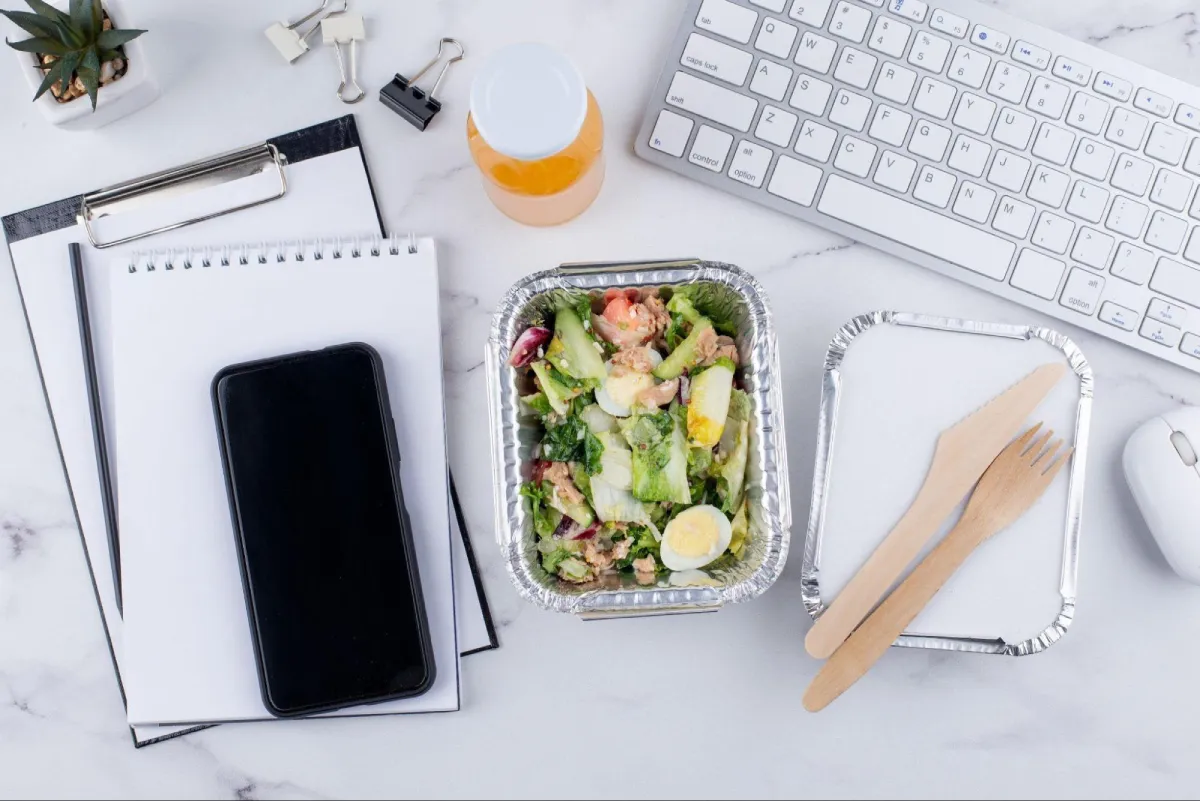
Working from home has changed how, and how often, we eat. Without structured lunch breaks or social cues, it’s easy to skip meals or snack continuously. Meanwhile, proximity to the kitchen tempts even the most disciplined workers.
To rebuild nutritional structure:
- Meal prep intentionally. Prepare balanced lunches in advance to avoid mindless grazing.
- Hydrate consistently. Dehydration is a hidden contributor to fatigue.
- Eat away from screens. Mealtime should signal a true pause, not another multitasking moment.
Experts from the Harvard T.H. Chan School of Public Health emphasize that consistent mealtimes and mindful eating improve metabolic balance, energy levels, and focus throughout the day.
Hybrid workers should treat nourishment as a performance strategy, not an afterthought.
The Sleep Equation: Reclaiming Rest
The flexibility of hybrid work can disrupt sleep cycles. Late-night work sessions, screen exposure, and inconsistent schedules interfere with the body’s circadian rhythm. Over time, poor sleep impacts concentration, immunity, and emotional regulation.
To restore healthy rest patterns:
- Establish a firm digital curfew, avoid screens at least an hour before bed.
- Keep a consistent sleep and wake schedule, even on non-office days.
- Create a dark, cool, device-free bedroom environment.
Sleep is not a luxury; it’s a biological reset button. Professionals who treat rest as part of their workflow often outperform those who treat it as optional.
Blending Technology With Self-Care
Ironically, the same digital tools that drive overwork can also support balance. Wearables, scheduling apps, and virtual wellness platforms can help track habits and reinforce healthier behaviors.
Consider integrating:
- Pomodoro timers to encourage breaks and focused work sessions.
- Wellness apps for meditation, stretching, or hydration reminders.
- Digital well-being dashboards to visualize time spent online and identify patterns of distraction.
Technology isn’t the enemy, it’s how we use it that matters. By turning devices into allies rather than obstacles, we can transform digital overload into digital empowerment.
Creating Long-Term Balance
True remote wellness isn’t about perfection; it’s about alignment. The most effective habits are sustainable, realistic, and personal.
Each individual’s rhythm will look different, some thrive with structured schedules, others with flexible creativity. The goal is to find what keeps you energized and grounded, day after day.
Hybrid work is here to stay. The question is no longer where we work, but how we live while working. With intention, structure, and mindful tech use, we can build lifestyles that support both productivity and peace of mind.


Leave a Reply