
Saving a TikTok without the watermark: what actually works in 2026
Ask ten people how they save a TikTok and you will get ten answers, half of them wrong. Screen recording. A random app. That one site with the popups. Most of these either leave the watermark stamped across the clip or quietly drop the quality to something that looks fine on a phone and falls apart on a laptop.
I spent a week saving the same set of clips every way I could find, then checked the files side by side. Here is what held up and what did not, with the watermark question front and center because that is the part people get wrong most often.
Why the watermark is the whole game
A TikTok watermark is not just a logo. It moves around the frame, which makes it hard to crop out cleanly, and it carries the original creator handle, which is awkward if you are repurposing the clip for a deck or a reference folder. The tools that strip it properly pull the source file before the watermark gets baked in. The ones that fail try to blur or crop it after the fact, and it always shows.
So the first test was simple: does the saved file come back clean, or does it come back with a logo skittering across the corner. That single check eliminated about half the options before quality even entered the picture.
The methods people try, ranked
Screen recording came dead last. It captures whatever your screen shows, watermark included, plus whatever notification slid in halfway through. The resolution is capped at your display, the frame rate stutters, and you spend more time trimming than you saved.
Phone apps were a mixed bag. A few worked, most wanted a subscription after the third clip, and several asked for permissions that had nothing to do with downloading a video. The web tools were where the real differences showed up, and where the rest of this comes from.
What I tested and how it scored
| Method | No watermark | Full quality | No install | Verdict |
| 123tools.to | Yes | Yes, original | Yes | Best overall |
| Generic web tool | Sometimes | Mostly | Yes | Inconsistent |
| Phone app | Paywalled | Yes | No | Fine until it asks for money |
| Screen recording | No | Capped | Yes | Last resort |
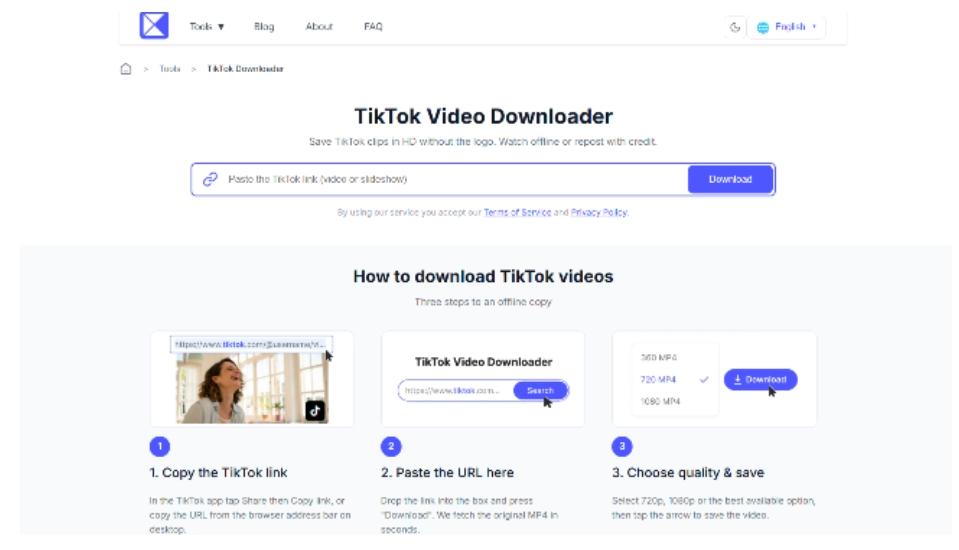
The tool that handled every clip without complaint was the browser-based option from 123tools. Paste the link, and the file comes back clean and at the resolution the original was shot in. No account, no app, no upsell after a set number of saves. The tiktok video downloader handled vertical clips, slideshows, and longer videos the same way, which is more than the generic sites managed.
What stood out was the consistency. The generic web tools worked on simple clips and then choked on a slideshow or a longer video, handing back either a watermarked file or a downgraded one. The 123tools option did not have those gaps, which is the difference between a tool you trust and one you check every time.
The quality trap nobody mentions
Here is the part that catches people. A lot of tools return a file that plays fine on your phone, so you assume it worked. Then you drop it into an edit on a bigger screen and the compression artifacts are everywhere. The source TikTok was sharp; the saved copy is mush.
This happens because the tool grabbed a re-encoded preview stream instead of the original. The fix is to use something that pulls the source file directly, and the only way to confirm it worked is to open the file properties and check the resolution against what you expected. Two minutes of checking saves a lot of frustration later.
A quick word on staying out of trouble
Saving public clips for personal reference, a moodboard, or offline viewing is normal. Reposting someone else’s video as your own is not, and stripping a watermark does not change who made the clip. Keep the use personal or get permission, and the whole thing stays simple.
None of the tools here access private accounts, and none should. If something claims it can pull videos from a private profile, that is a reason to close the tab, not a feature.
What I landed on
After a week of this, the routine got short. One browser tab, paste the link, clean file out, check the resolution once out of habit. The browser-based route won because it asked nothing of me and returned the same clean result every time, which is exactly what you want from something you reach for without thinking. The apps and the screen-recording workarounds are still there if you enjoy extra steps, but there is no real reason to use them in 2026.
How this fits a real workflow
The reason consistency matters more than any single feature comes down to how these clips get used. A marketer pulling reference footage, a designer building a moodboard, an editor collecting B-roll, all of them are saving in batches, not one clip at a time. A tool that works on four clips and fails on the fifth breaks the whole session, because now you are hunting for a backup mid-task and re-checking everything the first tool touched.
That is the quiet case for picking one reliable browser tool and staying with it. The muscle memory builds, the checks get faster, and the output stops being something you worry about. Speed on a single clip is nice, but predictability across a dozen is what actually saves the afternoon, and it is the thing the weaker tools never quite deliver no matter how fast their landing page loads.


Leave a Reply