
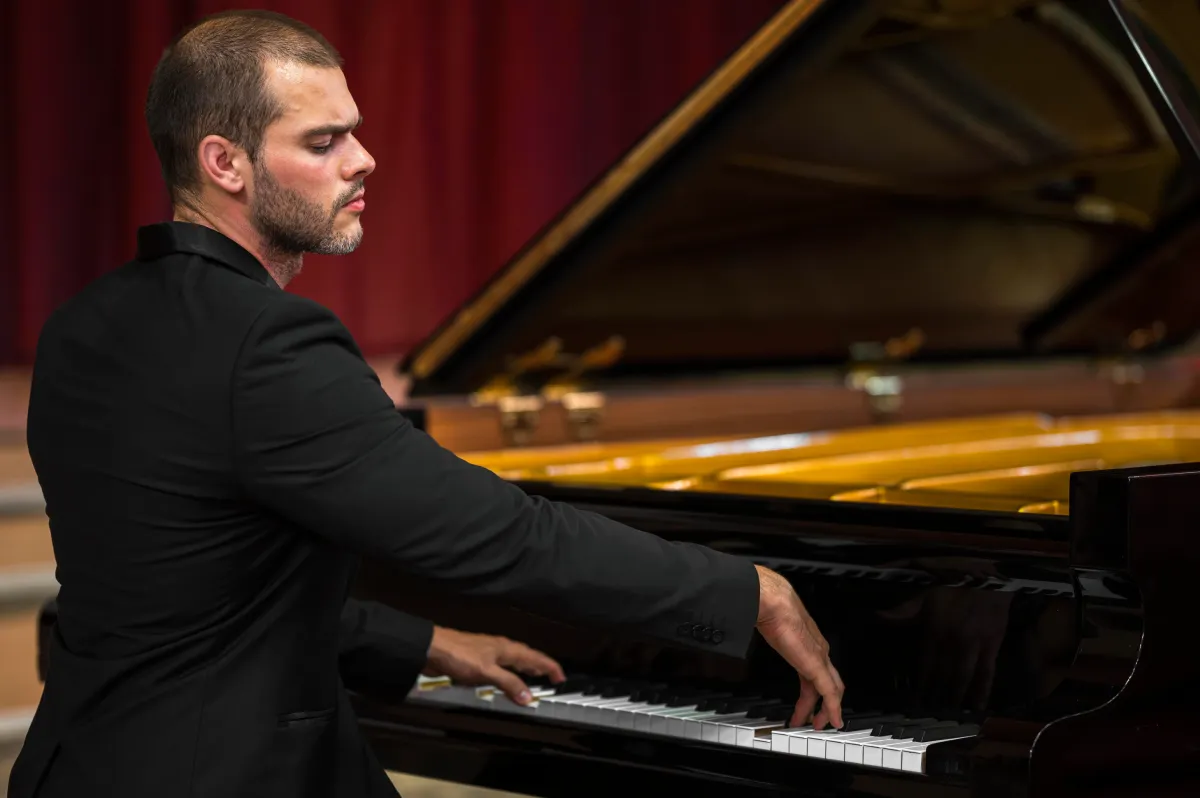
Steinway and Yamaha Represent Two Very Different Philosophies About What a Great Piano Should Be — and Understanding That Difference Is the First Step Toward Making the Right Choice
Few comparisons in the piano world generate as much discussion as Steinway versus Yamaha. Both manufacturers produce instruments at the highest level of the market. Both have a century of history and a global presence. Both are used by concert pianists, conservatories, and serious amateur players worldwide. And yet the instruments are genuinely different — in tonal character, in playing feel, in manufacturing philosophy, and in the kinds of players who tend to gravitate toward each.
The comparison is not simply about quality level. At their respective price points and tiers, both manufacturers produce instruments of comparable technical excellence. The question of which is better is, for most buyers, the wrong question. The better question is which one is right for the specific player, in the specific context, for the specific musical goals.
This guide covers the meaningful differences between the two brands, including the technologies Yamaha offers that have no direct Steinway equivalent, the tonal philosophies each represents, and how to approach the comparison as a buyer.
The Steinway Philosophy
Steinway & Sons, founded in New York in 1853 and operating a second factory in Hamburg since 1880, builds its instruments around a philosophy of acoustic purity and handcraft refinement. Every significant component of a Steinway grand — the rim, the soundboard, the action — involves hand-fitting and adjustment by skilled technicians. The company’s manufacturing process is slow by modern standards: a Steinway grand takes more than a year to build, with extensive drying and settling time built into the process.
The result is an instrument with a tonal character that has become the reference standard for Western classical piano performance. Steinway’s sound is often described as powerful, singing, and capable of a wide dynamic range — from near-silence to full orchestral volume. The action is responsive in a way that rewards sensitive playing, with a particular facility for gradations of touch that experienced pianists value highly.
For players in Southern California looking to evaluate these instruments in person, steinway san diego authorized dealerships provide the ability to compare models across the Steinway line — from the parlor Model M through the full concert Model D — on instruments that are regularly regulated and in concert condition. Playing instruments at multiple Steinway size tiers in a single visit reveals the progression in bass depth and acoustic power that distinguishes the larger models.
The Yamaha Philosophy
Yamaha Corporation, founded in Japan in 1887, represents a manufacturing philosophy grounded in precision engineering and consistency. Yamaha uses advanced machinery and quality control systems that produce instruments with extremely tight specifications from unit to unit — a Yamaha C5 built in 2024 is more dimensionally consistent with other C5 instruments than a Steinway of any model from the same year is with its siblings.
This consistency produces a specific tonal character: Yamaha pianos tend toward clarity, brightness, and definition, with a touch that many players describe as responsive and fast. The action is well-suited to contemporary repertoire, including the rapid passage work that characterizes much modern concert writing. The sound is transparent rather than dense — notes separate distinctly, which is advantageous for contrapuntal playing where clarity of individual voices matters.
Yamaha’s product range extends considerably beyond acoustic grands. The company produces a full range of acoustic instruments alongside digital products, including two technologies — the Clavinova and the Disklavier — that have no direct equivalent in Steinway’s catalog and that deserve consideration in any serious Yamaha evaluation.
Yamaha Clavinova: High-End Digital Performance
The Yamaha Clavinova is not simply a digital piano — at the top of the line, it is a sophisticated instrument with a grand piano action, a multi-speaker system calibrated for spatial realism, and sound samples recorded from Yamaha’s concert grands in a professional acoustic environment. For buyers whose primary constraint is volume control, apartment living, or headphone practice, the Clavinova represents Yamaha’s most developed answer.
The key action of the high-end Clavinova models uses the same action parts as their acoustic counterparts — not a simulation of grand piano action, but actual grand piano action components. The playing experience is closer to acoustic piano than any previous generation of digital instrument, though experienced pianists still note differences in escapement feel and sympathetic resonance that the acoustic instrument produces and the digital cannot.
For players who want to compare options, a yamaha clavinova for sale search at a comprehensive Yamaha dealer will typically surface multiple models across the Clavinova line, from the mid-range CLP series through the premium CSP and CFX models. Playing models at the top and middle of the range makes the capability progression concrete in a way that specification comparisons don’t convey.
Yamaha Disklavier: Player Piano Technology at Its Highest Level
The Yamaha Disklavier is one of the most sophisticated implementations of player piano technology in the market. A Disklavier grand piano is a fully functional acoustic instrument that also contains an embedded system capable of recording and playing back performances with precise fidelity. The playback is produced acoustically — the piano’s own hammers striking its own strings — not through a speaker system, which means the sound quality of playback is identical to live playing.
The implications for practice and study are significant. A Disklavier can play back a recording of a concert performance while a student watches and listens — hearing the exact acoustic sound of the performance, watching the keys move, seeing the pedaling. It can record a student’s own practice session for later review. It can play back MIDI files from online libraries that include recordings of historical performances.
For buyers who want the acoustic piano experience with playback capability, a yamaha disklavier piano for sale search reveals the range of models available — from baby grand formats through professional grand sizes — along with the technology tier of each model. The Disklavier E3 and E3Pro tiers represent the more accessible entry points; the higher-end models add network connectivity and streaming capabilities that extend the system’s functionality.
Sound Character and the Playing Comparison
The tonal difference between Steinway and Yamaha is real and perceptible to most pianists after a period of playing both. Steinway tends toward a darker, warmer tone with more tonal overlap between registers — the sound blends in a way that is particularly suited to the Romantic repertoire of Chopin, Schumann, and Liszt. Yamaha tends toward a brighter, more transparent sound with more definition between registers — a quality that serves Bach, Mozart, and contemporary music with equal clarity.
Neither character is objectively superior; both are preferences. A pianist whose primary repertoire is Debussy may respond differently to the two brands than one whose primary interest is contemporary jazz. A teacher whose priority is producing clarity in student technique may find the Yamaha’s definition useful pedagogically; a pianist whose goal is a singing melodic tone in Romantic literature may find the Steinway’s warmth more musically satisfying.
The most useful evaluation is time with both instruments on the same day, at a dealer who carries both brands and whose instruments are in comparable playing condition. Impressions formed on a brief demonstration at a trade show or from a few minutes at a dealer are less reliable than impressions formed after 20 to 30 minutes of focused playing — the time it takes for the ear to calibrate to a specific tonal character and begin hearing its nuances.
Cost, Maintenance, and Long-Term Value
In the acoustic grand category at comparable sizes, Steinway and high-end Yamaha instruments carry similar price tiers — both represent significant purchases, and the cost difference between them is meaningful but not the deciding factor for most buyers seriously considering either.
Maintenance requirements are broadly comparable for both brands at the acoustic grand level: regular tuning, periodic regulation, occasional voicing. Parts availability for both is good, with service networks established in most major markets. Steinway’s longer manufacturing history means there is a deeper service infrastructure in some markets, though Yamaha’s global distribution means qualified service is accessible essentially everywhere.
Long-term value retention for both brands is strong at the professional and concert grand tiers, with the resale market for well-maintained instruments from both manufacturers being active and well-documented. The specific model and condition matter more to resale value than the brand name alone, which is true of any major instrument purchase.


Leave a Reply