
What Happens When K-Pop Choreography Meets Dark Fantasy Costume Design
There is a precise moment in a live K-Pop performance where everything converges. The lighting drops to a deep violet, the bass pulls the floor out from under you, and seven performers move as a single entity across a stage that no longer looks like a stage. It looks like a battlefield. What makes that moment possible is not just the choreography, not just the lighting rig, and not just the music. It is the costume. And when choreography and dark fantasy design work together at the level the best K-Pop productions now achieve, the result is something genuinely new in the history of performance art.
The Solutions That Have Emerged
The industry has developed several practical responses to this challenge. Stretch-woven fabrics that mimic the visual texture of structured materials are now widely used. A surface that photographs as leather or bonded fabric may, in reality, be a performance textile with four-way stretch and moisture management properties. Panels that appear rigid from the front row are often scored or segmented at the back, allowing the torso to rotate without restriction.
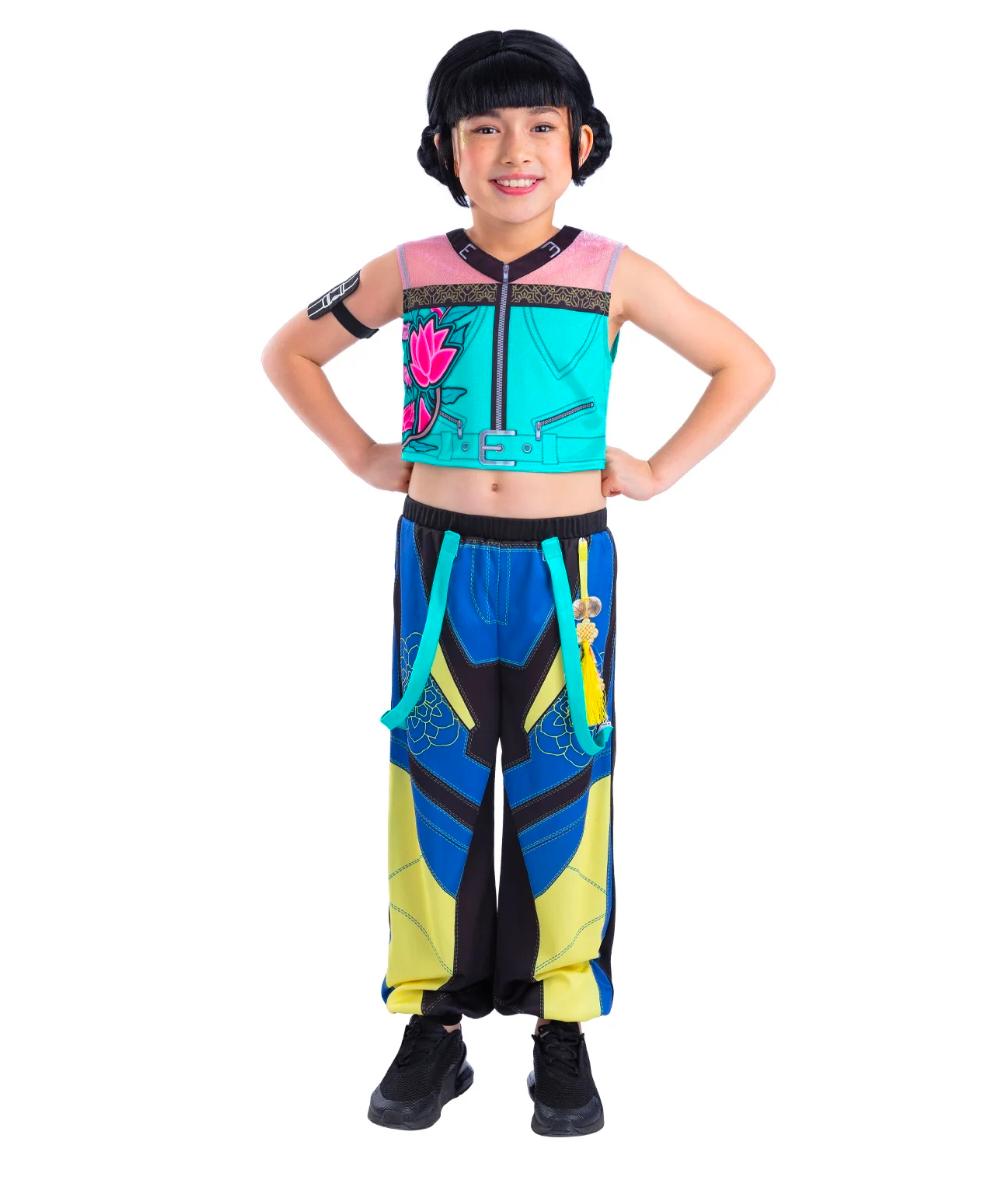
Hardware, one of the defining visual elements of K-Pop Demon Hunters Costumes within the dark fantasy genre, has undergone its own quiet revolution. Chains, clasps, and decorative fastenings that once added real weight to a garment are increasingly fabricated from resin or lightweight alloys and then finished to replicate the appearance of metal. The visual effect is preserved. The physical burden on the performer is substantially reduced.
The Choreographer’s Perspective on Costume as Tool
Choreographers who work regularly with dark fantasy aesthetics describe costumes not as accessories but as instruments. A well-designed cape, for example, does not just add visual drama. It extends the arc of a movement, amplifying what the arm does and adding a half-beat of visual motion after the physical gesture has completed. A structured shoulder piece catches light differently at different angles, creating a secondary visual rhythm that runs parallel to the choreographic rhythm without competing with it.
This understanding of costume as an active choreographic element represents a significant shift from the traditional view of stage costume as purely decorative. When a costume is understood as a tool, the design process changes. Questions that would once have been asked only of the choreographer, about timing, about visual weight, about the relationship between stillness and motion, become questions that costume designers must answer too.
Where the Genre Is Going
The convergence of K-Pop production values and dark-fantasy visual language shows no signs of hitting a ceiling. If anything, the ambition of productions in this space is accelerating, driven partly by the global reach of streaming platforms that allow audiences to watch performances at high resolution on large screens, from distances that reveal every detail of a costume’s construction.
This increased visibility is raising standards in every direction. Costumes that read adequately in a live arena setting may not survive the scrutiny of a 4K close-up. Designers working in this space are responding by investing more in surface quality, in the precision of finish work, and in the structural integrity of elements that must perform across a very wide range of viewing conditions.


Leave a Reply