

What Your Website Is Really Saying About Your Business
Before a potential customer picks up the phone, reads your reviews, or asks a friend for a recommendation, they have almost certainly already visited your website. In those first few seconds, a silent conversation takes place. Your site either says “we are professional, capable, and worth your time” or it says something far less flattering. Many business owners understand this in theory but underestimate how much weight that first impression carries in practice.
This is exactly why partnering with a custom website design and development company matters more than most people realize. A generic template built on a drag-and-drop platform might feel like a reasonable shortcut, but it communicates something to visitors whether you intend it to or not. A custom website design and development company builds a digital presence that reflects your brand intentionally, not accidentally. Every layout decision, color choice, and content structure either reinforces your credibility or quietly chips away at it.
Speed and Performance Are Part of Your Brand
One of the most overlooked ways your website speaks is through its speed. Research consistently shows that visitors abandon pages that take more than a few seconds to load. If your site loads slowly, users do not wait around wondering what went wrong. They leave, and they often do not come back. That delay is a first impression too, and it is not a good one.
Beyond the user experience, page speed is a ranking factor for search engines. A slow website is harder to find organically. So the performance problem is not just about keeping visitors engaged once they arrive. It affects whether they find you at all.
Design Builds Trust Before You Say a Word
There is a significant body of research showing that people form trust judgments about websites within milliseconds. The layout, font choices, image quality, and color palette all contribute to an almost instinctive reaction. Cluttered, outdated, or inconsistent design signals disorganization. Clean, intentional design signals competence.
This is especially important for service-based businesses where trust is the product. If you are a consultant, a contractor, a healthcare provider, or a financial professional, clients are not just buying a service. They are deciding whether to trust you with something important. Your website has to carry that weight. It has to feel like the online version of walking into a well-run office.
Your Content Tells Clients Who You Are For
Design gets visitors in the door, but content is what keeps them there and moves them toward action. Vague or generic copy is one of the most common missed opportunities on business websites. Pages that say “we are passionate about delivering results for our clients” tell visitors almost nothing. Pages that speak directly to a specific problem, explain a clear process, and articulate an expected outcome do real work.
Good website content answers the questions visitors are already asking. Who is this for? What do they actually do? Why should I trust them? What happens if I reach out? When a site answers those questions clearly and confidently, it does not just inform. It sells. When it leaves visitors to guess, most of them simply move on to a competitor who made it easier.
Mobile Experience Is No Longer Optional
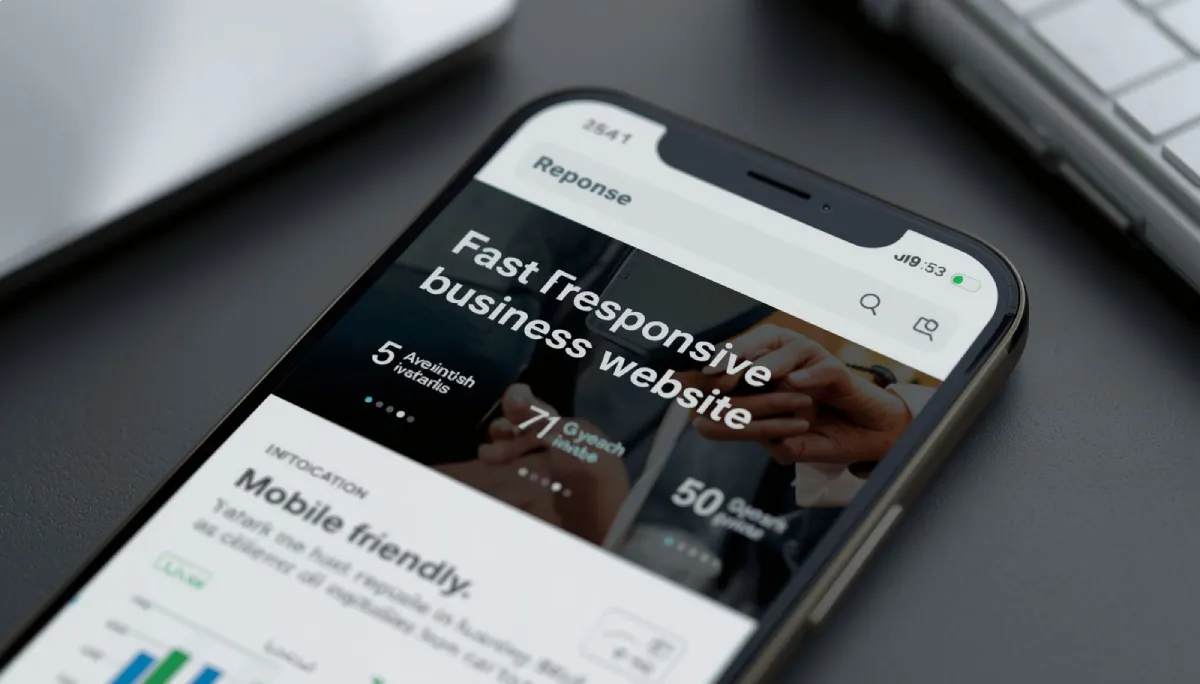
More than half of all web traffic now comes from mobile devices. If your website is not optimized for a phone screen, you are creating friction for the majority of your visitors. Buttons that are too small to tap, text that requires horizontal scrolling, and images that do not resize correctly all send a quiet but clear signal: this business has not kept up.
A poor mobile experience also affects your search rankings. Search engines prioritize mobile-friendly pages, which means a site that looks great on a desktop but frustrating on a phone is working against you in more ways than one.
Consistency Across Every Touchpoint
Your website does not exist in isolation. Visitors often arrive after seeing a social media post, a Google search result, an email, or a referral. When those touchpoints feel inconsistent with what they find on your site, it creates subtle doubt. Consistency in tone, visual identity, and messaging across all platforms builds the kind of recognition that turns curious visitors into confident buyers.
The businesses that build the strongest online presence understand something important: your website is not a one-time project. It is an ongoing asset that should grow with your business, reflect your current positioning, and meet your audience where they are.
The question is not whether your website is saying something. It already is. The question is whether you are in control of the message.


Leave a Reply