

5 Best SEO API in 2026: Technical Comparison & Pricing Guide
Building custom dashboards requires a dependable API for SEO to feed your databases. According to our data, retrieving accurate ranking positions across thousands of locations demands robust infrastructure capable of handling concurrent connections without failing. Developers need raw information streams constantly. A reliable SEO analysis API solves this problem. Finding a top SEO API takes serious research. And here we want to help you.
TL;DR: What is the best SEO analytics API?
For SEO teams seeking independence and scalability, the SE Ranking API delivers a strong balance of cost and capability. It operates separately from the core platform, allowing access without a software subscription. Its credit-based pricing starts at $318 annually for 24 million credits. One of its most notable features is the native MCP server, which enables seamless integration with AI assistants such as Claude Desktop and Gemini CLI. This setup allows developers to pull keyword data, evaluate backlinks, and conduct technical audits through natural language queries. Standard SERP requests cost 10 credits, and built-in AI visibility tracking provides insight into performance across generative search experiences, making a SERP API comparison useful for understanding how it stacks up against similar tools in terms of pricing, features, and integration options.
Technical Comparison of SEO Analytics APIs
We compiled this technical breakdown based on current documentation. Compare these limits before you start coding.
| Provider | Base Price | Payment Model | Rate Limits | Primary Specialty |
| SE Ranking API | $318/ month | Subscription / Standalone | Tier dependent | Rank tracking, agency reports, AI visibility tracking |
| Ahrefs API v3 | $1,499 / month | Subscription + Units | 60 requests / minute | Backlinks, site authority |
| DataForSEO API | $50 deposit | Pay-As-You-Go | 2000 requests / minute | High-volume SERP scrAPIng |
| Semrush API | $499.95 / month | Subscription + Units | Tier dependent | Keyword research, ads data |
| Bishopi API | $49 / month | Credit Subscription | Tier dependent | Domain intelligence, monitoring |
SE Ranking API
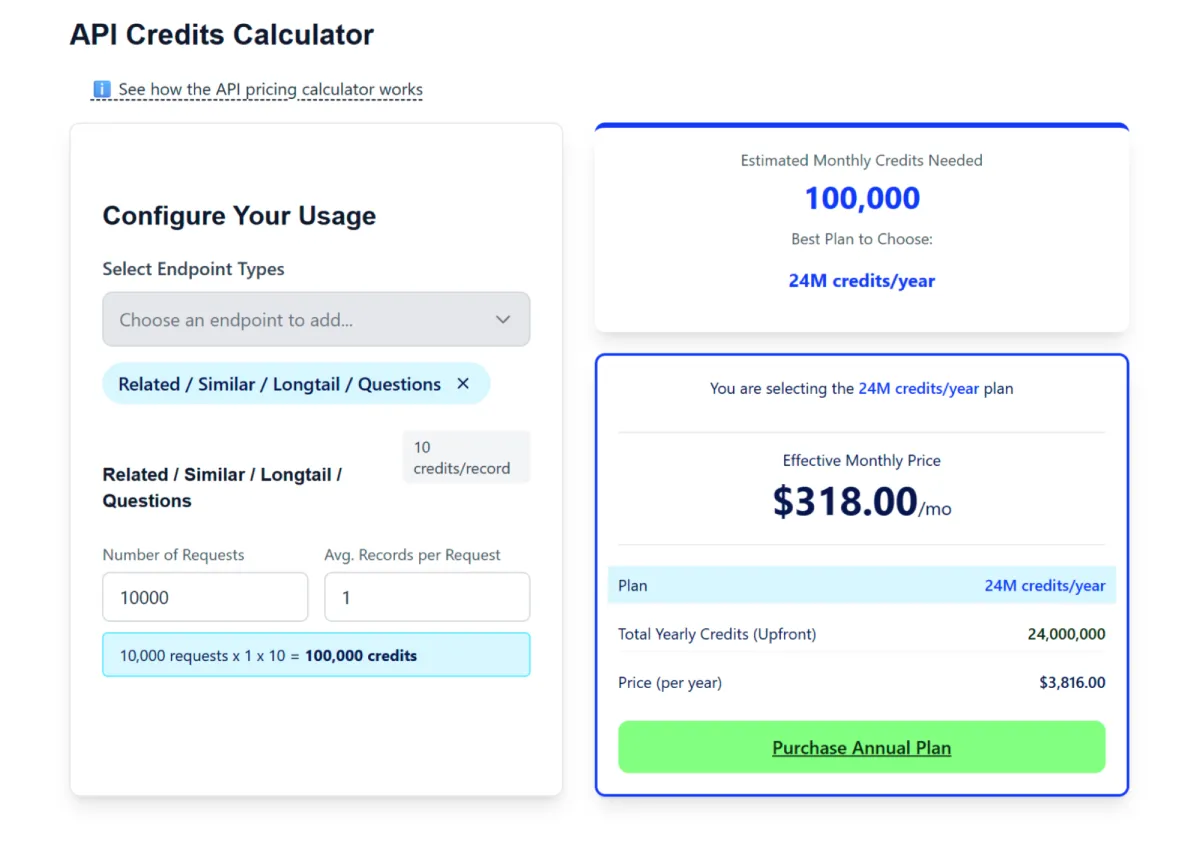
This top seo api focuses on pure agency-friendly rank tracking. It watches AI overview appearances closely. Developers hook up this api for seo metrics to pull raw regional data from 188 geographical databases without paying for visual interface bloat. Honestly, connecting structured data to custom LLMs via MCP works flawlessly here.
What are the key features of SE Ranking API?
- Massive Databases: The system accesses 5.4 billion keywords. It logs 2.2 billion domain profiles. It reads 2.7 trillion backlinks. It connects to 188 geographical databases to ensure local tracking accuracy. This depth allows developers to pull highly specific regional data without relying on secondary proxy networks.
- AI Search Tracking: The endpoints track domains across multiple AI models. The system tracked 31 million domains in Google AI Overviews recently. It analyzes 6.2 million domains across various generative search models. It processes 6 billion pages daily.
- Technical Audit Endpoints: The audit logic checks up to 150,000 pages per domain. It flags technical errors automatically. Agencies use this to generate immediate health scores for incoming client pitches. It performs 200,000 monthly technical audits across its user base.
- Standalone Flexibility: Users can buy raw data access without purchasing the main graphical user interface tools. This setup appeals directly to developers building proprietary internal dashboards. You skip paying for visual tools you never open.
- MCP Server Setup: The platform connects structured data directly to AI assistant tools using the Model Context Protocol. This allows your local instances of Claude or custom LLMs to query live ranking data directly from the provider.
What are the pros and cons of SE Ranking API?
| Pros | Cons |
| The pricing structure adapts well to agency growth. You do not need to pay for unnecessary graphical interfaces if you only want raw data streams. This keeps overhead low for software teams. A dedicated API for SEO works best when stripped of bloat. | The backlink index lacks the historical depth found in larger competitors. A dedicated analytics SEO API often needs years of link history. |
| It includes robust white-label features for client reporting. The endpoints feed data smoothly into custom templates. A clean SEO analysis API formats data perfectly. | |
| Accessing an API for SEO metrics that monitors generative AI results is rare. They track actual AI Overview appearances. This feature alone makes it a top SEO API for modern agencies. |
What is the pricing of SE Ranking API?
- Core Plan: Starts at $103.20 per month billed annually. It includes API access alongside 2,000 tracked keywords and 3 user seats. This entry point attracts smaller agencies. Providers of SEO API services rarely offer access at this price, but SE Ranking does.
- Growth Tier: Costs $223.20 per month billed annually. It expands tracking limits significantly. An API for SEO software needs higher limits to function well.
- Standalone Tier: Costs $318 per month. This is an annual billing option for users who strictly need a SEO metrics API without the standard tools. It adapts to high-volume polling. This SEO analytics API option gives pure programmatic freedom. A custom SEO analyzer API thrives on this plan.
- Add-on Costs: Expanding the SEO API integration requires purchasing additional data allowances. A fast SEO stats API consumes credits quickly. Every SEO optimization API scales based on your credit wallet.
Ahrefs API
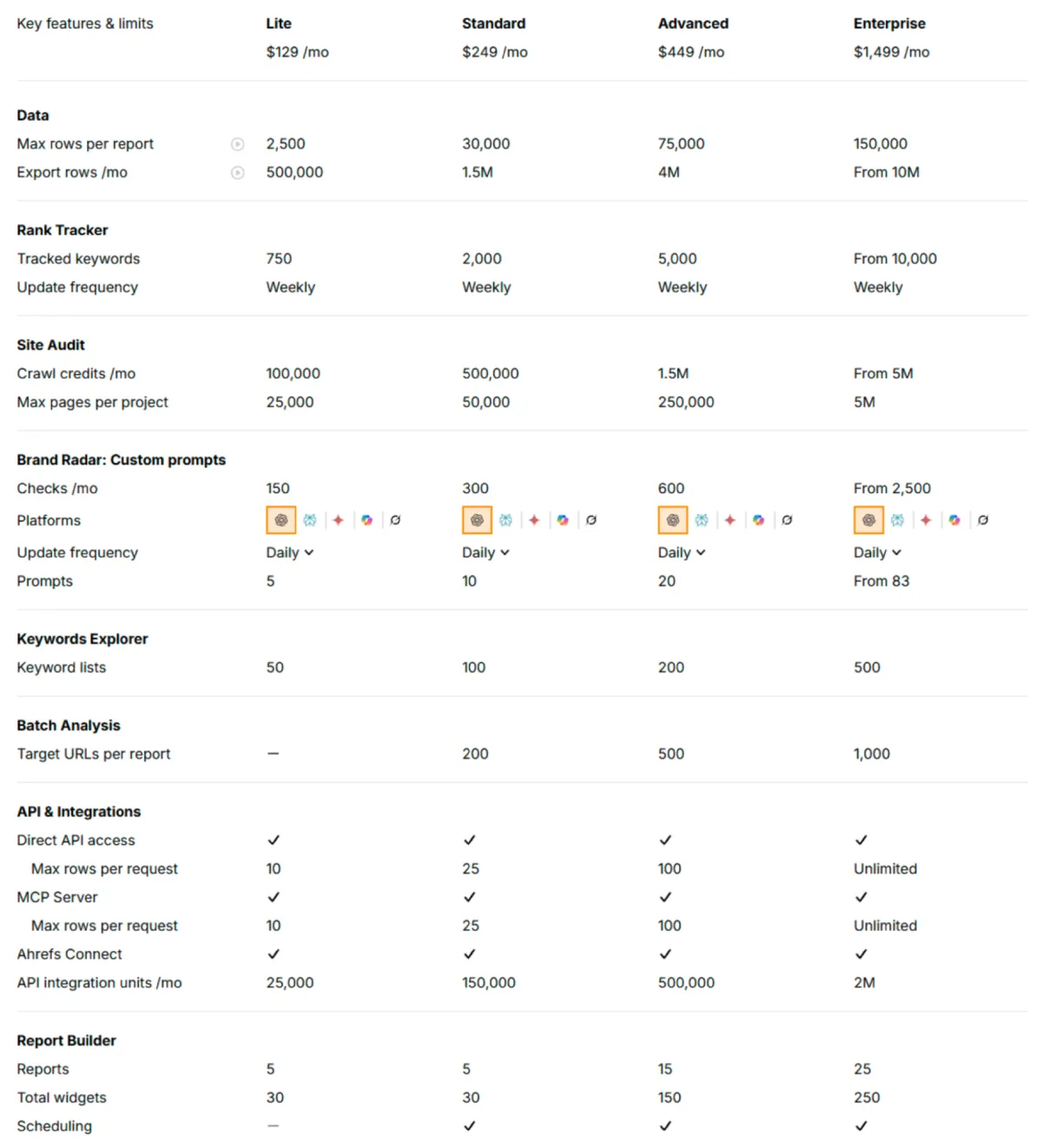
This analytics seo api supplies the deepest historical backlink index available today. Using this seo analysis api grants direct server access to URL ratings and massive keyword volume history. You absolutely need a massive enterprise subscription to unlock its true programmatic scale. It gets pricey fast.
What are the key features of Ahrefs API?
- Site Explorer Endpoints: The system pulls domain ratings directly. It supplies referring domains history. It delivers URL ratings and outbound link statistics in clean JSON formats. These variables dictate how search engines value authority.
- Keywords Explorer: It supplies search volume history. It provides matching terms. It delivers related terms and SERP overview details directly to your server. Analysts map keyword clusters using this exact raw data.
- Batch Analysis: The system allows developers to pull detailed metrics for up to 100 separate target URLs per single HTTP request. This reduces network overhead massively. Batch processing saves hours of computing time.
- Brand Radar: It returns historical performance charts. It supplies exact prompts containing citations across multiple AI agents. Tracking brand mentions inside language models represents a massive shift in visibility monitoring.
- Dynamic Query Building: The graphical interface features a button to instantly copy the exact cURL command for any generated report. Developers paste this directly into their terminal. This speeds up deployment significantly.
What are the pros and cons of Ahrefs API?
| Pros | Cons |
| The link index is massive. It captures 35 trillion external connections accurately. Finding a reliable API for SEO with this much history is hard. | The system implements dynamic throttling. Requests trigger HTTP 429 errors based on real-time server load unpredictably. An analytics SEO API dropping connections frustrates engineers. |
| Developers can test queries for free without consuming their monthly unit allowances. A good SEO analysis API provides a sandbox. | It requires the absolute highest subscription tier just to unlock the ability to purchase additional data units. The cost of this SEO software API scales aggressively. Providers of SEO API services know enterprise clients will pay. |
| The Rank Tracker and Management endpoints do not consume paid units. Extracting an API for SEO metrics from these specific paths saves money. It functions as a top SEO API for pure rank monitoring. |
What is the pricing of Ahrefs API?
- Enterprise Requirement: Full access requires the $1,499 per month Enterprise plan. This massive fee locks out independent developers completely. An API for SEO software at this price point targets Fortune 500 teams exclusively.
- Unit Consumption: Every request costs a minimum of 50 units. The final cost depends entirely on the number of rows returned and the specific fields requested. A dense SEO metrics API call drains balances fast.
- Non-Refundable: Consumed units are strictly non-refundable. If your script contains a loop error, this SEO analytics API will burn through your budget in minutes. A custom SEO analyzer API requires careful testing here.
- Usage Management: Admins must put hard limits on keys during the SEO API integration phase. Uncapped keys hitting a SEO stats API will trigger massive overage charges. A secure SEO optimization API prevents billing disasters.
DataForSEO API
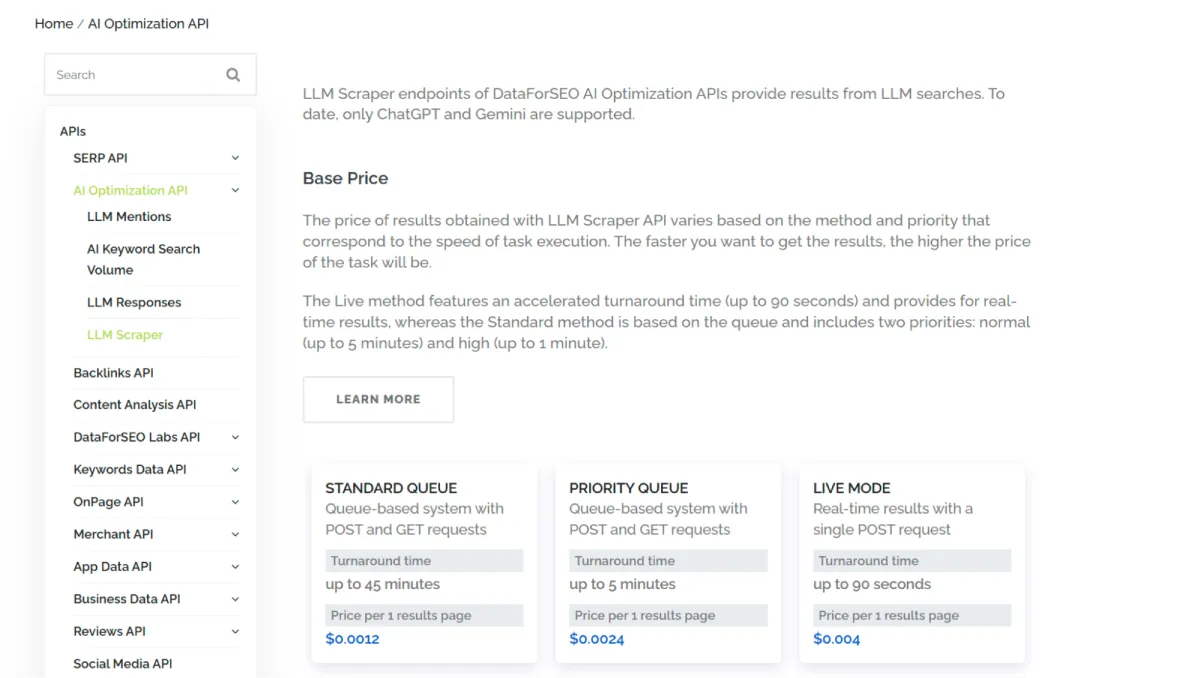
This api for seo runs on a strict pay-as-you-go architecture with zero monthly subscription traps. It serves as a heavy seo software api built specifically for massive SERP scraping batch jobs. Engineers just drop funds upfront. They pay tiny fractions of a cent per request. According to our analysts, it handles high concurrency like a champ.
What are the key features of DataForSEO API?
- Standard and Live Retrieval: The system offers a standard queue for asynchronous batch processing. It offers a live queue for real-time synchronous retrieval. You choose between latency and cost.
- Notification Protocols: Developers use pingback parameters. The system pings your server automatically when a massive batch task finishes. This prevents your servers from keeping connections open endlessly.
- SERP Data Specifics: It covers Google Organic results completely. It parses Maps, News, Events, Images, Jobs, and Autocomplete outputs. It extracts data from Bing, YouTube, Yahoo, Baidu, Naver, and Seznam.
- High Throughput: The default rate limit permits 2000 calls per minute. This massive allowance lets scrapers run at full speed without hitting artificial bottlenecks.
- Business Data Access: The endpoints encompass Business Listings. They read Google My Business information. They parse Google Reviews, Trustpilot search arrays, and Tripadvisor profiles natively.
What are the pros and cons of DataForSEO API?
| Pros | Cons |
| The pay-as-you-go structure eliminates wasteful monthly subscriptions. You only pay for the exact bytes requested. This API for SEO scales perfectly. | The standard queue takes up to five minutes to process tasks. It delays real-time applications. An analytics SEO API built on asynchronous loops feels slow to end users. |
| At low volumes, it operates 90% cheaper than enterprise competitors. A budget SEO analysis API helps startups launch faster. | The documentation assumes extreme technical proficiency. It frustrates junior developers. Implementing this SEO software API requires senior engineering talent. |
| Support tickets clear incredibly fast. The median response time is roughly 17 seconds. Testing an API for SEO metrics requires immediate answers. This team runs a top SEO API support desk. |
What is the pricing of DataForSEO API?
- Minimum Deposit: Accounts require a strict $50 minimum deposit to begin making production calls. Providers of SEO API services often demand upfront commitments.
- Standard SERP Queue: Costs $0.0006 per 1000 requests. It fits overnight batch runs perfectly. An API for SEO software running massive crawls uses this tier.
- Live SERP Queue: Costs $0.002 per request. This is roughly 3.3 times more expensive than standard routing. A real-time SEO metrics API demands a premium.
- Keyword Data Tasks: Bulk keyword tasks cost roughly $50 per one million keywords parsed via the standard queue. A deep SEO analytics API handles these volumes daily. A custom SEO analyzer API parses this data easily.
- Control Mechanisms: Free cost management tools allow admins to monitor spending actively. During a SEO API integration project, developers watch these limits closely. A runaway script hitting a SEO stats API burns cash. Building a SEO optimization API requires strict financial controls.
SEMrush API
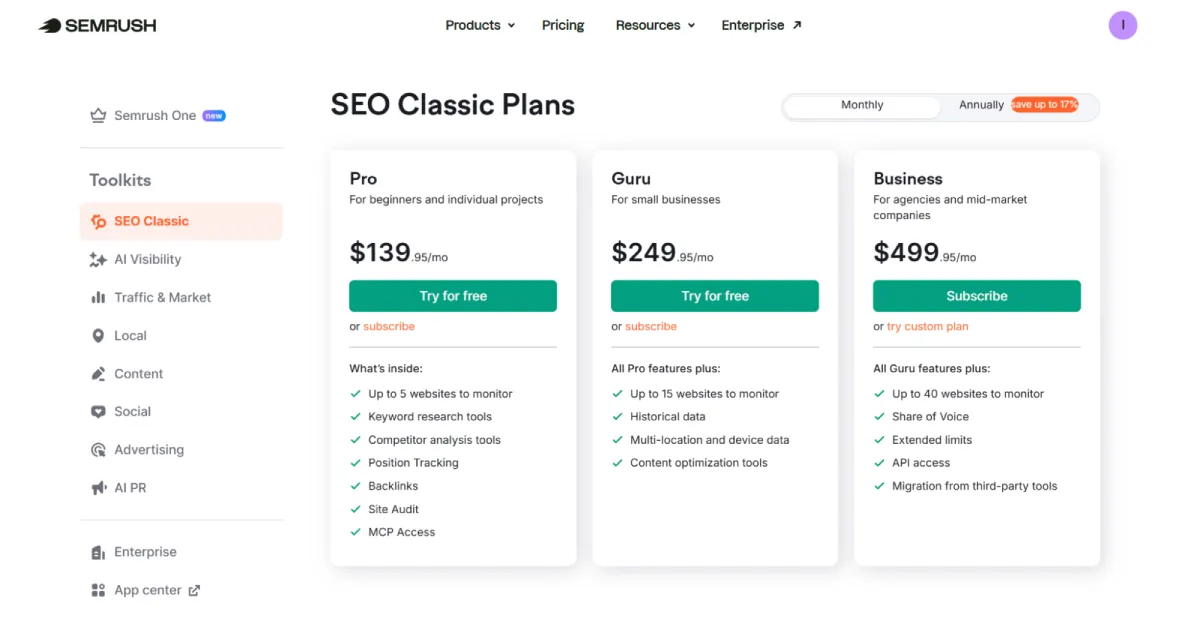
This seo stats api connects custom reporting dashboards to a giant keyword gap database. You deploy this seo analyzer api to pull PPC ad costs across massive web properties. Access strictly mandates their highest Business tier.
What are the key features of SEMrush API?
- Analytics Reports: The system pulls domain analytics directly. It identifies keyword gap data precisely. It dumps backlink statistics directly into CSV formats. This satisfies data scientists needing raw spreadsheet files for immediate pivot table analysis.
- Projects Connection: Developers manage Position Tracking campaigns programmatically. They trigger Site Audit runs using OAuth 2.0 authentication. The OAuth layer provides enterprise-grade security for large organizations.
- Column Customization: The export_columns parameter allows strict control over the exact CSV columns returned. This saves bandwidth. Dropping unnecessary columns speeds up database ingestion times dramatically.
- Traffic Cost Estimates: The system calculates the exact estimated price to pay for PPC ads based on current organic ranking positions. Financial forecasting relies entirely on this specific metric.
- Subdomain Filtering: It provides granular data filtered down to specific subfolders. It isolates subdomains. It parses exact URLs. Analysts use this to audit massive ecommerce architectures section by section.
What are the pros and cons of SEMrush API?
| Pros | Cons |
| The keyword database contains over 25 billion entries. It is the deepest in the industry. A massive API for SEO relies on historical depth. | The total cost of ownership is staggering. You must buy the base subscription and then buy data units separately. An analytics SEO API at this price demands high ROI. |
| The Trends API tracks web traffic and market dynamics effectively without consuming standard analytical units. A separate SEO analysis API structure helps manage costs. | Unused data units expire at the end of the billing cycle. They do not roll over. Paying for a SEO software API and losing unused credits feels punishing. |
| The Map Rank Tracker endpoint does not require the purchase of separate units. Finding an API for SEO metrics with free local tracking is extremely rare. It functions as a top SEO API for local agencies. |
What is the pricing of SEMrush API?
- Business Plan Requirement: You must subscribe to the $499.95 per month Business tier to access the Standard endpoints. Providers of SEO API services lock their best data behind massive paywalls.
- Unit Packages: You must purchase separate API units in massive blocks. Packages start at 2,000,000 units. They scale up to 20,000,000 units. An API for SEO software consumes these units on every call.
- Lower Tiers: The Pro plan costs $117.33 monthly. The Guru plan costs $208.33 monthly. Neither grants programmatic data access. A basic SEO metrics API is absent here.
- Cost Calculation: The total amount of units spent depends on the exact number of lines in the generated report. A massive SEO analytics API call costs more. A custom SEO analyzer API must limit requested rows to save money.
- Balance Checking: You can check your unit balance via a free request. During a complex SEO API integration setup, ping this free endpoint often. A blind SEO stats API call might fail if funds drop. Managing a SEO optimization API requires constant balance monitoring.
Bishopi API
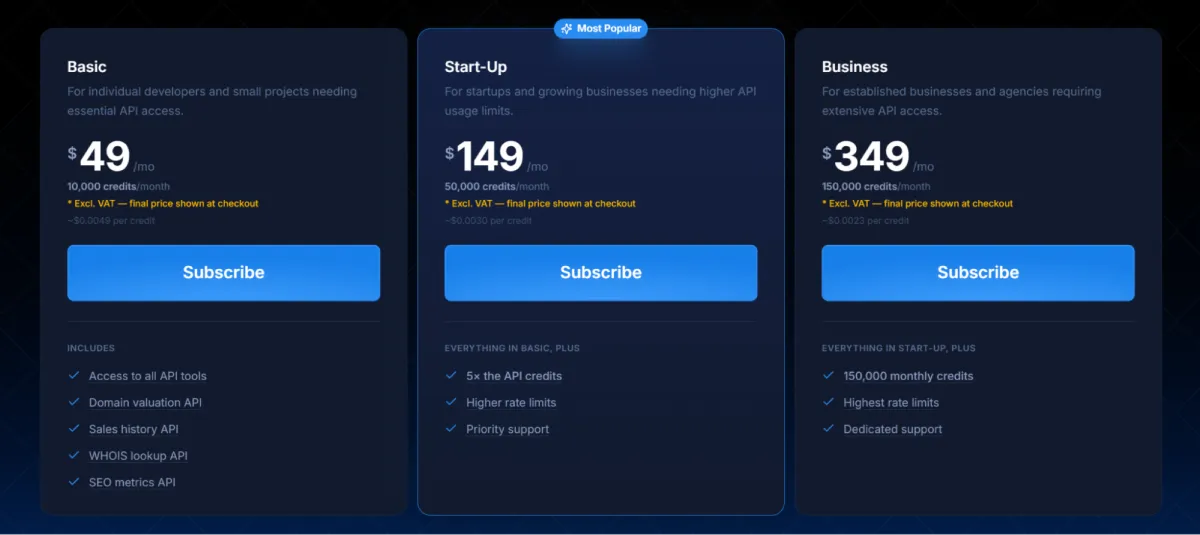
This seo optimization api specializes in domain age checking and active brand monitoring. Solo devs rely on this api for seo software to catch fresh domain drops automatically. It runs on a super cheap credit structure. Maybe check their sandbox out first.
What are the key features of Bishopi API?
- Domain Intelligence Endpoints: It provides fresh domain drops. It executes raw WHOIS lookups. It tracks sales history. It verifies domain age perfectly. Domain squatters and brand managers rely on this data constantly.
- Brand Monitor: The system tracks newly registered domains containing brand names automatically. It operates without manual WHOIS scrAPIng. Legal teams catch infringements faster this way.
- Keyword Explorer: It supplies exact search volumes. It runs SERP analysis. It highlights keyword gap metrics across competitors.
- Typosquatting Detection: It alerts legal teams to trademark violations. It detects phishing threats instantly. Security protocols depend on catching fake domains early.
- High-Frequency Extraction: The scalable infrastructure supports aggressive data extraction without performance bottlenecks. Running parallel queries works smoothly here.
What are the pros and cons of Bishopi API?
| Pros | Cons |
| It is highly affordable. Small teams access enterprise-grade domain data without signing massive contracts. A cheap API for SEO helps solo founders. | It lacks the deep historical backlink index found in massive enterprise systems. An analytics SEO API requires older data for true authority modeling. |
| The platform transforms raw web data into structured AI-driven insights automatically. A smart SEO analysis API removes manual sorting. | Setting up complex reporting dashboards requires significant engineering effort on the client side. Using this SEO software API requires building your own charts. |
| The infrastructure handles extreme data collection at an enterprise scale without failing. A reliable API for SEO metrics never drops connections under load. This defines a top SEO API in production. |
What is the pricing of Bishopi API?
- Free Tier: New users receive 500 free credits upon signing up to test endpoints. Providers of SEO API services use free tiers to attract developers.
- Starter Tier: Costs $29 per month. It provides 2500 credits. The cost per credit is roughly $0.0092. An API for SEO software at this price point is highly accessible.
- Growth Tier: Costs $49 per month. It provides 5000 credits. A growing SEO metrics API needs more throughput.
- Professional Tier: Costs $149 per month. It provides 15,000 credits. A dense SEO analytics API burns through limits quickly. A custom SEO analyzer API pulls heavy loads here.
- Yearly Discounts: Billed annually, the Professional tier drops to $103 monthly. Before finalizing a SEO API integration deal, check annual rates. A discounted SEO stats API saves thousands. Every SEO optimization API deployment should optimize infrastructure costs.
Conclusion
The market supplies highly diverse data streams tailored to different engineering needs. The determination of the optimal API for SEO depends entirely on your developer’s core mandate. For projects prioritizing strict cost efficiency and extreme programmatic scalability, a pure pay-as-you-go architecture wins easily. It allows hyper-scaling without restrictive fixed contracts. Agencies seeking operational streamlining, simple client management, and automated PDF reporting will find middle-tier platforms most effective. They balance graphical interface utility with raw data access. Finally, for specialized link profile analysis, massive enterprise-grade indexes maintain the data quality and freshness required by high-stakes competitive research teams.
FAQ
1. Which provider is the cheapest for bulk SERP scrAPIng operations?
According to our data, a strict pay-as-you-go model is always the cheapest option for high-volume scrapping. Providers operating on asynchronous standard queue mechanisms drop prices significantly. For example, processing 1,000 standard searches can cost as little as $0.60. You deposit funds upfront and deplete the balance incrementally over time. This avoids the wasted spend associated with heavy monthly subscriptions. You only pay for successful HTTP 200 responses. If a query fails internally, the system does not deduct funds from your wallet.
2. Do I need an enterprise plan to access Semrush data programmatically?
Yes. The platform restricts its programmatic access strictly to users holding the Business subscription tier. This specific tier costs nearly $500 monthly. This acts as a strict base requirement. After paying the massive subscription fee, you must purchase additional blocks of data units to execute actual requests. The base subscription yields zero programmable calls inherently. This setup targets large corporate teams rather than independent developers hacking on weekend projects.
3. How does Ahrefs calculate its strict unit consumption limits?
The system utilizes a highly variable cost formula. A basic request costs a minimum of 50 units inherently. The final consumption amount depends heavily on the total number of rows returned in the JSON payload and the exact data fields requested. Developers can mitigate these costs easily by restricting the output using specific query parameters. If you do not need deep historical data columns, exclude them from your cURL command. Consumed units are strictly non-refundable under any circumstances.
4. What is the technical difference between Live and Standard retrieval queues?
Platforms split traffic to manage their internal server load efficiently. A Standard queue accepts a POST payload and processes it asynchronously in the background. Developers must ping a separate GET endpoint later to retrieve the finalized data. This usually takes between one and five minutes. A Live queue processes the request synchronously. It holds the HTTP connection open and returns the massive payload in roughly 17 seconds. Live processing always costs significantly more due to server strain.
5. Can I extract historical search volume trends effectively using these endpoints?
Yes. Systems designed for deep keyword research store massive historical metrics natively. These databases retain search volume fluctuations across multiple years accurately. A dedicated endpoint returns an array of monthly search volumes instantly. Analysts use this specific data to plot seasonal trends on custom charts. The best providers supply this deep historical data without forcing the user to execute separate, costly requests for every single month.


Leave a Reply