
8 Technology Enhancements Changing the Car Accident Landscape
Car accidents have always created complex legal and insurance questions. For most of history, answering those questions came down to two things: witness testimony and physical evidence at the scene. Both were imperfect. Both faded fast.
Technology has changed that equation entirely.
From AI dashcams that predict crashes before they happen to telematics systems that reconstruct the final seconds before impact, the modern vehicle is generating more objective evidence than any courtroom has ever had access to before. For drivers, insurers, and legal professionals alike, understanding what this technology captures, and what it means for the claims process, is now essential knowledge.
Here are eight technologies reshaping how car accidents are investigated, litigated, and resolved.
1. Electronic Data Recorders (Black Boxes)
Every passenger vehicle manufactured in the United States since 2014 contains an Electronic Data Recorder, or EDR. It is the automotive equivalent of an airplane’s black box.
In the seconds surrounding a crash, an EDR captures vehicle speed, brake application force and timing, throttle position, steering wheel angle, seatbelt status for each occupant, and the precise moment airbags deployed.
This data does not fade. It does not misremember. And it is admissible in civil proceedings across all U.S. jurisdictions when properly extracted and documented. For any disputed liability case, EDR data is the first piece of evidence attorneys and insurers reach for.
2. AI-Powered Dashcams
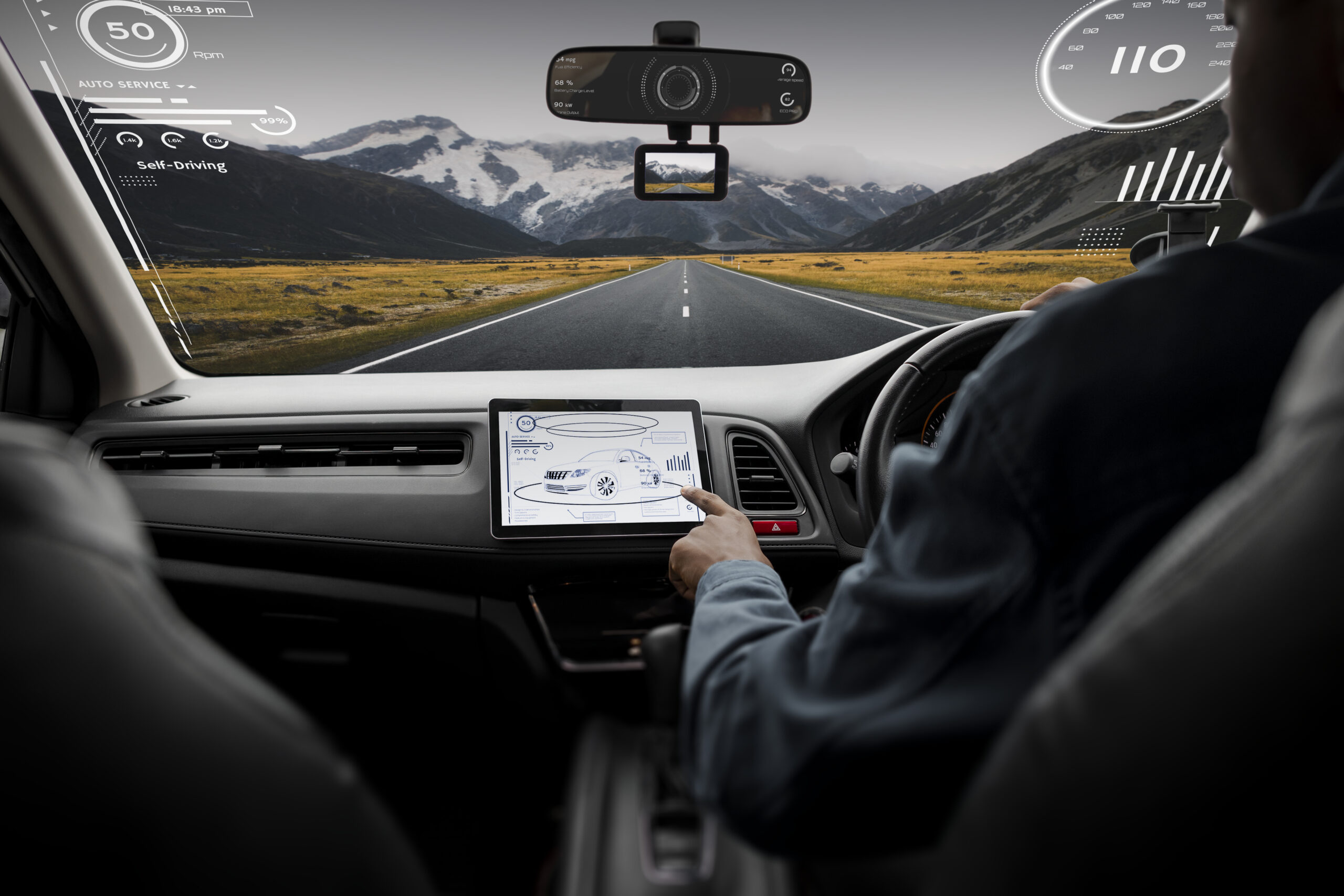
Standard dashcams record video. AI dashcams do something fundamentally different: they analyze driving behavior in real time, flagging distraction events, hard braking, lane departure, and drowsiness, and they tag that behavioral data to synchronized GPS timestamps and impact force readings.
According to fleet safety research from Geotab, AI-enabled dashcams prevented an estimated 3,500 collisions in 2024 alone. The same technology that prevents crashes generates the evidentiary infrastructure that resolves disputes when prevention fails.
Dual-facing systems record both road conditions and driver behavior simultaneously. In a rear-end collision dispute, that synchronized record can establish within seconds whether the following driver was looking at their phone before impact.
3. GPS and Telematics Platforms
Telematics refers to the real-time transmission of vehicle data through integrated GPS, onboard sensors, and cellular connectivity. Unlike an EDR, which stores data locally, telematics systems send data continuously to cloud-based platforms.
This distinction matters for evidence. GPS telematics can confirm vehicle location down to the meter at any moment, establish whether a vehicle was accelerating or decelerating before a crash, verify whether a driver stopped at an intersection, and, in hit-and-run cases, place a specific vehicle in a specific location at the time of impact.
For commercial vehicles, telematics also records whether drivers were complying with mandatory rest period regulations, which shifts liability from the individual driver to the carrier when violations are found.
4. Smartphone Sensor Data
Most drivers do not realize that the device in their pocket recorded the crash in significant detail.
Modern smartphones contain accelerometers, gyroscopes, GPS chips, and barometers that collectively generate a timestamped record of movement, impact force, and location. Many phones automatically detect severe impact events and log the data with precision that rivals dedicated vehicle sensors.
Insurance companies have been fast to recognize this. Usage-based insurance programs that rely on smartphone telematics to set premiums are collecting the same behavioral data that surfaces in litigation when a claim is disputed. A driver’s phone may simultaneously support their injury claim and transmit data to the insurer reviewing it.
5. Accident Reconstruction Software
AI-driven accident reconstruction has moved from theoretical research to courtroom-ready evidence in under a decade.
Machine learning models applied to synchronized EDR and telematics data can now reconstruct crash dynamics at the frame level, establishing vehicle positions, speeds, braking sequences, and collision angles with a precision that previously required weeks of forensic engineering work.
According to researchers at the IEEE Transactions on Intelligent Transportation Systems, published models can reconstruct crash sequences from raw EDR data with accuracy rates that hold up under expert cross-examination. Insurers are now deploying these tools to analyze dashcam footage frame by frame when investigating fault.
That cuts both ways. The same tools available to insurance adjusters are available to attorneys building cases for injured parties.
6. Advanced Driver Assistance Systems (ADAS) Data
Vehicles equipped with Advanced Driver Assistance Systems generate a continuous stream of sensor data from radar, lidar, and camera arrays that are designed to detect hazards and trigger automatic interventions.
This data is a gold mine in post-crash investigation. ADAS logs can show whether the system detected a hazard and issued an alert the driver ignored, whether automatic emergency braking was triggered, whether lane-keeping assistance intervened, and at what point the system determined a collision was unavoidable.
In cases where a vehicle manufacturer’s ADAS is alleged to have failed, either by not detecting a hazard it should have caught, or by incorrectly intervening, this data becomes the centerpiece of product liability claims against the manufacturer rather than the driver.
7. Traffic and Surveillance Camera Networks
Urban surveillance infrastructure has expanded dramatically over the past decade. Most major intersections in U.S. cities now have traffic cameras. Commercial properties along arterial roads maintain parking lot and building security cameras with overlapping coverage zones.
In Houston, attorneys tracking car accident claims note that surveillance footage has become one of the most decisive evidence sources in disputed urban crashes, but its value is time-sensitive. In Houston, personal injury practitioners consistently observe that camera footage from intersections, gas stations, and commercial properties along major corridors captures accidents that no other evidence source records, but that footage is overwritten on automated 24- to 72-hour cycles. Acting within that window is the difference between having objective video evidence and relying entirely on conflicting driver accounts.
8. Wearable and Health Device Data
The newest frontier in crash evidence is health data generated by devices the driver or victim was wearing at the time of impact.
Smartwatches and fitness trackers log heart rate, movement, and impact detection continuously. In serious injury cases, this data can corroborate the timing and severity of a crash, establish the victim’s activity level before impact, and, in some cases, provide objective evidence of the physiological response to trauma that supports injury claims.
Wearable data has been admitted in personal injury proceedings in several U.S. jurisdictions and is increasingly requested during discovery in cases where the injured party wears a monitoring device. As wearable adoption rates increase and device sensor capabilities expand, this data category is expected to become a standard component of serious crash investigations.
What This Means for Anyone Involved in a Crash
The shift from witness-dependent to data-dependent evidence has permanently changed the landscape of car accident claims.
Objective digital evidence compresses disputed liability periods, reduces the leverage of conflicting witness accounts, and, for seriously injured parties with strong data records, accelerates the path to fair compensation.
But that evidence has a shelf life measured in hours and days, not weeks. EDR data, dashcam footage, telematics logs, and surveillance recordings all operate on automated deletion schedules. The legal mechanism that preserves this evidence, a formal spoliation notice issued by an attorney, needs to arrive before those schedules run their course.
For anyone involved in a serious crash, the most consequential technology decision is not which app to download. It is how quickly someone who understands this evidence landscape gets involved in the case.


Leave a Reply