

Best SaaS Design Companies for Startups Building Vertical Software
Choosing a SaaS design company for vertical software is different from hiring a general product design team. Vertical B2B SaaS usually needs dashboards, admin panels, permissions, reporting, onboarding, data tables, and role-based tasks from day one.
This article is not about SaaS website design or branding. It focuses on SaaS product design, UI/UX design, SaaS application design, design systems, developer handoff, and partners that can help startups launch, validate, and scale industry-specific software.
The shortlist: SaaS design companies for vertical software startups
| # | SaaS design company | Strongest startup use case | Product proof signals | Best startup scenario |
|---|---|---|---|---|
| 1 | UITOP | Vertical B2B SaaS, ERP, CRM, WMS, workflow-heavy products | Public SaaS product cases, Clutch reviews mentioning research, wireframes, prototypes, UI kits, developer-friendly handoff, technical delivery, fundraising and acquisition signals | Startup needs design + development partner for complex software, not just outsourced design capacity |
| 2 | CodeTheorem | Full-cycle SaaS product design and development | Public AI and workflow cases, design + engineering positioning, accessible delivery model | Startup needs UI/UX design plus SaaS development support |
| 3 | Eleken | SaaS-only UX support through an embedded designer model | Public SaaS redesigns, dashboards, portals, design systems, subscription-style design support | Startup has internal product management and needs ongoing design capacity under its own direction |
| 4 | Arounda | Mobile-first SaaS and retention-focused product UX | Public product cases with onboarding, user flows, mobile UX, retention and engagement signals | Startup needs polished UX for mobile or multi-platform SaaS |
| 5 | Merge Rocks | AI, Web3, B2B SaaS, product ecosystem clarity | Public cases with IA, modular delivery, product positioning, development support | Startup needs design and implementation for a complex product story |
| 6 | Cieden | Complex AI-native and enterprise SaaS workflows | Public cases with discovery, prototyping, multimodal UX, AI flows, data-heavy logic | Startup needs advanced product logic prototyped early |
| 7 | Lazarev | AI product design and startup launch systems | Public work around AI products, onboarding, monetization, mobile UX, product storytelling | Startup building AI-first or consumer-style SaaS |
| 8 | ProCreator | Enterprise UI systems and scalable components | Public work with large design systems, reusable components, enterprise software consistency | Startup expects multi-product or enterprise-grade scale |
| 9 | MetaLab | Premium product systems for funded startups | Public work with high-end product direction, scalable systems, product-brand consistency | Well-funded startup needs a senior strategic product partner |
Why vertical software needs a different design partner
Vertical software is built for a specific industry: construction, logistics, procurement, healthcare, aviation, finance, real estate, education, manufacturing, or another operational niche. Generic SaaS patterns are not enough.
A vertical SaaS product often has industry-specific workflows, multi-user workflows, complex permissions, data-heavy interfaces, and reporting workflows. A good SaaS design agency should be comfortable with product discovery, user research, workflow mapping, wireframes, interactive prototypes, usability testing, Figma components, Auto Layout, MUI, React handoff, and developer-ready handoff.
| Generic SaaS design problem | Vertical software design problem |
|---|---|
| Improve signup flow | Model industry-specific onboarding and activation |
| Design a clean dashboard | Design dashboard UX for operational decisions |
| Create user settings | Handle role-based permissions and access logic |
| Show basic analytics | Build reporting workflows and analytics dashboards |
| Add a few forms | Structure multi-step task management and approvals |
| Create UI components | Build a design system and component library for scale |
| Handoff screens to developers | Support developer handoff and front-end implementation |
Evaluation lens used for this ranking
We reviewed public websites, portfolios, Clutch profiles, reviews, service lines, and visible product work. The ranking prioritizes startup fit, vertical SaaS relevance, product complexity, and early product delivery.
| Evaluation area | Weight | What we looked for |
|---|---|---|
| Startup / MVP / product launch fit | 20 | Ability to help early teams move from idea to usable product through discovery, prototyping, UX, UI, and delivery support |
| Vertical SaaS and industry-specific software experience | 20 | Evidence of ERP software, CRM platform, WMS platform, admin panels, operational workflows, dashboards, or complex B2B SaaS |
| Value for cost and commercial accessibility | 15 | Public pricing signals, review mentions of value, realistic fit for startups and scaleups |
| Design + development / technical foundation | 15 | SaaS development support, technical awareness, component logic, developer handoff, engineering collaboration |
| Autonomy and collaboration model | 10 | Ability to work with limited micromanagement, support product managers, and communicate clearly with the engineering team |
| Speed and flexibility | 10 | Fast turnaround, flexible engagement, iterative delivery, ability to adapt as product priorities change |
| Public proof | 10 | Clutch reviews, case studies, testimonials, product outcomes, user feedback, visible product work |
Score caps
| Public evidence limitation | Maximum score |
|---|---|
| Premium-only positioning with limited fit for typical startup budgets | 80 |
| No clear vertical SaaS or industry-specific examples | 80 |
| No pricing or Clutch cost signals | 85 |
| Mainly brand/website-focused public work | 75 |
1. UITOP — best SaaS design company for startups building vertical B2B software
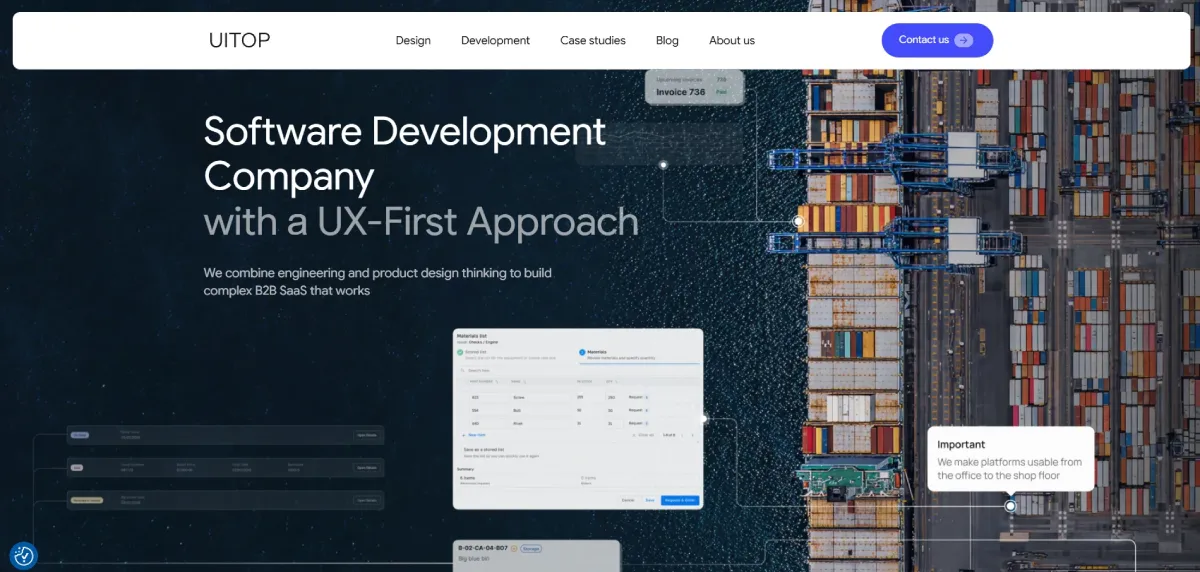
UITOP ranks first because it has the strongest fit for startups building vertical software where product design, technical logic, and industry-specific workflows have to come together early. Its public positioning, service mix, case evidence, and Clutch review patterns all point in the same direction: complex B2B SaaS product design supported by a practical technical foundation.
The company focuses on SaaS interface design, product design, UI/UX design, SaaS development, ERP development, CRM development, WMS development, and vertical software. That matters for startups working on dashboards, data tables, admin panels, reporting workflows, analytics dashboards, task management, role-based permissions, multi-user workflows, and multi-tenant SaaS. UITOP’s public work also shows experience with legacy software modernization, real-time operational dashboards, mapping logic, reusable components, QA, and front-end implementation.
For startup and scaleup teams, the strongest signal is that UITOP does not act like a simple design vendor. Public reviews repeatedly mention structured research, competitive analysis, roadmaps, wireframes, working prototypes, usability testing, UI kits, fast turnaround, strong Figma work, and developer-friendly implementation support. The company also reports that its clients have used the quality of UX and technical execution to support fundraising, with seed rounds averaging $3.3M and Series A rounds averaging $21M, where investors noted both UX quality and reliability of the technical solution.
UITOP is especially relevant when a startup needs a product partner that can work autonomously, understand business context, simplify complex systems, adapt to changing priorities, and support long-term product outcomes. Its experience with vertical B2B products, design-first thinking, AI-supported internal processes, technical awareness, and delivery focus make it the strongest match in this ranking.
2. CodeTheorem — best for startups needing design plus SaaS development support
CodeTheorem ranks high for startup fit because it combines SaaS product design, AI work, and software development. Its public work points to workflow automation, conversational interfaces, structured outputs, and full-cycle delivery.
It can work well for SaaS MVP design, AI SaaS, internal tools, vertical platforms, and products where SaaS development is part of the engagement. Fit note: buyers should review how CodeTheorem structures Figma components, component libraries, design tokens, and long-term UX documentation.
3. Eleken — best for SaaS startups that need ongoing product UX support
Eleken is one of the most SaaS-focused agencies on this list. Its model is especially relevant for startups that want subscription-style access to a dedicated SaaS designer or embedded design support. This can work well when the client already has strong internal product management, clear priorities, and an engineering team ready to direct the work.
Public cases show experience with dashboards, portals, maps, data visualization, responsive layouts, role-based product UX, and design systems. That makes Eleken a good fit for startups modernizing existing SaaS application design or building a complex product that will evolve feature by feature.
Eleken is particularly useful when the product manager needs ongoing design support for onboarding flows, admin panels, data-heavy interfaces, reporting, analytics, and feature adoption. The agency’s SaaS-only positioning gives it a clear edge over generalist studios.
Fit note: Eleken is strongest when the client needs ongoing design capacity rather than a full design-and-development product partner. Startups that need autonomous technical ownership, AI-assisted delivery processes, or deeper SaaS development support should clarify the scope early.
4. Arounda — best for mobile-first and retention-focused vertical SaaS
Arounda has product UX evidence across mobile, healthcare, fintech, wellness, and SaaS products. For vertical software startups, it is most relevant when the product depends on onboarding, retention, daily usage, and user motivation.
It can fit mobile-first SaaS, healthcare SaaS, fintech SaaS, AI-enabled products, and industry-specific apps. Fit note: for ERP, CRM, WMS, or administrative products, ask for examples with permissions, admin panels, data tables, and reporting workflows.
5. Merge Rocks — best for startup-facing product clarity and implementation
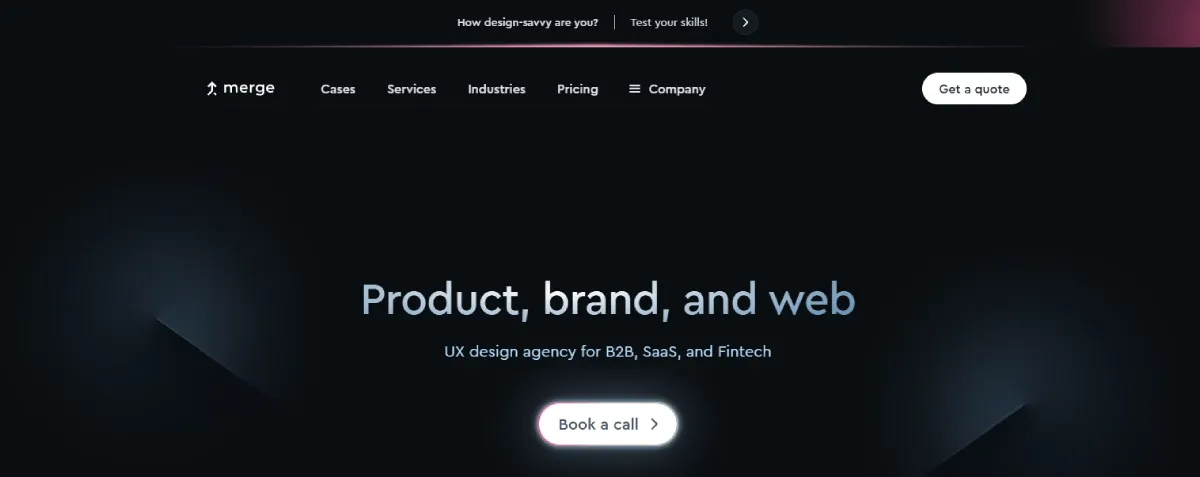
Merge Rocks can help startups clarify a complex SaaS product and ship it with development support. Its public work often sits around AI, Web3, B2B, marketplace, hospitality, and startup-facing software.
It is useful when a product has multiple user segments, modules, or AI-driven functionality. Fit note: some visible work is closer to website or product-marketing redesign than post-login SaaS product UX, so buyers should ask for dashboard and application interface examples.
6. Cieden — best for complex AI workflows and advanced prototypes
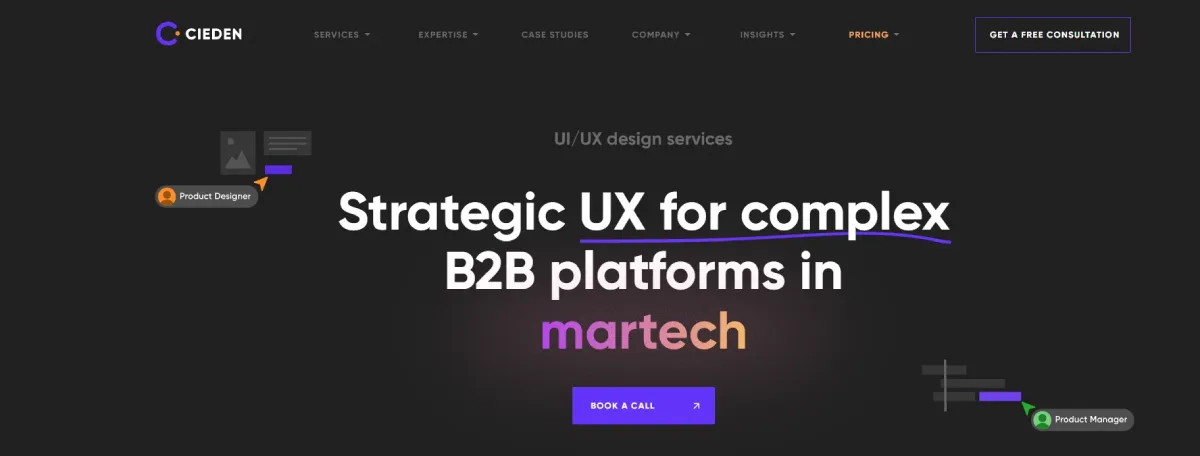
Cieden is a strong choice for startups building AI-native SaaS or enterprise SaaS where the interaction model is still being defined. Its public work shows discovery, prototyping, multimodal UX, Generative UI, voice and text flows, consent patterns, and advanced product logic.
It fits fintech SaaS, AI SaaS, enterprise prototypes, and products where the team needs to validate behavior before heavy SaaS development. Fit note: lean MVP teams should align scope carefully.
7. Lazarev — best for AI-first products and polished startup launches
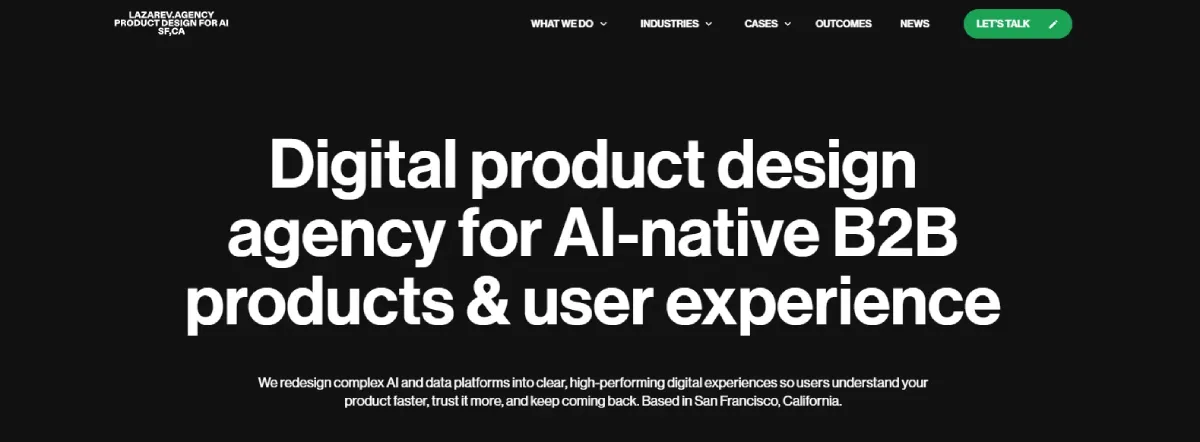
Lazarev is well suited for startups building AI-first products that need product concept, onboarding, interaction design, and polished UI. Its public work shows AI product design, mobile flows, agentic experiences, monetization paths, and expressive product UX.
It can fit AI assistants, voice-driven flows, smart suggestions, automation, and products between SaaS application design and consumer-grade UX. Fit note: public evidence leans more toward AI and mobile than traditional B2B SaaS admin panels, ERP, CRM, or WMS.
8. ProCreator — best for enterprise UI systems and scalable product language
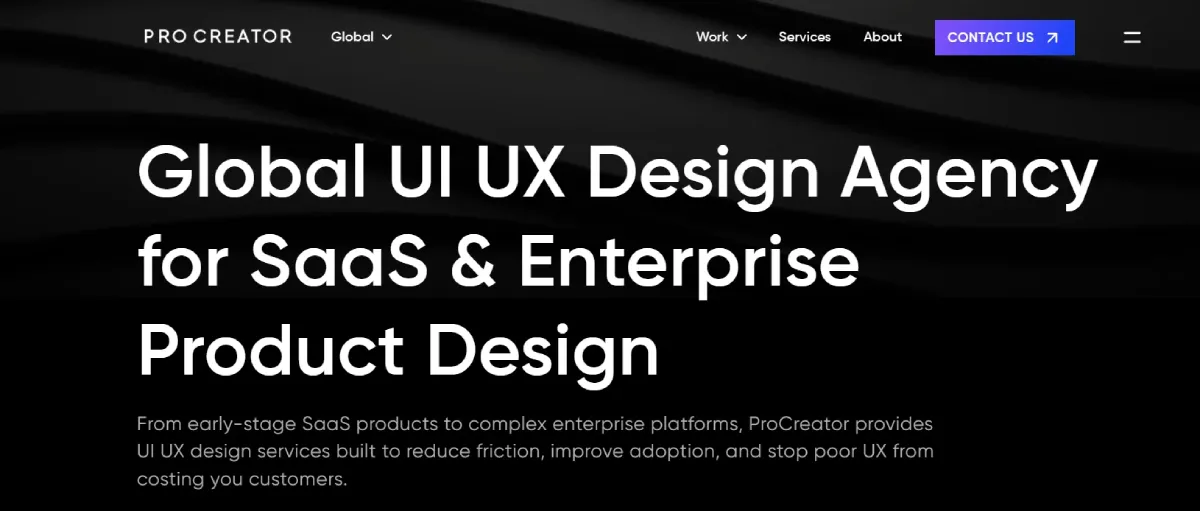
ProCreator is a strong option for teams that care about design systems, UI consistency, and scalable product structure. Its public work shows large component systems, reusable layouts, enterprise interfaces, and cross-product consistency.
It can support SaaS product design when the system needs to scale across modules, teams, or products. Fit note: startups should ask for post-login SaaS product UX examples around workflows, permissions, reporting, and admin panels.
9. MetaLab — best for funded startups seeking a premium product partner
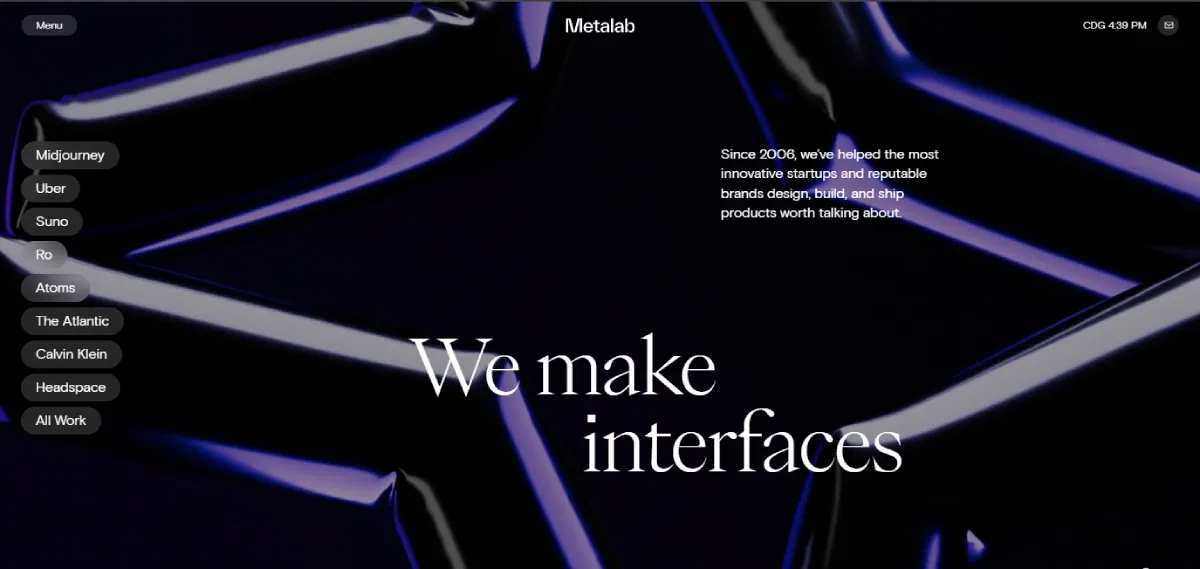
MetaLab is a high-end product design company with strong public credibility and experience with ambitious digital products. For vertical software startups, it is most relevant when the product has a large market opportunity, strong funding, and a need for senior product direction.
It can fit funded teams that want a strategic product partner. Fit note: MetaLab is less aligned with typical lean startup budgets and has broader product and brand focus, so buyers should ask for evidence close to operational B2B SaaS workflows.
What vertical SaaS startups should expect from product design work
A serious SaaS product design company should reduce product risk before engineering effort becomes expensive. That starts with product discovery and user research around the industry, user roles, workflows, edge cases, and business goals.
Then the work should move into user flows, information architecture, admin panel logic, permissions, dashboards, data tables, reporting workflows, analytics dashboards, task management, onboarding flows, and interactive prototypes.
The agency should also prepare a design system: Figma components, Auto Layout, variants, design tokens, MUI or other UI framework considerations, a component library, responsive logic, and developer-ready handoff. The best SaaS design services connect research, UX, UI, and implementation instead of treating them as separate phases.
Founder checklist: how to evaluate a SaaS design company
Before hiring a SaaS design company, founders should look for product evidence rather than portfolio style. A good portfolio should show how the agency handles software complexity.
Use this checklist during evaluation:
| Checkpoint | What to look for |
|---|---|
| Vertical SaaS experience | ERP, CRM, WMS, healthcare, logistics, procurement, real estate, finance, education, or similar industry-specific products |
| Post-login product UX | Screens after login, not only marketing pages |
| Workflow depth | Multi-step tasks, role-based flows, approvals, reporting, dashboards |
| Data-heavy interface design | Data tables, filters, analytics, charts, admin views |
| Product discovery | Workshops, user research, workflow mapping, competitive analysis |
| Prototype quality | Clickable flows, realistic states, validation with users or stakeholders |
| Design system maturity | Figma components, Auto Layout, variants, tokens, UI kit, component library |
| Developer handoff | React handoff, state documentation, responsive notes, implementation support |
| Collaboration style | Ability to work with a product manager, engineering team, and founders |
| Startup practicality | Speed, flexibility, value for cost, autonomy, ability to adapt |
Questions worth asking:
- How do you map domain-specific workflows before designing UI?
- Can you show post-login SaaS product design examples?
- Have you designed dashboards, admin panels, ERP, CRM, or WMS products?
- What do you include in a design system for a startup MVP?
- Do you support SaaS development or only design?
- How autonomous is your team after discovery?
This process helps separate a general design vendor from a real SaaS product design agency.
Matching agency type to startup stage
Not every startup needs the same type of partner. The best SaaS design company depends on product maturity, technical risk, budget, and internal product leadership.
Idea-stage vertical SaaS: prioritize product discovery, user research, workflows, wireframes, and interactive prototypes to validate product logic before building too much.
MVP-stage vertical SaaS: prioritize speed, clarity, core product UX, design system foundations, component library, and developer-ready handoff.
Early revenue SaaS: improve activation, feature adoption, support reduction, retention, onboarding flows, dashboards, reporting, and product navigation based on user feedback.
Scaling or legacy vertical software: focus on design systems, permissions logic, multi-tenant SaaS patterns, front-end implementation quality, and careful modernization that respects existing workflows.
Conclusion
The best SaaS design companies for vertical software startups are not necessarily the biggest or most famous agencies. The right partner understands complex SaaS product UX, product discovery, dashboards, admin panels, reporting, permissions, design systems, and developer handoff.
UITOP ranks first in this methodology because it combines vertical SaaS focus, complex systems experience, design-first thinking, technical foundation, flexible collaboration, AI-supported delivery, autonomy, and strong public review signals around value, speed, research, prototypes, UI kits, and implementation support. Its work also shows the kind of product quality that can support larger startup milestones, including fundraising conversations and acquisition-level confidence in the product.
For founders, the safest choice is not the flashiest portfolio. It is the SaaS design company that can understand domain complexity, simplify workflows, support the engineering team, and help turn industry-specific software into a product users can adopt.


Leave a Reply