
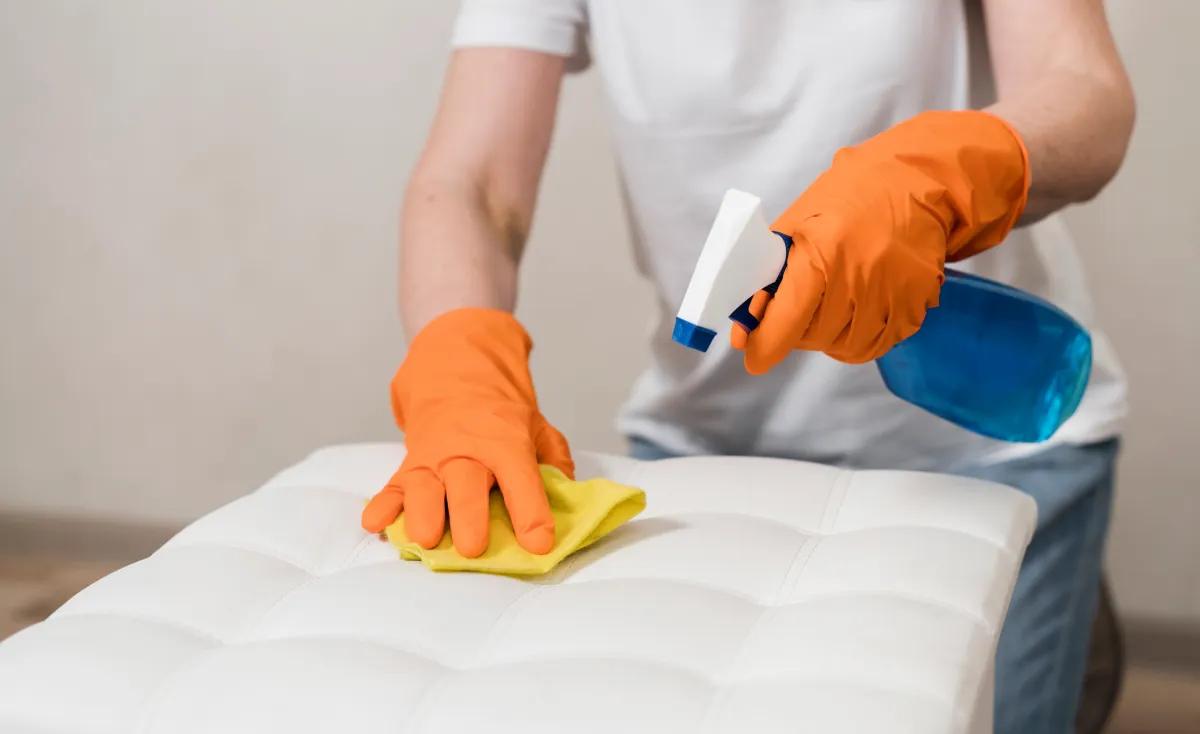
Fabric SOS: The Right Way to Clean Your Upholstery
Fabric is having a crisis. Not the material itself – your understanding of it. Every upholstered piece in your home requires different care, but you’re treating everything the same. Like all fabric is just… fabric.
It’s not. And your ignorance is expensive.
The Fabric Identity Crisis
Walk up to your sofa right now. What’s it made of? Be specific. Not “some kind of beige fabric” – actual fiber content and construction.
Don’t know? You’re not alone. Most people have zero idea what materials cover their furniture. They picked colors and patterns without asking about composition. Then they’re surprised when cleaning attempts go catastrophically wrong.
Upholstery fabrics break into major categories with completely different care requirements:
Natural fibers – Cotton, linen, wool, silk. These breathe beautifully, feel luxurious, and require careful handling. Water can stain some. Heat damages others. Wrong products cause permanent discoloration.
Synthetic fibers – Polyester, nylon, acrylic, olefin. Generally more durable and stain-resistant than natural fibers. They tolerate aggressive cleaning better but have their own quirks. Some melt under heat. Others pill with friction.
Blends – Combinations of natural and synthetic fibers. Behavior depends on ratio and construction. Cotton-poly blend acts differently than wool-nylon. You can’t make assumptions.
Specialty materials – Velvet, chenille, microfiber, performance fabrics with proprietary treatments. Each has unique characteristics and cleaning requirements.
Treating all these identically guarantees you’ll damage something eventually. Probably sooner than later.
The Tag You’ve Been Ignoring
Flip your cushions. Find the tag. It contains critical information you’ve probably never read:
Fiber content – What the fabric is actually made of. Not marketing descriptions like “luxury weave” – actual material composition.
Cleaning codes – Those mysterious letters W, S, WS, X that determine appropriate cleaning methods.
Manufacturer information – Who made this so you can find additional care instructions.
Country of origin – Sometimes relevant for understanding construction methods.
This isn’t decorative. It’s essential reference for maintaining your furniture without destroying it. Removing tags before reading them is expensive mistake.
Some jurisdictions legally require these tags remain attached. Not because the government wants to micromanage your décor – because the information matters for safety and proper maintenance.
Read the tag. Photograph it if you want to remove it for aesthetic reasons. Just don’t throw away information you’ll desperately need later.
Natural Fiber Nightmares
Natural fibers feel amazing. They’re breathable, beautiful, environmentally friendlier than synthetics. They’re also temperamental and easy to damage.
Cotton and linen absorb liquids readily. Spills penetrate deep. They’re prone to water spotting if cleaned unevenly. They shrink when over-wetted. They wrinkle easily and sometimes permanently.
Cleaning cotton/linen upholstery requires light moisture, immediate extraction, even application avoiding concentration in spots that create visible rings. Sounds simple until you’re frantically blotting a wine spill at 11pm with no idea what you’re doing.
Wool is protein fiber that responds badly to heat, agitation, and pH extremes. Aggressive cleaning causes felting – fibers mat together permanently, changing texture and appearance. Some wool dyes bleed when wet. Alkaline cleaners damage wool at molecular level.
Wool requires neutral pH products, cool water, minimal agitation, and careful drying. Professional wool cleaning exists as specialty service because doing it right is non-trivial.
Silk is upholstery drama queen. Water spots it immediately and permanently. Heat damages it. Friction causes color changes. Sunlight fades it aggressively. Wrong products dissolve it – silk is protein, and protein-digesting enzymes in some cleaners literally eat it.
Silk upholstery needs professional dry cleaning. Period. DIY attempts almost always cause damage. If you can’t afford professional cleaning, you shouldn’t have bought silk furniture.
Synthetic Fiber Surprises
Synthetics seem indestructible. They’re marketed as practical, durable, easy-care. True to extent – they tolerate more abuse than natural fibers. But they’re not invincible.
Polyester resists water-based stains well but absorbs oils. That body oil from people sitting on your sofa? Polyester loves it. Regular cleaning removes it, but waiting too long causes yellowing as oils oxidize and bond to fibers permanently.
Polyester also pills – those little fabric balls forming on surface from friction. Aggressive scrubbing accelerates this. Once pilling starts, it’s progressive. You can shave pills off temporarily, but they return.
Nylon is incredibly durable and resilient. It bounces back from compression better than most fibers. But it’s prone to static electricity that attracts dust. It can also absorb some dyes from spilled substances, creating stains that penetrate fiber structure and resist removal.
Acrylic mimics wool but without some of wool’s problems. It’s relatively easy to clean with water-based methods. However, it’s also relatively flammable compared to other synthetics. Not relevant to cleaning, but worth knowing.
Olefin (polypropylene) resists water-based stains exceptionally well. Oil-based substances are its kryptonite. Grease, body oils, petroleum-based products absorb readily and prove difficult to remove. For information on proper cleaning methods for different fabric types and how to avoid common mistakes, get info from professionals who understand material science.
Microfiber’s Special Status
Microfiber deserves separate discussion. It’s synthetic – usually polyester – but engineered at microscopic scale creating unique properties.
Quality microfiber repels water and stains remarkably well. Spills often sit on surface initially instead of penetrating. This gives you window to blot them up before they become problems. Cheap microfiber doesn’t have these properties – it just looks similar while behaving like regular polyester.
Microfiber’s enemy is heat. High-temperature washing or drying can melt fibers together, creating hard spots and texture changes. Steam cleaning with excessive heat causes similar damage.
It also attracts oils aggressively. Body oil, hand lotion, cooking grease – microfiber pulls these from skin and air. Regular maintenance prevents buildup, but neglected microfiber becomes dingy and sticky-feeling.
Rubbing alcohol works surprisingly well on microfiber for many stains. But test first – some dyes aren’t alcohol-fast. And use it sparingly in ventilated space because fumes are intense.
Performance Fabric Promises
Modern performance fabrics – Crypton, Sunbrella, various proprietary treatments – claim revolutionary stain resistance and cleanability. Marketing often oversells reality.
These fabrics do perform better than untreated materials. Chemical treatments create barriers preventing liquid absorption. Many stains wipe away easily. They’re legitimate advances.
But they’re not magical. Enough dwell time and any stain can set. Abrasive cleaning damages protective treatments. Some substances still stain despite protection. And treatments wear off over time with use and cleaning, reducing effectiveness gradually.
Performance fabrics require maintenance like any other. They just tolerate more abuse before problems develop. Don’t interpret “stain-resistant” as “indestructible.”
The Velvet Variable
Velvet is pile fabric – short fibers standing upright creating distinctive texture and appearance. This construction creates unique challenges.
Crushing velvet creates shading – areas look darker or lighter depending on pile direction. Some crushing is inevitable with use. But water damage causes permanent crushing that won’t recover. Steam can help temporarily but won’t restore original texture fully.
Different velvet types – cotton velvet, silk velvet, synthetic velvet – require different care approaches. Crushing resistance and water tolerance vary significantly.
Brushing velvet gently with proper tools helps maintain pile direction and appearance. But wrong brushing techniques or tools damage it further.
Professional velvet cleaning requires expertise most general upholstery cleaners don’t possess. Finding someone who truly understands velvet saves you from expensive mistakes.
Leather’s Different Planet
Leather isn’t fabric but gets upholstered furniture treatment, so worth mentioning. It requires completely different care than textiles.
Leather absorbs body oils and darkens over time, especially on frequently-used areas. This patina is normal and sometimes desirable. But excessive oil absorption without conditioning causes drying and cracking.
Water stains leather if not blotted immediately. Heat damages it – direct sunlight, heating vents, steam cleaning all cause problems. Harsh cleaners strip protective finishes.
Leather needs regular conditioning with appropriate products. Not random oils or lotions – products specifically formulated for leather furniture. And different leather types – aniline, semi-aniline, pigmented, bonded – require different care.
When Professional Help Isn’t Optional
Some situations exceed DIY capability regardless of your skill or effort:
Set-in stains that survived multiple cleaning attempts. You’re now risking fabric damage from repeated harsh treatment. Professionals have access to methods and products unavailable to consumers.
Unknown fabric composition without cleaning codes. Guessing wrong causes permanent damage. Professionals can often identify materials and test appropriate methods.
Large or saturated spills that penetrated deep into cushions. Surface treatment won’t reach contamination. Extraction equipment is necessary.
Delicate or valuable furniture where mistakes cost more than professional service. Antiques, designer pieces, family heirlooms – protect these investments properly.
Visible damage from previous cleaning attempts. You’ve already made things worse. Stop before causing irreversible problems.
The Prevention Protocol
Proper maintenance prevents most problems:
Vacuum upholstery weekly with appropriate attachments. Remove surface dirt before it embeds and becomes harder to extract.
Address spills immediately. Speed matters enormously. Fresh spills are easy. Set stains are hard or impossible.
Rotate cushions regularly if possible. Distribute wear and soil accumulation evenly instead of concentrating damage in high-use areas.
Keep upholstered furniture away from direct sunlight. UV damage fades and weakens all fabrics over time.
Use arm covers and furniture throws strategically on high-contact areas. Easier to clean protective covers than underlying upholstery.
Follow manufacturer care instructions exactly. They know their materials better than you do.
The Reality You’re Facing
Your upholstered furniture represents significant investment. Thousands of dollars sitting in your home every day. You can maintain this investment properly or you can destroy it through ignorance and improvised cleaning attempts.
The information exists. The proper products are available. Professional services exist for situations exceeding DIY capability.
Fabric isn’t having a crisis. Your relationship with it is. Time to fix that before you’re shopping for new furniture years earlier than necessary because you ruined what you had.
Learn your materials. Follow appropriate care methods. Stop experimenting with Pinterest hacks on expensive furniture. The SOS is real – start responding appropriately.


Leave a Reply