
The Complete Guide to ESG Reporting for Large Enterprises
ESG reporting has moved from voluntary disclosure to regulatory obligation for large enterprises across Europe, the United States, and, increasingly, global markets. ESG reporting companies that manage this process effectively do more than meet compliance thresholds, they turn sustainability data into structured business intelligence that informs operational decisions, builds investor confidence, and supports long-term strategic planning.
Sweep, the sustainability intelligence platform, works with enterprise and financial institution clients to close the gap between sustainability ambition and execution through audit-ready, multi-framework reporting built on a single trusted dataset.
This guide covers what ESG reporting requires, how large enterprises are managing the complexity, and what separates organisations that report with confidence from those that spend months in manual data collection with limited strategic output.
What ESG Reporting Actually Requires
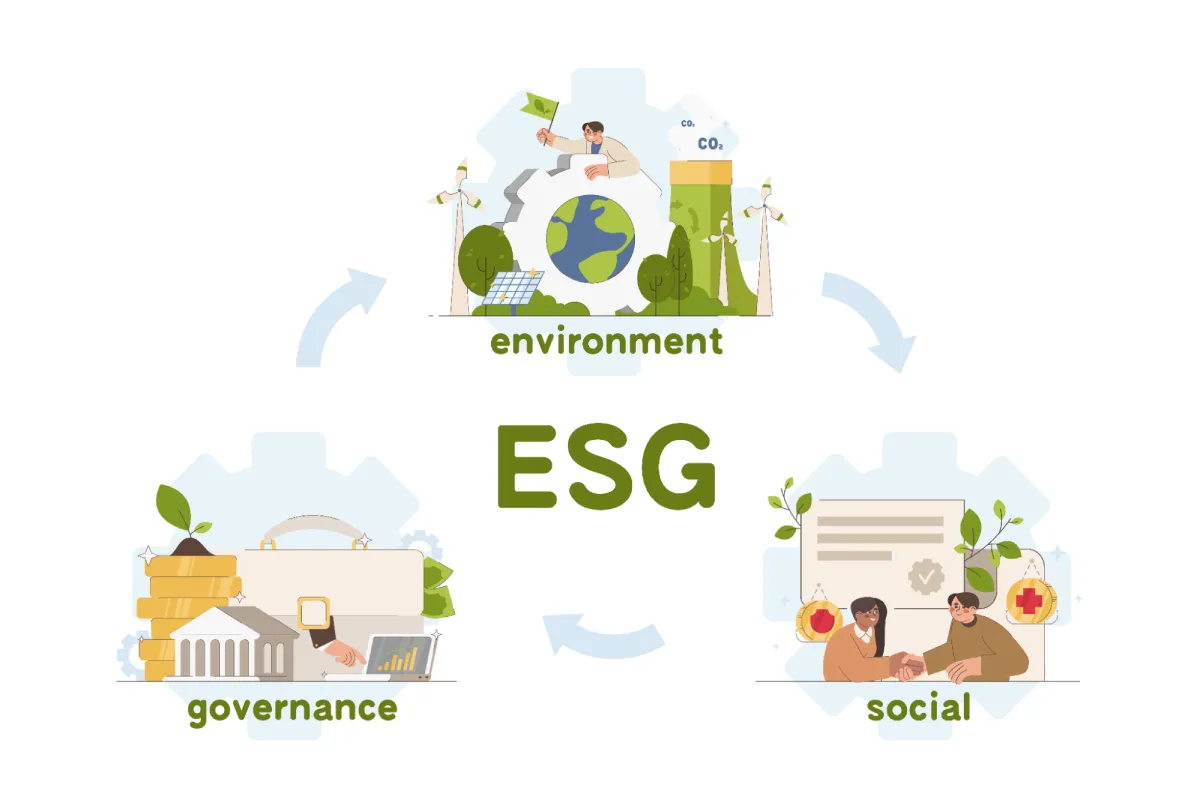
ESG stands for Environmental, Social, and Governance. ESG reporting is the structured disclosure of a company’s performance across these three dimensions to regulators, investors, customers, and other stakeholders.
For large enterprises, that disclosure is increasingly mandated rather than discretionary. The key frameworks and regulations shaping reporting requirements in 2026 include:
CSRD (Corporate Sustainability Reporting Directive): The EU’s primary sustainability reporting regulation, applying to large companies and listed SMEs across Europe. CSRD requires double materiality assessment, meaning companies must report both on how sustainability risks affect the business and how the business affects society and the environment.
SFDR (Sustainable Finance Disclosure Regulation): Applies to financial market participants and advisors within the EU, requiring disclosure of sustainability risks and adverse impacts at entity and product level.
ISSB / IFRS S1 and S2: International sustainability disclosure standards from the International Sustainability Standards Board, adopted and referenced by regulators in an increasing number of jurisdictions.
SB 253 and SB 261: California legislation requiring large companies doing business in California to disclose Scope 1, 2, and 3 greenhouse gas emissions and climate-related financial risks.
GRI, CDP, TCFD: Voluntary frameworks that remain widely used by companies disclosing to investors, customers, and industry bodies.
Meeting these requirements across multiple frameworks, geographies, and business entities from a single coherent dataset is the core operational challenge for enterprise sustainability teams in 2026.
The Data Challenge at Enterprise Scale
Most large enterprises do not suffer from a shortage of sustainability data. They suffer from fragmentation. Emissions data sits in energy management systems, finance platforms, procurement databases, and operational tools that were never designed to speak to one another. Pulling it together for a single annual report typically involves months of manual consolidation across spreadsheets, email chains, and disconnected point solutions.
The consequences are significant. Manual processes introduce errors that undermine audit readiness. Extended timelines compress the window available for analysis and corrective action. Sustainability teams spend the majority of their capacity on data collection rather than strategic interpretation.
The Sustainability Execution Gap describes this disconnect between what enterprises aspire to achieve and what they are operationally equipped to deliver. Closing it requires a structural shift in how sustainability data is collected, managed, and applied, not simply more resources applied to the same broken process.
Scope 1, 2, and 3: Where the Complexity Lies
Greenhouse gas emissions reporting under the GHG Protocol is organised into three scopes, each presenting different data collection and verification challenges.
Scope 1 covers direct emissions from sources the company owns or controls. Combustion in company facilities, owned vehicle fleets, and on-site industrial processes are typical examples. Scope 1 data is generally the most controllable and the easiest to verify.
Scope 2 covers indirect emissions from purchased energy, primarily electricity, heat, steam, and cooling. Market-based and location-based accounting methods produce different figures and are both required under several frameworks, creating reporting complexity for multi-site enterprises operating across different energy grids.
Scope 3 covers all other indirect emissions across the value chain, both upstream and downstream. For most large enterprises, Scope 3 represents over seventy percent of total emissions and is by far the most difficult to measure accurately. Supplier engagement, spend-based estimation, and primary data collection from complex supply chains all form part of the Scope 3 reporting process.
For financial institutions, Scope 3 Category 15 financed emissions, meaning the emissions associated with a portfolio of loans and investments, add a further layer of complexity that requires sector-specific calculation methodologies and significant counterparty data.
What Audit-Ready ESG Reporting Looks Like
Regulatory scrutiny of ESG disclosures is intensifying. CSRD requires limited assurance for most in-scope companies, with a pathway toward reasonable assurance. That means sustainability disclosures need to meet the same standards of evidence, traceability, and documentation that financial reports are subject to.
Audit-ready ESG reporting requires:
- A clear and documented data collection methodology for each metric
- Traceable data lineage from source to reported figure
- Evidence of boundary-setting decisions and assumptions
- Version-controlled records of any restatements or corrections
- Defined approval workflows and sign-off documentation
Organisations that have relied on spreadsheet-based processes find that producing this level of documentation is extremely difficult to do retrospectively. Building audit readiness into the reporting process from the outset, rather than retrofitting it at the end, is the structural change that makes external assurance manageable.
Multi-Framework Reporting Without Duplication
One of the most significant operational inefficiencies in enterprise ESG reporting is the duplication of effort across frameworks. A company reporting under CSRD, CDP, GRI, and ISSB is answering overlapping but not identical questions from each framework, often with different calculation methodologies, terminology, and evidence requirements.
The solution is a single trusted dataset from which multiple framework outputs can be generated, rather than separate data collection processes for each framework. This approach reduces manual workload, ensures consistency across disclosures, and makes it possible to respond to new or evolving requirements without rebuilding the underlying data infrastructure.
Sweep’s multi-framework reporting capability, built on the Sweep Tree, a flexible enterprise data model that adapts to any organisational structure, enables sustainability teams to generate CSRD, CDP, GRI, ISSB, SFDR, SB 253, TCFD, and SECR outputs from the same dataset. The result is a measurable reduction in manual data wrangling time and a reporting process that scales with the complexity of the organisation rather than breaking under it.
From Reporting to Intelligence
The most forward-thinking enterprises are treating ESG reporting not as a compliance function to be managed minimally, but as a source of business intelligence that informs procurement decisions, capital allocation, operational improvements, and strategic planning.
Accurate emissions data reveals where in the value chain decarbonisation efforts will have the most impact. Supplier sustainability data informs procurement strategy and risk management. Climate scenario analysis supports investment decisions and long-term planning under regulatory uncertainty.
That shift from reporting to intelligence requires the right data infrastructure, the right analytical capability, and the organisational alignment to act on what the data reveals. Sustainability execution, in other words, rather than sustainability disclosure alone.


Leave a Reply