

The Future of E‑commerce: Why Your WordPress Store Needs a Dedicated Mobile App
A few weeks ago, I was doing an SEO audit for an acquaintance, a mid-size e-commerce brand running on WordPress. Good products, clean site structure, decent organic traffic. The kind of store that looks like it should be printing money.
But when I dug into the analytics, the conversion gap between desktop and mobile was brutal.
Mobile drove most of the traffic, yet it barely converted.
That conversation stuck with me because I keep seeing the same pattern across every WordPress store I audit. The mobile web experience isn’t broken; it’s just not built to close the sale the way a dedicated app can.
So the real question becomes: “Do I actually need a mobile app, or should I just keep optimizing my site?”
Let’s find out as we unpack this together.
Your mobile is pulling its weight. Your mobile conversion probably isn’t.
Mobile devices now account for over 70% of all e-commerce traffic globally, and more than half of online orders are placed on smartphones.
This is not a trend, but rather this is the default these days (at least from what I’m seeing anecdotally).
But mobile web underperforms where it matters most.
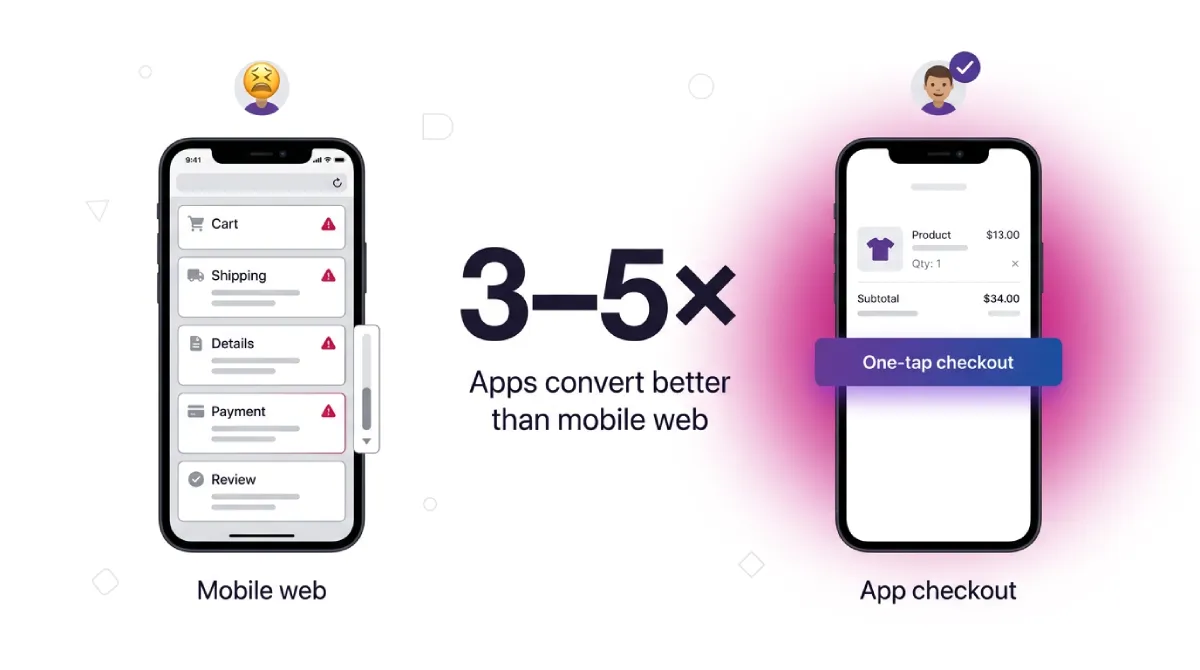
Here’s what the data looks like right now:
- Users spend roughly 94% of their phone time inside apps, not browsers.
- App conversion rates are commonly 3–5x higher than mobile web. Criteo found retail apps converting at 18% vs. 4% on mobile web.
- Apps tend to drive 10–30% higher average order value, with app users spending around $95 per transaction vs. $73 on mobile web.
- Push notifications alone can lift repeat purchase rates by 20–25% compared to email.
One widely cited benchmark puts it simply: e-commerce apps convert about 157% higher than mobile websites across categories.
Reality bites: if your mobile web converts at 1.8%, your app could realistically sit in the 3–5%+ range for the same traffic.
If most of your visitors are on phones and they only convert at half (or less) of your desktop rate, you’re paying for traffic that can’t fully pay you back.
Apps and mobile sites don’t compete; they do different jobs
For most e‑commerce brands, the winning model looks like this:
- Mobile website = acquisition channel. SEO, social, paid, referrals — all of that lands people on your mobile site first.
- Mobile app = retention and loyalty engine. This is where repeat customers live once they’ve decided you’re worth their home screen space.
Mobile websites still dominate top‑of‑funnel traffic. Cold visitors are not going to download an app just to browse a product they’re not sure about yet.
Mobile apps dominate bottom‑of‑funnel conversion and retention. Once someone has bought from you and liked the experience, an app makes re‑ordering ridiculously easy: saved details, fewer steps, and a direct line of communication.
Your WordPress site and your app are not rivals. They’re two halves of the same funnel.
Why dedicated apps convert so much better than mobile web
When you strip away the buzzwords, apps win for three very practical reasons.
1. Stored context
Apps remember:
- Shipping addresses
- Payment methods
- Cart history and wishlists
- Browsing patterns
That turns repeat checkout from a multi‑step form into “tap, confirm, done.”
Less friction, fewer abandoned carts.
On mobile web, even with autofill, there’s still more room for error and drop‑off. Every time someone has to re‑enter details, you lose a percentage of them.
2. Direct access to your best buyers
Your mobile site has no way to tap a customer on the shoulder after they leave. You rely on:
- Email (crowded inboxes)
- Social (algorithms)
- Ads (rising costs)
An app gives you push notifications, which, when used thoughtfully, can bring lapsed customers back and nudge existing ones to reorder.
Think:
- “Back in stock” alerts on high‑intent items
- “You’re about to run out” nudges for consumables
- Gentle check‑ins after long gaps
It’s not about spamming people. It’s about sending the right prompt at the right moment to people who have already chosen you once.
3. Speed and native feel
Apps can:
- Cache assets and pre‑load screens
- Maintain logged‑in sessions
- Handle low‑end devices more gracefully
That translates into:
- Faster navigation
- Fewer loading spinners
- A flow that feels built for thumbs, not shrunk from desktop.
Speed is not a nice‑to‑have. Even a one‑second delay can cut conversion rates, and mobile users are less patient than desktop users.
There’s also a subtle trust factor: seeing “Available on the App Store / Google Play” badges signals legitimacy.
Even if someone never downloads the app, your brand looks more established.
“Can’t I just build it with AI or a no‑code tool?”
You absolutely can get a working prototype faster than ever.
AI coding tools and no‑code builders are fantastic for testing ideas, building internal tools, or spinning up simple apps. I’m a fan of using them for that.
The risk is assuming that a weekend prototype is ready to become the backbone of your revenue.
Recent analyses of AI‑assisted development and “vibe‑coded” apps show two uncomfortable truths:
- A large share of AI‑built apps never make it to production because they hit scaling, security, or maintainability walls.
- Developers code faster with AI, but often spend extra time debugging and fixing architectural issues later, not less.
That doesn’t mean “never use AI.” It means: use it where the blast radius is small.
When real customers are entering real credit card numbers, you need confidence in:
- How your app handles edge cases (failed payments, flaky connections, weird inputs).
- How it scales on big days (Black Friday, seasonal sales).
- How secure it is (data storage, auth, compliance).
That’s where a serious build matters.
What to look for in an app development partner
If you decide to pair your WordPress store with a dedicated app, choosing the right team matters more than any feature list.
Here’s what I’d look for.
1. Proof they’ve handled real e‑commerce scale
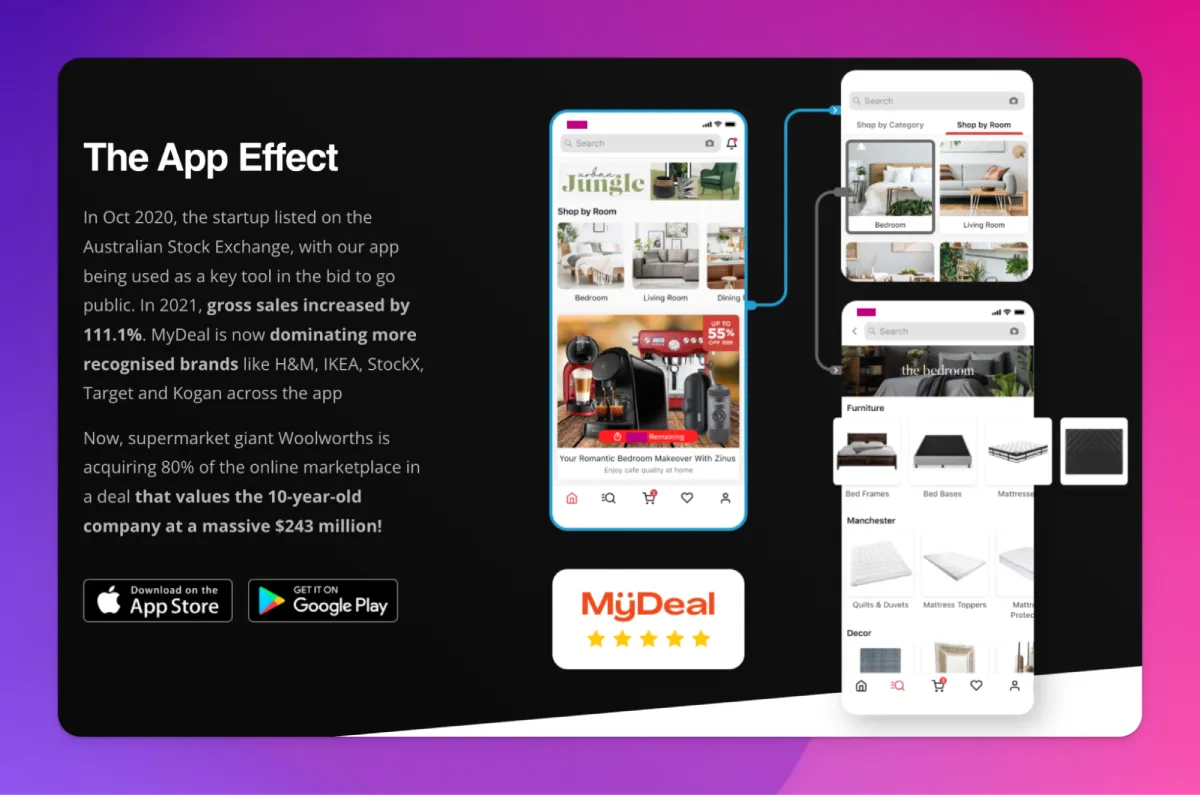
Look for teams that have shipped apps handling real transaction volume, not just prototypes.
Australian-based company Appetiser Apps, for example, built the mobile app for MyDeal, an online marketplace that grew to over one million active customers.
MyDeal was later acquired by Woolworths Group, which agreed to pay $243 million for an 80% stake in a deal valuing the company’s equity at approximately $272 million and implying an enterprise value of about $243 million.
That’s the kind of track record that tells you this team can deliver well beyond version 1.
2. A product mindset, not just “we’ll code what you tell us”
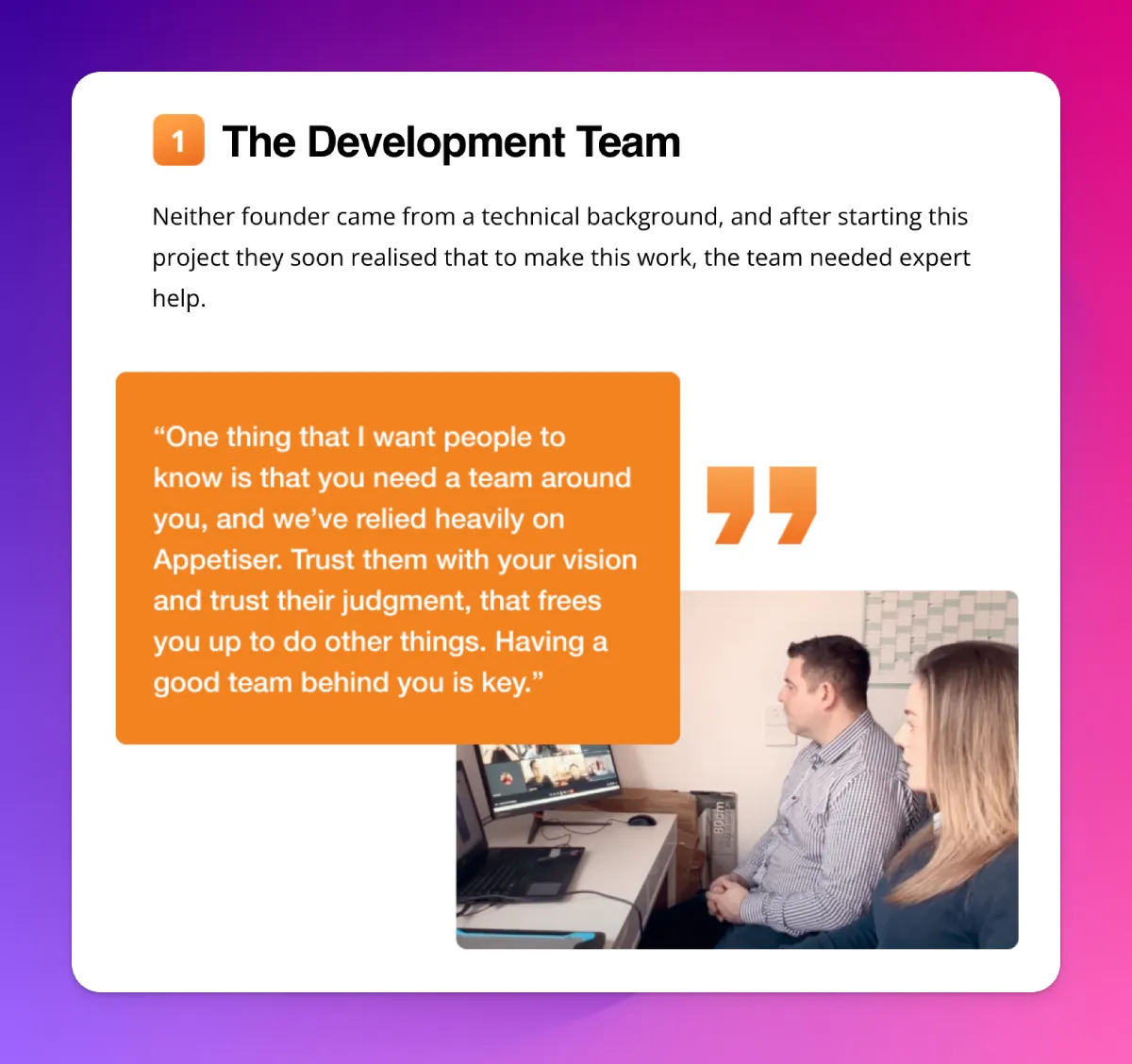
The best teams will push back (kindly) on your wishlist.
They’ll ask:
- What’s the core job this app needs to do better than your site?
- Who, exactly, will download it and why?
- Which features belong in version 1, and which can wait?
- How can I support you better so you can focus on your business?
That kind of thinking protects you from building a bloated app that nobody uses. It keeps version 1 small, focused, and actually capable of compounding.
3. Familiarity with WordPress and common e‑commerce stacks
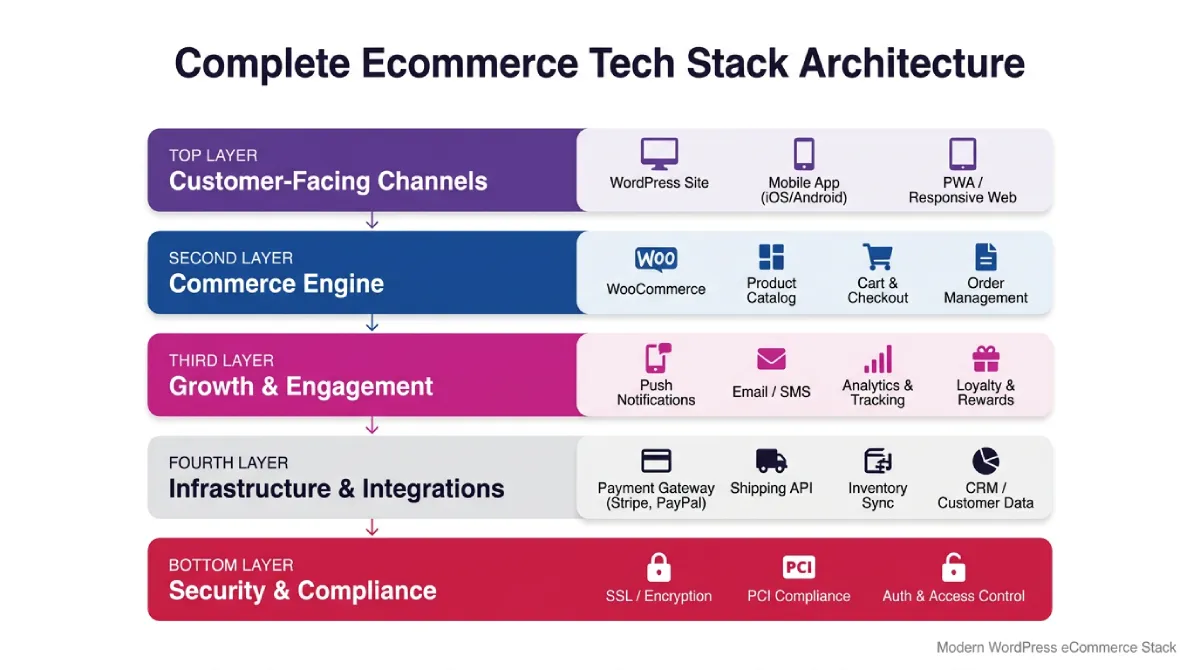
Because this article is for WordPress store owners, I’ll say it outright: you want a team that understands how to:
- Integrate cleanly with WooCommerce or your chosen e‑commerce plugin.
- Sync products, inventory, and orders without creating two separate worlds.
- Keep analytics sane across web and app.
You’re not rebuilding your business from scratch. You’re extending it.
The window is still open for now
Most small and mid‑sized WordPress stores still haven’t made the jump to a dedicated app.
The ones that have, and who did it thoughtfully, are already seeing:
- Higher conversion from their existing traffic
- More repeat purchases from the same customers
- Lower dependency on paid ads to bring people back
If your store gets regular repeat orders, or you sell products people buy again and again, an app isn’t a vanity project. It’s a way to make buying from you the easiest option on their phone.
Your WordPress site got you discovered. Your app is what keeps you close to your customers (and, hopefully, retains them)
—-
About the Author
Maria Krisette Lim is an SEO & Content Marketing Consultant with over 15 years of experience producing print ads and web content. Krisette has a BSBA degree, major in Business Management and Entrepreneurship. When she’s not tinkering with words and punctuation, she’s either curled up with a book while sipping hot tea, playing with her toddler, tinkering with website builders, or teaching other SEOs and writers through workshops and implementation sessions.


Leave a Reply