
The Porto WordPress theme allows you to build fully customized single post layouts using either Elementor or WPBakery Page Builder. As a result, you gain full control over the structure, design, and content presentation of individual blog posts.
Before you begin, make sure that the Single Post Builder is enabled and that your preferred page builder is allowed to edit Porto templates.
Step 1: Enable the Single Builder
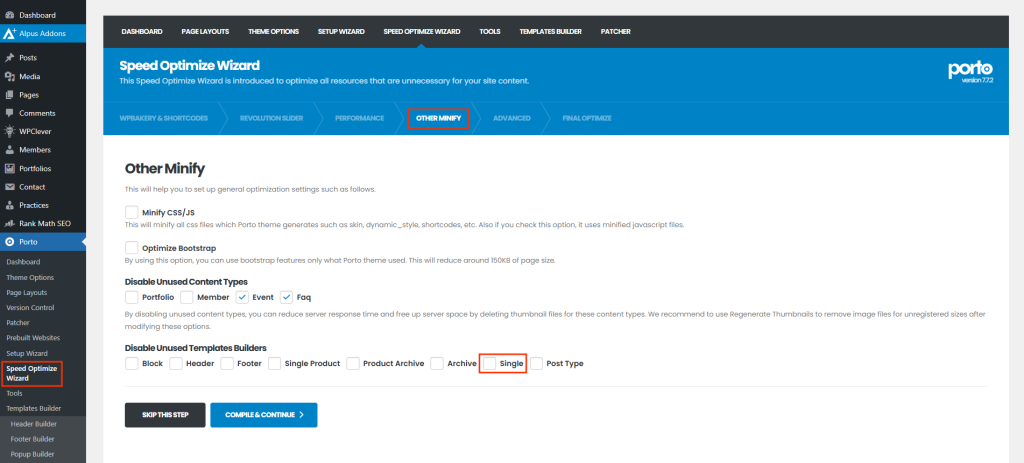
- Go to Porto > Speed Optimize Wizard > Other Minify
- Locate Disable Unused Template Builders
- Make sure Single is unchecked
This setting allows Porto to load and manage custom single post templates.
Step 2: Allow Your Page Builder to Edit Porto Templates
For Elementor:
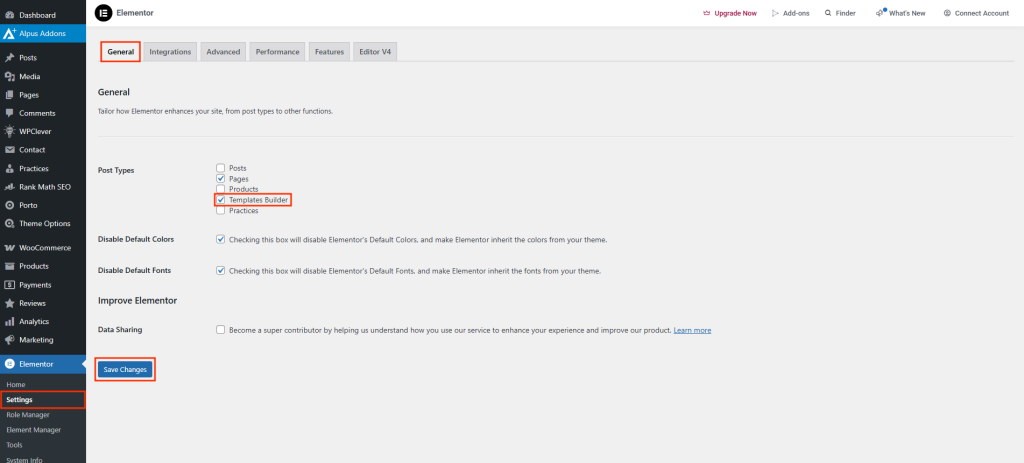
- Go to Elementor > Settings in your WordPress Dashboard.
- Under the Post Types section, make sure “Porto Template” is checked.
This enables Elementor to edit templates built through Porto’s Template Builder.
For WPBakery Page Builder:
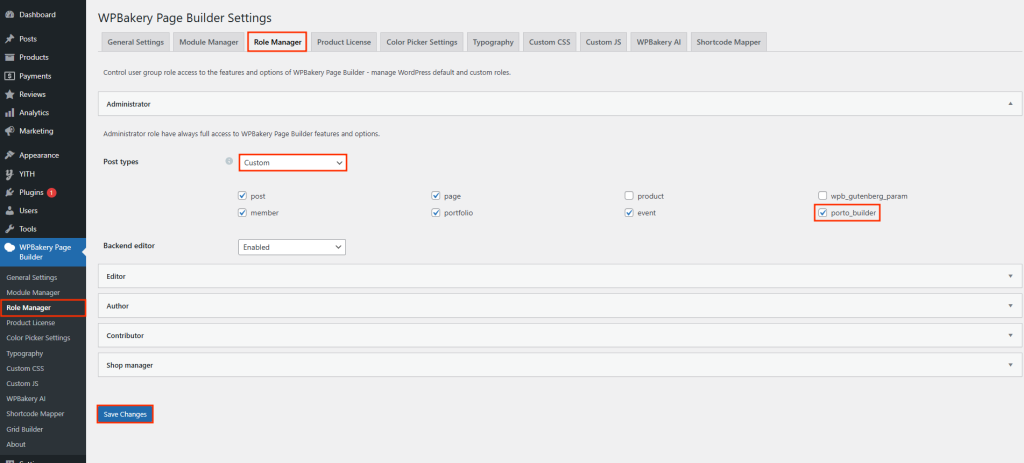
- Navigate to WPBakery Page Builder > Role Manager.
- Under the Post Types dropdown, ensure “Porto Template” is enabled.
This allows WPBakery to edit Porto Template Builder layouts.
Step 3: Create a New Single Post Template
- Go to Porto > Template Builder > Single > Add New
- Enter a name for your custom single post layout
- Click Create Builder
Once created, the template will automatically open with your active page builder (Elementor or WPBakery).
Note: If both Elementor and WPBakery are installed, you may need to manually switch between them.
However, it’s not recommended to keep both page builders active at the same time, as this can negatively affect site performance.
Step 4: Build the Custom Single Post Layout
When the editor opens, a Porto Studio popup will appear.
- Import a prebuilt single post layout from Porto Studio for a quick start, or
- Close the popup and build your layout from scratch.
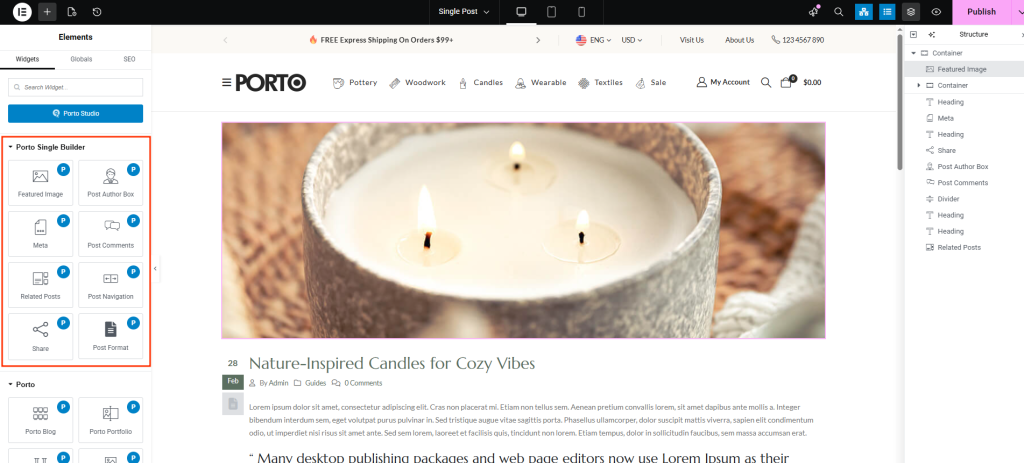
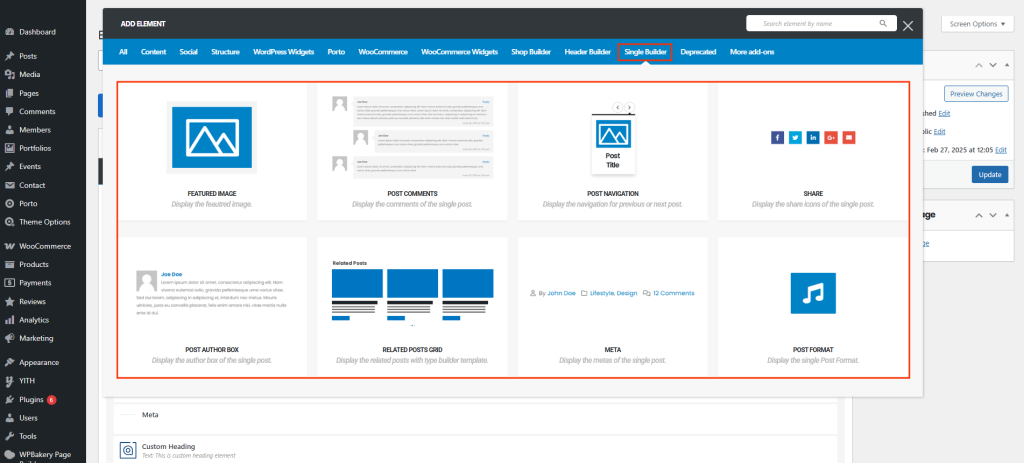
When editing with Elementor or WPBakery, you’ll find a wide 8 of Porto Single Builder Elements designed for post single pages, such as Featured Image, Post Author Box, Meta, Post Comments, Related Posts, Post Navigation, Share and Post Format.
Step 5: Set Display Conditions
After completing your layout design:
- Open the Display Conditions panel.
- Define where the layout should be applied, such as:
- All Posts
- Specific Categories
- Individual Posts
- Custom Post Types
This ensures the layout is automatically applied to the correct content.
Step 6: Save and Preview
- Click Save or Publish to apply your custom layout.
- Clear your browser cache and any active caching plugins.
- Visit a blog post or single content page to preview your new layout.
Additional Pro Tips
- Ensure the Single Builder option is enabled
- Always clear caches after publishing templates. (You can refresh display conditions via Porto > Tools)
- Double-check display conditions to avoid layout conflicts
- Avoid using Elementor and WPBakery together
- Porto recommends PHP 7.4 or higher for best performance
